
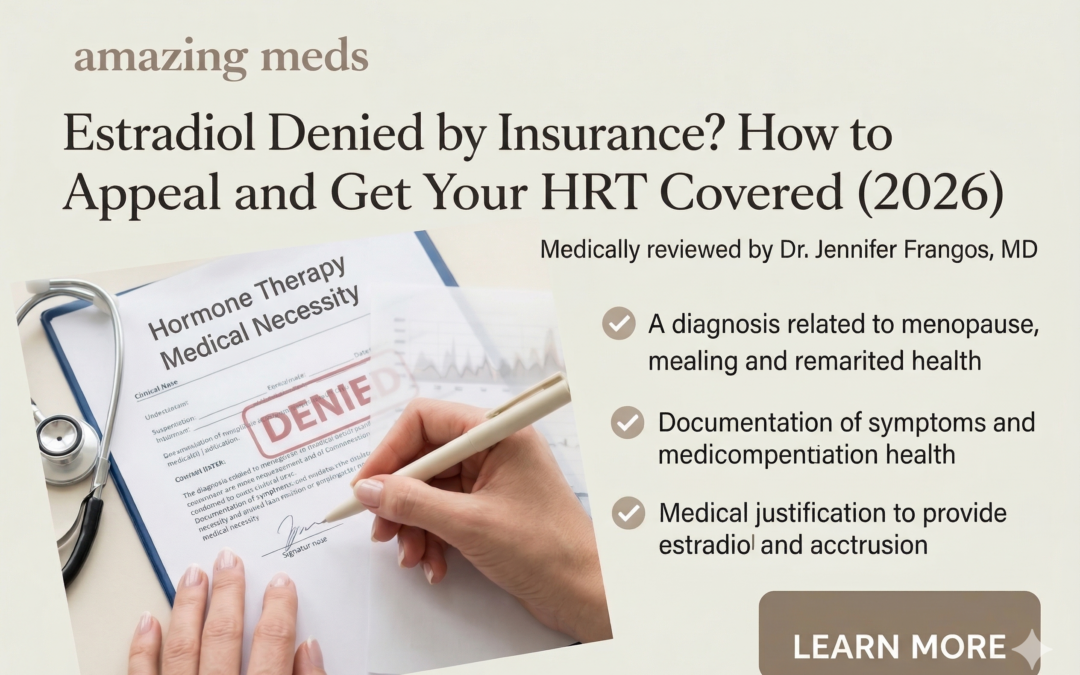
Medically reviewed by Dr. Frangos, MD
Board-certified physician with over 15 years in hormone optimization and insurance advocacy
Last updated: March 2026
Quick Answer
Yes — insurance plans often cover estradiol, but prescriptions are sometimes denied due to prior authorization requirements, step therapy rules, or missing documentation.
Most health plans require:
-
-
A diagnosis related to menopause or estrogen deficiency
-
Documentation of symptoms such as hot flashes or night sweats
-
Medical justification for the specific estradiol formulation prescribed
-
If your prescription was denied, you can appeal the decision. Research shows about 83% of prior authorization appeals are eventually approved when proper documentation is submitted (AMA, 2024).
If you need help reviewing your denial, you can book a consultation with a hormone specialist here
A Real Example of an Estradiol Insurance Denial
A 51-year-old patient came to our clinic after her insurance denied her estradiol patch prescription.
She was experiencing:
-
-
frequent hot flashes
-
night sweats disrupting sleep
-
significant brain fog and fatigue
-
Her gynecologist prescribed Climara estradiol patches, but her insurance provider denied the claim with the explanation:
“Not medically necessary.”
This is a common reason insurers give when hormone therapy is requested.
After submitting documentation showing the severity of her symptoms and citing menopause treatment guidelines, the denial was overturned within eleven days.
Her monthly copay dropped to $12 instead of paying hundreds out of pocket.
Why Insurance Companies Deny Estradiol Prescriptions
Insurance denials usually happen for one of three reasons.
Understanding the reason behind the denial helps determine the best appeal strategy.
1. “Not Medically Necessary”
Some insurers classify menopause symptoms as a natural life stage rather than a medical condition.
However, this position conflicts with clinical evidence.
Estradiol therapy is FDA-approved for treating moderate-to-severe vasomotor symptoms, including:
-
-
hot flashes
-
night sweats
-
sleep disruption
-
The North American Menopause Society (NAMS) recommends hormone therapy as the most effective treatment for these symptoms.
Appeals often succeed when these clinical guidelines are included.
2. Step Therapy Requirements
Many insurance plans require patients to try oral estradiol first before approving patches, gels, or other formulations.
This is called step therapy.
However, oral estradiol passes through the liver before entering the bloodstream. For some patients, this can increase clotting risks.
For women who have:
-
-
elevated BMI
-
migraines with aura
-
higher cardiovascular risk
-
transdermal estradiol (patches or gels) may be the safer option.
An appeal can request a step therapy exception explaining why oral therapy is not appropriate.
3. Formulary Restrictions
Insurance formularies categorize medications into coverage tiers.
For example:
-
-
generic oral estradiol is often Tier 1
-
generic patches may be Tier 2
-
brand-name patches often require prior authorization
-
If a brand medication is denied, your doctor may need to submit a formulary exception request.
Estradiol Formulations and Typical Insurance Coverage
Coverage varies by medication type.
| Estradiol Formulation | Examples | Typical Coverage | Estimated Denial Rate | Appeal Difficulty |
|---|---|---|---|---|
| Oral (generic) | Estrace | Tier 1 | <5% | Low |
| Transdermal patch (generic) | Generic estradiol patch | Tier 2 | 15% | Low |
| Transdermal patch (brand) | Vivelle-Dot, Climara | Prior authorization | 45% | Medium |
| Topical gel | Estrogel, Divigel | Plan dependent | 60% | Medium |
| Vaginal ring | Estring, Femring | Prior authorization | 50% | Medium |
| Injectable estradiol | Delestrogen | Often excluded | 75% | High |
| Compounded estradiol | Custom creams | Not covered | 98% | Very High |
Coverage patterns reflect typical policies from large insurers such as UnitedHealthcare, Aetna, Cigna, and Blue Cross Blue Shield.
How to Appeal an Estradiol Insurance Denial
If your prescription was denied, you can appeal the decision.
Step 1: Review the Denial Letter
Your insurance letter will explain:
-
the reason for the denial
-
the appeal deadline
-
where to submit your appeal
Appeal deadlines are typically 180 days from the denial date.
Step 2: Gather Supporting Evidence
Strong appeals include clinical documentation such as:
-
-
symptom history
-
lab results including estradiol and FSH levels
-
clinical notes from your physician
-
medical conditions that make oral estrogen unsafe
-
These documents help demonstrate medical necessity.
Step 3: Submit the Appeal
Appeals can usually be submitted through:
-
-
certified mail
-
fax
-
your insurer’s member portal
-
Some physicians also request peer-to-peer review, where the prescribing doctor speaks directly with the insurer’s medical reviewer.
Estradiol Appeal Letter Template
[DATE]
[INSURANCE COMPANY NAME]
Appeals Department
[ADDRESS FROM DENIAL LETTER]
RE: Appeal of Estradiol Therapy Denial
Member Name: [FULL NAME]
Member ID: [ID NUMBER]
Group Number: [GROUP NUMBER]
Reference Number: [FROM DENIAL LETTER]
Dear Appeals Committee,
I am writing to appeal the denial of estradiol hormone therapy for the above-referenced patient.
Clinical Presentation:
The patient is experiencing moderate-to-severe menopausal symptoms including hot flashes, night sweats, and sleep disruption.
Laboratory Evidence:
FSH: [VALUE]
Estradiol: [VALUE]
Medical Necessity:
Estradiol therapy is recommended as first-line treatment for vasomotor symptoms according to the North American Menopause Society (NAMS) and Endocrine Society guidelines.
Because of the patient’s clinical profile, the prescribed formulation is medically appropriate.
Requested Action:
I respectfully request reconsideration and approval of estradiol therapy for this patient.
Sincerely,
[PROVIDER NAME]
[NPI NUMBER]
[PRACTICE NAME]
[CONTACT INFORMATION]
Insurance-Specific Estradiol Coverage Tips
Coverage rules vary by insurer.
UnitedHealthcare
Generic oral estradiol and generic patches are usually covered. Brand patches often require prior authorization.
Blue Cross Blue Shield
Coverage varies by state. Some plans require step therapy before approving patches.
Aetna
Aetna commonly enforces step therapy requiring patients to try oral estradiol before approving patches.
Cigna
Cigna typically covers oral estradiol at Tier 1 and generic patches at Tier 2.
Estradiol Costs and Appeal Timelines
| Action | Average Cost | Resolution Time | Success Rate |
|---|---|---|---|
| Generic oral estradiol | $4–$15 per month | Immediate | N/A |
| Generic estradiol patch | $30–$60 per month | Immediate | N/A |
| Brand patch | $200–$500 per month | Immediate | N/A |
| Prior authorization | $0 | 3–5 days | 65% |
| First appeal | $0 | 15–30 days | 83% |
| External review | $0 | 30–45 days | 40% |
How Amazing Meds Supports Patients
Many clinics prescribe hormone therapy but do not assist with insurance appeals.
Amazing Meds supports patients through the entire process, including:
-
-
hormone evaluation and treatment planning
-
prior authorization submissions
-
insurance appeal documentation
-
ongoing hormone therapy management
-
If your estradiol prescription was denied, you can schedule a consultation to review your case: https://amazing-meds.com/specialty-selection/
Frequently Asked Questions
Does insurance cover estradiol?
Most health plans cover generic oral estradiol and sometimes generic patches. Brand medications often require prior authorization.
Why was my estradiol patch denied?
Many insurers require step therapy, meaning patients must try oral estradiol before patches are approved.
Is compounded estradiol covered by insurance?
No. Most insurers do not cover compounded hormone medications.
Can I switch from oral estradiol to patches?
Yes, but your physician may need to submit a step therapy exception request explaining why patches are medically necessary.
Sources
American Medical Association — Prior Authorization Physician Survey
https://www.ama-assn.org
Kaiser Family Foundation — Insurance Claim Denial Data
https://www.kff.org
North American Menopause Society — Hormone Therapy Position Statement
https://www.menopause.org
Endocrine Society — Clinical Practice Guidelines for Hormone Therapy
https://www.endocrine.org
Centers for Medicare & Medicaid Services — Drug Coverage Data
https://www.cms.gov