

Fine lines and wrinkles are a natural part of aging, but they’re not caused by age alone. Daily sun exposure, environmental stress, lifestyle habits, and the gradual decline of collagen all contribute to visible changes in the skin over time.
One ingredient that’s gained significant attention in modern skincare is peptides. These short chains of amino acids act as messengers, helping support the skin’s natural repair processes, collagen production, and overall skin health. Different peptides offer different benefits, from improving firmness to softening the appearance of expression lines.
In this guide, we’ll compare six of the most popular peptides for wrinkles and fine lines, explain how they work, and help you understand which ingredients may best support your skincare goals.
Looking for Personalized Skin Wellness?
Healthy-looking skin starts with a personalized approach. Our licensed providers can help you explore treatment options tailored to your skin concerns and long-term wellness goals.
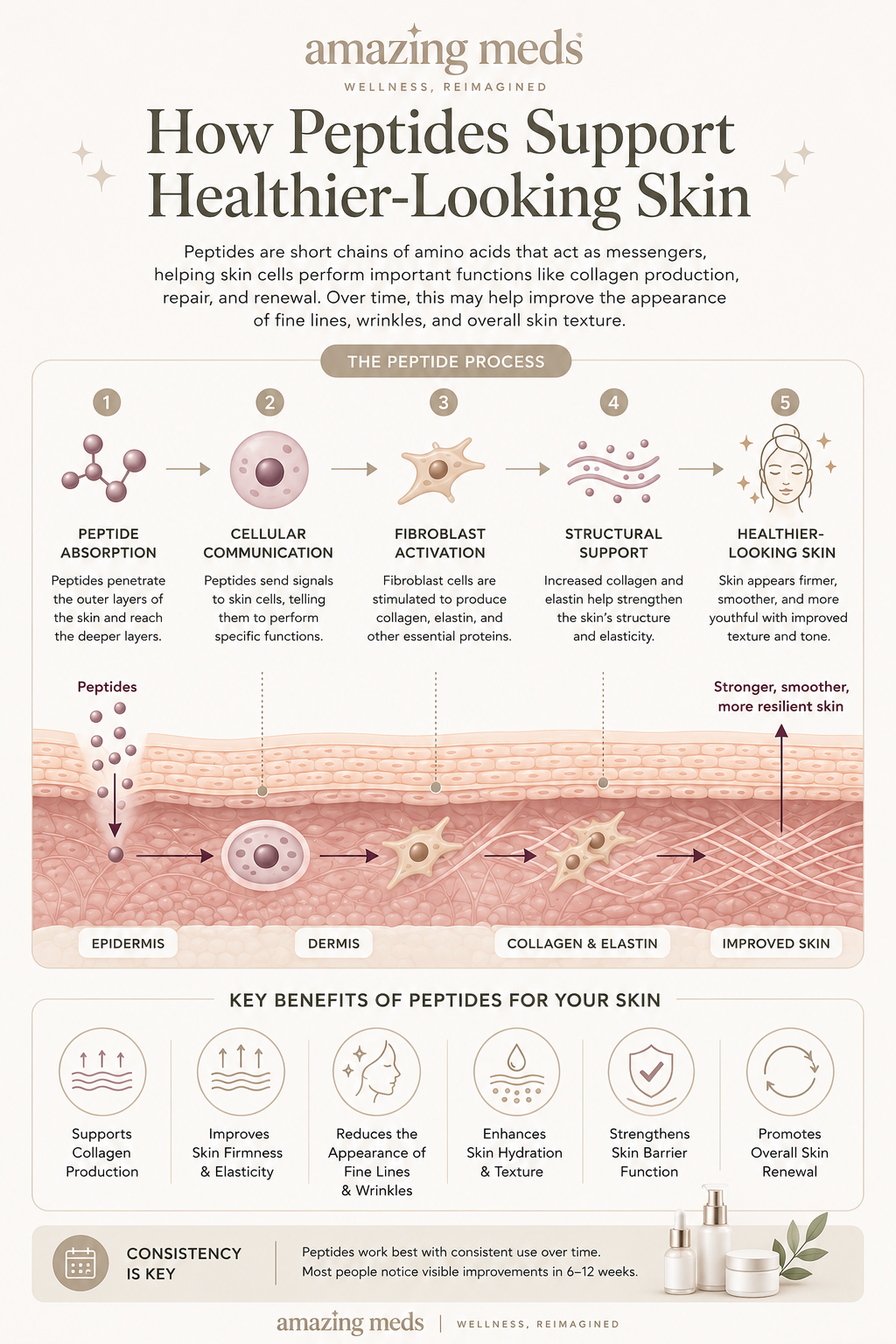
Why Skin Ages & How Peptides Help
As we age, our skin naturally produces less collagen and elastin—the proteins responsible for keeping it firm, smooth, and resilient. Sun exposure, smoking, stress, and genetics can speed up this process, leading to wrinkles, fine lines, and loss of elasticity.
Peptides are short chains of amino acids that help support the skin’s natural repair processes. Depending on the type, they may encourage collagen production, improve hydration, strengthen the skin barrier, or soften the appearance of expression lines.
Unlike quick-fix cosmetic ingredients, peptides work gradually. Consistent use over several weeks is typically needed before noticeable improvements appear.
Top 6 Peptides for Wrinkles Compared
1. GHK-Cu (Copper Peptide)
Best for: Overall skin rejuvenation and collagen support
GHK-Cu (Copper Tripeptide-1) is one of the most researched peptides in skincare. Naturally found in the body, it helps support tissue repair and collagen production, making it a popular ingredient for improving skin firmness and reducing the appearance of fine lines.
May help:
-
- Support collagen production
- Improve skin firmness
- Smooth fine lines
- Improve skin texture
Pairs well with: Hyaluronic Acid, Niacinamide, Ceramides
2. Matrixyl®
Best for: Fine lines and early signs of aging
Matrixyl® is a signal peptide that encourages the skin’s natural production of collagen and other structural proteins. It’s commonly found in anti-aging serums because it helps improve firmness and smooth the appearance of wrinkles over time.
May help:
-
- Improve skin elasticity
- Support collagen production
- Smooth fine lines
- Improve overall skin texture
Pairs well with: Vitamin C, Hyaluronic Acid, Ceramides
3. Argireline®
Best for: Forehead lines and expression wrinkles
Argireline® is often called a “Botox-like peptide” because it targets expression lines caused by repeated facial movements. While it doesn’t replace injectable treatments, it may help soften the appearance of dynamic wrinkles when used consistently.
May help:
-
- Reduce the appearance of forehead lines
- Soften crow’s feet
- Improve skin smoothness
Pairs well with: Matrixyl®, Hyaluronic Acid
4. Acetyl Tetrapeptide-5
Best for: Under-eye concerns
Commonly found in eye creams, Acetyl Tetrapeptide-5 is designed to improve hydration and reduce the appearance of puffiness around the eyes. It complements collagen-supporting peptides by addressing one of the earliest areas to show visible signs of aging.
May help:
-
- Reduce puffiness
- Improve hydration
- Refresh the eye area
Pairs well with: Caffeine, Hyaluronic Acid
5. Palmitoyl Tripeptide-1
Best for: Skin firmness and elasticity
Palmitoyl Tripeptide-1 is another signal peptide that helps support collagen production and healthy skin structure. It’s frequently combined with Matrixyl® in multi-peptide formulas designed for aging skin.
May help:
-
- Improve firmness
- Support collagen
- Enhance skin elasticity
Pairs well with: Matrixyl®, Vitamin C
6. SNAP-8®
Best for: Dynamic wrinkles
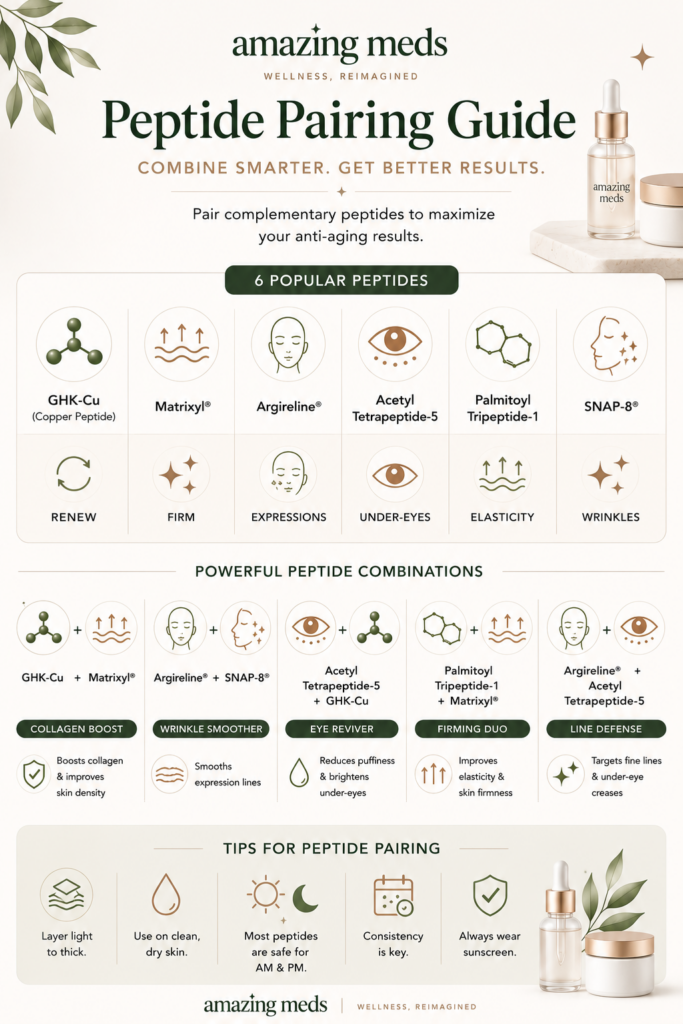
SNAP-8® is a next-generation peptide that helps soften the appearance of expression lines. It’s commonly paired with Argireline® to create a more comprehensive anti-aging formulation.
May help:
-
- Reduce the appearance of forehead lines
- Smooth expression wrinkles
- Support a youthful-looking complexion
Pairs well with: Argireline®, GHK-Cu
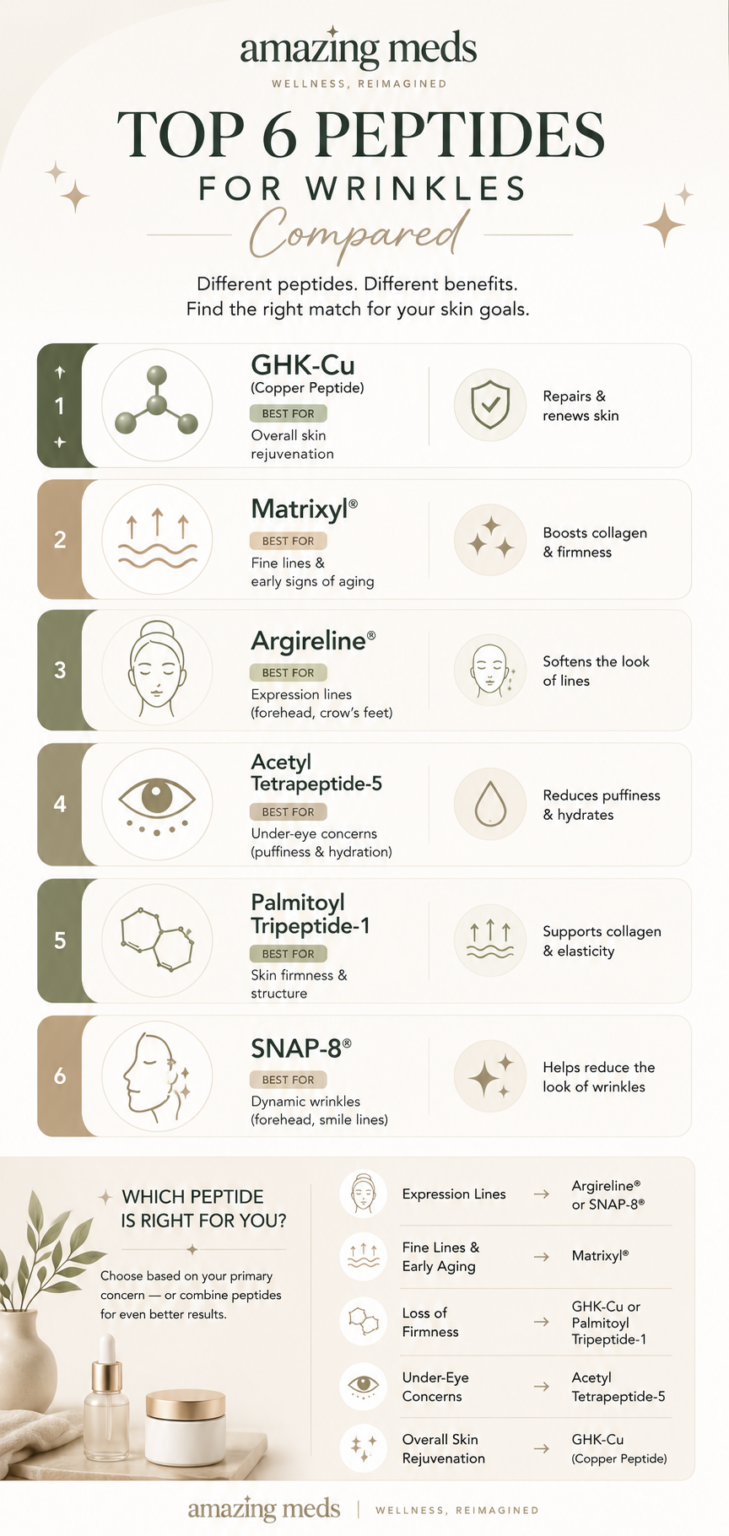
Which Peptide Is Best for Your Skin Goals?
The best peptide depends on your primary skin concern. Some peptides focus on collagen production, while others are better suited for expression lines or under-eye care.
| Skin Concern | Recommended Peptide |
|---|---|
| Overall skin rejuvenation | GHK-Cu |
| Fine lines | Matrixyl® |
| Forehead & expression lines | Argireline® |
| Under-eye puffiness | Acetyl Tetrapeptide-5 |
| Loss of firmness | Palmitoyl Tripeptide-1 |
| Dynamic wrinkles | SNAP-8® |
Many skincare products combine several peptides to target multiple signs of aging at once, making them a practical choice for a well-rounded anti-aging routine.
How Long Do Peptides Take to Work?
Peptides support your skin’s natural repair processes, so results develop gradually rather than overnight.
-
- 2–4 weeks: Skin may feel smoother and more hydrated.
- 6–8 weeks: Improvements in texture and firmness may become noticeable.
- 12+ weeks: Fine lines and overall skin quality may continue to improve with consistent use.
Results vary depending on factors such as age, skin type, sun exposure, and the specific product being used.
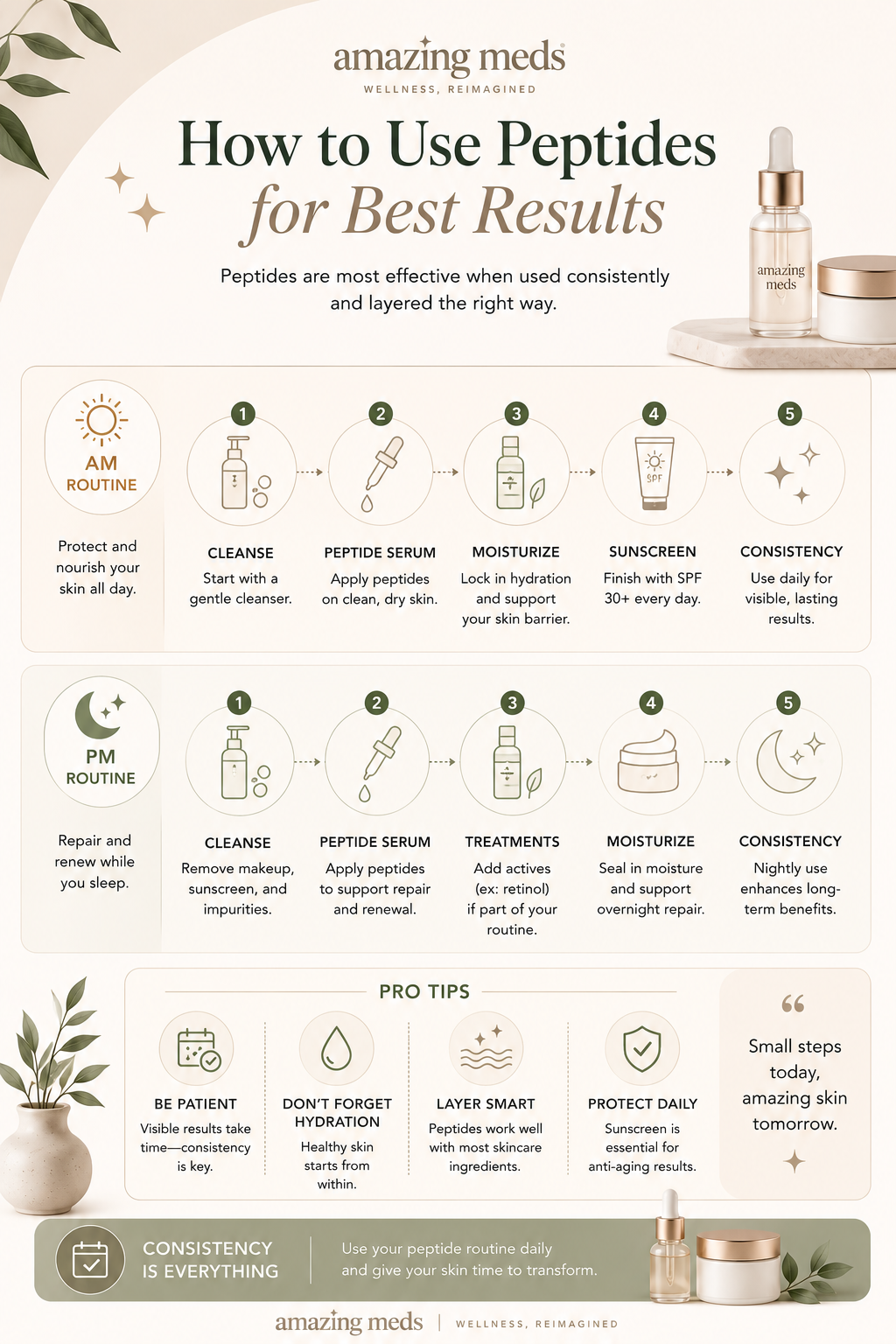
Getting the Best Results from Peptides
Peptides work best when combined with healthy skincare habits and consistent daily use.
Pair Peptides with Hydrating Ingredients
Ingredients like Hyaluronic Acid, Ceramides, and Niacinamide help support the skin barrier and complement peptide-based products.
Wear Sunscreen Every Day
Daily UV protection helps preserve collagen and reduces one of the biggest causes of premature skin aging.
Be Consistent
Most peptide products require regular use for several weeks before visible improvements occur.
Introduce New Products Gradually
If you’re adding peptides to an existing routine with active ingredients such as retinol or Vitamin C, introduce them slowly to see how your skin responds.
Maintain Healthy Lifestyle Habits
Getting enough sleep, staying hydrated, eating a balanced diet, and avoiding smoking all contribute to healthier-looking skin.
Frequently Asked Questions
What are peptides in skincare?
Peptides are short chains of amino acids that help support proteins like collagen and elastin. In skincare, they may help improve firmness, texture, hydration, and the appearance of fine lines.
Do peptides help reduce wrinkles?
Peptides may help soften the appearance of wrinkles by supporting collagen production, skin repair, and hydration. Results are gradual and depend on consistency, product quality, and skin type.
Which peptide is best for wrinkles?
Matrixyl®, GHK-Cu, Argireline®, and SNAP-8® are commonly used for wrinkles. Matrixyl® and GHK-Cu support collagen, while Argireline® and SNAP-8® help target expression lines.
Which peptide is best for fine lines?
Matrixyl® is often used for fine lines and early signs of aging. GHK-Cu may also help support overall skin renewal and firmness.
Can peptides replace Botox?
No. Peptides like Argireline® and SNAP-8® may help soften the appearance of expression lines, but they do not work the same way or produce the same results as injectable treatments.
How long do peptides take to work?
Some people notice smoother, more hydrated skin within 2–4 weeks. Changes in firmness and fine lines may take 6–12 weeks of consistent use.
Can I use peptides every day?
Yes. Most peptide skincare products are formulated for daily use. Follow the product instructions and introduce new products gradually if you have sensitive skin.
Can peptides be used with retinol or Vitamin C?
In many cases, yes. Peptides can complement both ingredients, although some people prefer to alternate products if irritation occurs.
Are peptides good for mature skin?
Yes. Peptides may support firmness, elasticity, hydration, and smoother-looking skin, making them a popular choice for mature skin.
What’s the difference between skincare peptides and peptide therapy?
Skincare peptides are cosmetic ingredients applied to the skin, while peptide therapy involves prescription treatments used under the supervision of a licensed healthcare provider.
Ready to Support Healthier-Looking Skin?
Healthy skin starts with a personalized approach. Whether you’re exploring peptide-based skincare or looking for advanced wellness solutions, Amazing Meds is here to help you make informed decisions that fit your goals.
Why Patients Choose Amazing Meds
✓ Personalized wellness plans
✓ Licensed healthcare providers
✓ Science-backed treatment options
✓ Convenient telehealth consultations
✓ Compassionate, patient-centered care
References
- American Academy of Dermatology (AAD) – Skin Care Basics
https://www.aad.org/public/everyday-care - MedlinePlus – Skin Aging
https://medlineplus.gov/skinaging.html - National Institutes of Health (NIH) – Skin Aging and Anti-Aging Strategies
https://www.ncbi.nlm.nih.gov/pmc/articles/PMC3583892/ - Journal of Cosmetic Dermatology – Cosmetic Peptides and Skin Rejuvenation
https://onlinelibrary.wiley.com/journal/14732165 - International Journal of Cosmetic Science
https://onlinelibrary.wiley.com/journal/14682494