
Medically reviewed by Dr. Frangos, MD — board-certified physician with experience in hormone therapy and insurance-supported treatment coordination.
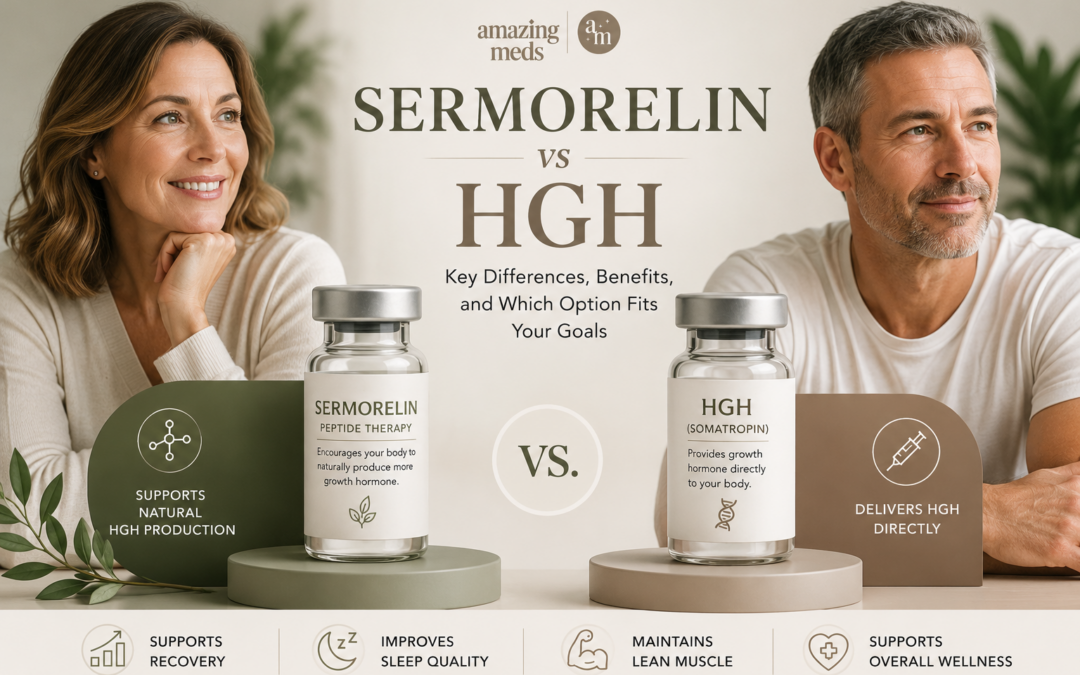
If you’ve been researching growth hormone therapies, you’ve probably come across two common options: Sermorelin and Human Growth Hormone (HGH).
At first glance, they may seem very similar. Both are associated with growth hormone support, both are typically administered by injection, and both are often discussed by individuals looking to optimize recovery, body composition, energy, and overall wellness.
However, Sermorelin and HGH work in fundamentally different ways.
One stimulates your body’s own growth hormone production. The other provides growth hormone directly.
Understanding those differences can help you have a more informed conversation with your healthcare provider and determine which option may be appropriate for your individual needs.
In this guide, we’ll compare Sermorelin and HGH side by side, including how they work, potential benefits, costs, and factors that may influence treatment decisions.
What Is Sermorelin?
Sermorelin is a synthetic version of Growth Hormone-Releasing Hormone (GHRH).
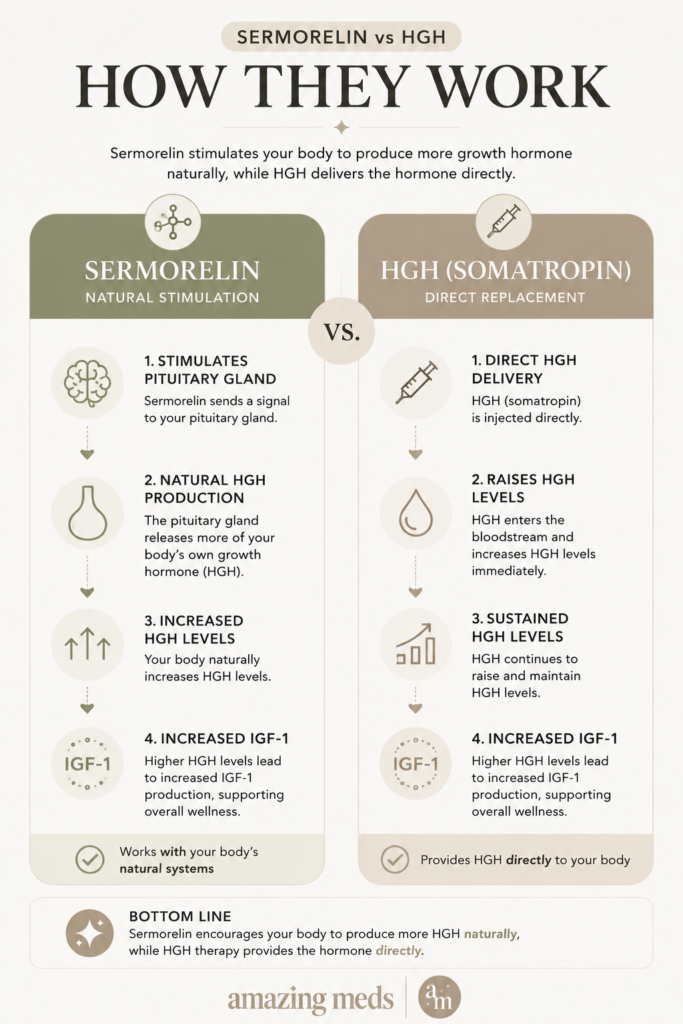
Rather than supplying growth hormone directly, Sermorelin signals the pituitary gland to produce and release more of its own growth hormone.
Think of Sermorelin as a messenger.
Instead of replacing HGH, it encourages the body’s natural production process.
Because Sermorelin relies on the pituitary gland to respond appropriately, it is generally most effective in individuals who still have functional growth hormone production capacity.
How Sermorelin Works
Hypothalamus Signal
    ↓
Sermorelin
    ↓
Pituitary Gland
    ↓
Natural HGH Release
    ↓
Increased IGF-1 Production
↓
Sermorelin
↓
Pituitary Gland
↓
Natural HGH Release
↓
Increased IGF-1 Production
This distinction is important because it separates Sermorelin from direct growth hormone replacement therapies.
Not Sure Which Option Fits Your Goals?
Understanding the difference between stimulating growth hormone production and replacing growth hormone directly can be confusing.
Our providers can help evaluate your symptoms, health history, and lab work to determine which approach may be appropriate.
What Is HGH (Somatropin)?
Human Growth Hormone therapy typically refers to somatropin, a synthetic form of human growth hormone that is biologically similar to naturally occurring HGH.
Unlike Sermorelin, HGH does not rely on the pituitary gland to increase production.
Instead, it provides growth hormone directly.
How HGH Works
HGH Injection
    ↓
Direct HGH Delivery
    ↓
Increased HGH Levels
    ↓
Increased IGF-1 Production
↓
Direct HGH Delivery
↓
Increased HGH Levels
↓
Increased IGF-1 Production
Because HGH bypasses the natural signaling pathway, it is often prescribed when direct growth hormone replacement is medically indicated.
This is why you may also see people searching:
-
- Sermorelin vs Somatropin
- Growth Hormone Peptides vs HGH
- Sermorelin vs Growth Hormone Therapy
In many cases, these comparisons are referring to the same fundamental question:
Should I stimulate HGH production or replace HGH directly?
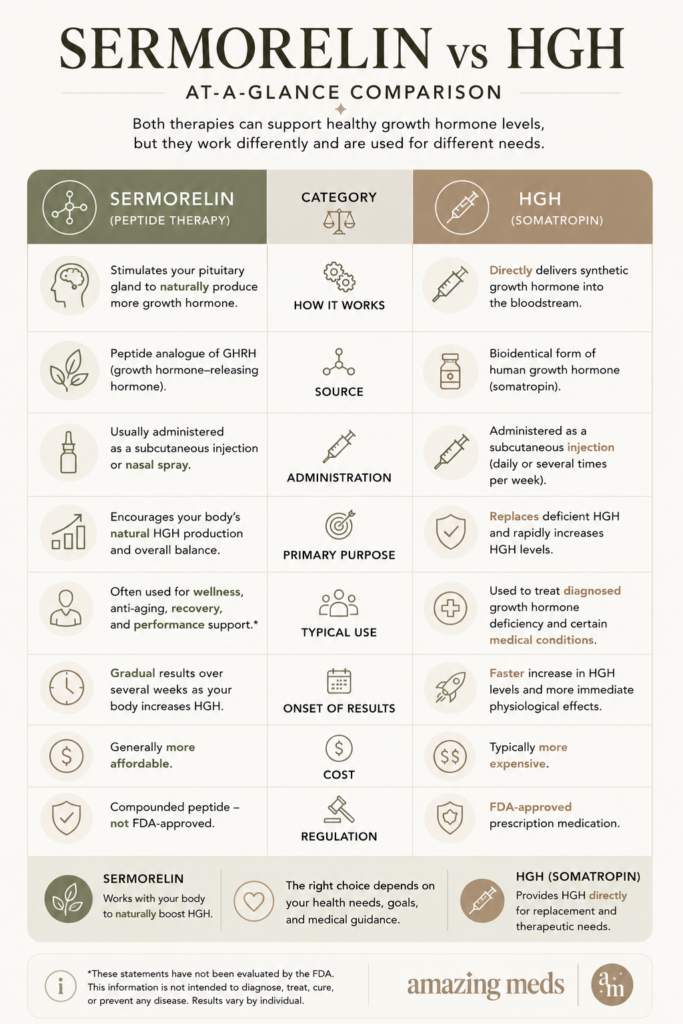
Sermorelin vs HGH: Side-by-Side Comparison
| Feature | Sermorelin | HGH (Somatropin) |
|---|---|---|
| Category | Growth Hormone-Releasing Hormone | Human Growth Hormone |
| Mechanism | Stimulates natural production | Direct replacement |
| Requires Functional Pituitary | Yes | No |
| Administration | Injection | Injection |
| Growth Hormone Levels | Indirect increase | Direct increase |
| Prescription Required | Yes | Yes |
| Monitoring Required | Yes | Yes |
| Cost | Generally lower | Generally higher |
| Treatment Approach | Supports natural production | Replaces hormone directly |
Why This Difference Matters
Although both therapies may ultimately influence IGF-1 levels and growth hormone activity, the route they take is very different.
Some individuals prefer the idea of stimulating their body’s natural production.
Others require direct replacement because natural production may not be sufficient.
The right option depends on medical history, hormone testing, symptoms, and provider recommendations.
Potential Benefits of Sermorelin
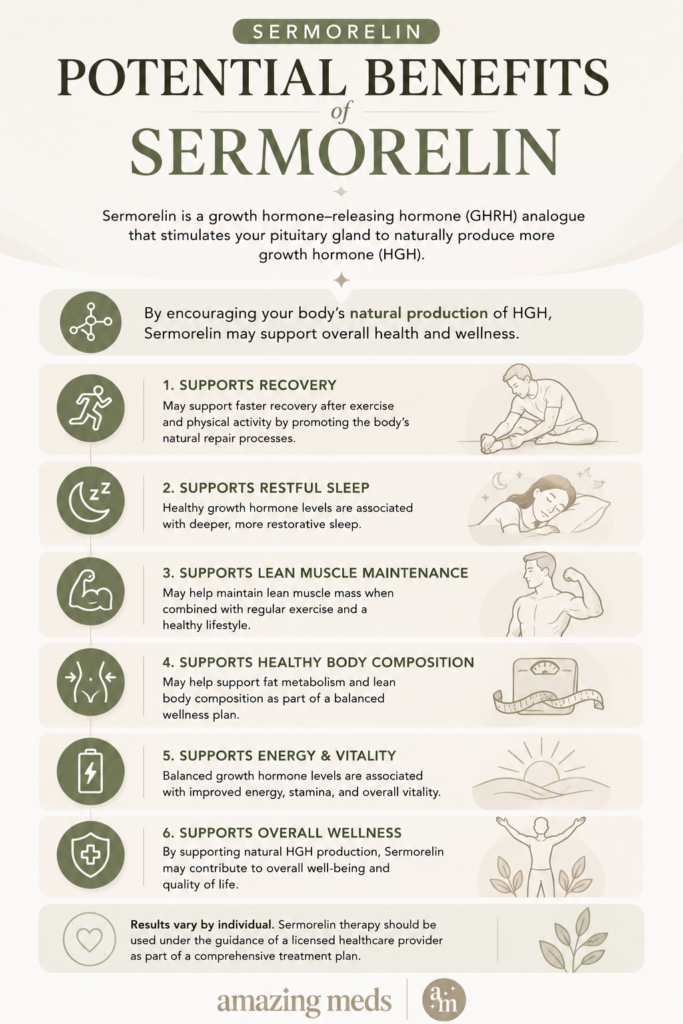
For appropriate candidates, Sermorelin may support:
✓ Natural HGH production
✓ Recovery
✓ Exercise performance
✓ Sleep quality
✓ Healthy body composition
✓ Overall wellness
Because Sermorelin works through the body’s own regulatory system, some patients appreciate its indirect approach.
However, results vary from person to person.
Potential Benefits of HGH
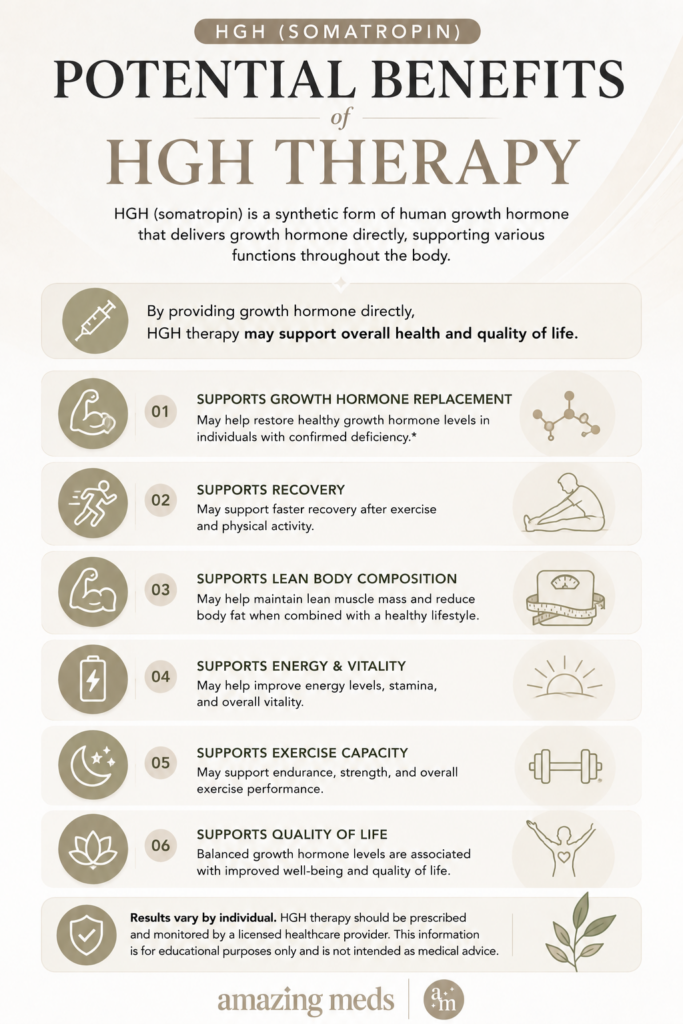
For individuals with appropriate medical indications, HGH therapy may support:
✓ Growth hormone replacement
✓ Recovery
✓ Lean body composition
✓ Exercise capacity
✓ Energy
✓ Quality of life
Because HGH provides the hormone directly, it may be recommended when stimulation alone is unlikely to be sufficient.
Sermorelin vs HGH Cost Comparison
One of the most common questions people ask is:
“Which one costs more?”
In general:
Sermorelin
Often Lower Cost
↓
HGH
Typically Higher Cost
However, treatment costs can vary significantly depending on:
-
- Dosage
- Treatment duration
- Pharmacy
- Monitoring requirements
- Follow-up visits
- Laboratory testing
It is important to evaluate overall value rather than focusing solely on monthly medication costs.
The most appropriate treatment is not always the least expensive option.
Sermorelin vs HGH: Which Option Fits Your Goals?
You May Prefer Sermorelin If…
✓ You want to stimulate natural HGH production
✓ Your pituitary gland remains functional
✓ You are interested in a peptide-based approach
✓ Cost is an important consideration
✓ Your provider believes stimulation is appropriate
You May Prefer HGH If…
✓ You have confirmed growth hormone deficiency
✓ Direct hormone replacement is indicated
✓ Pituitary stimulation may not be sufficient
✓ Your provider recommends HGH therapy
✓ You require a replacement-based approach
Is One Better Than The Other?
This is perhaps the most important question.
The answer is:
Not necessarily.
The “best” option depends on:
✓ Hormone testing
✓ Diagnosis
✓ Symptoms
✓ Health history
✓ Treatment goals
✓ Budget
✓ Provider recommendations
For one patient, Sermorelin may be a reasonable choice.
For another, HGH replacement may be more appropriate.
The goal is not to find the universally “best” therapy.
The goal is to find the therapy that best aligns with your individual situation.
Looking For Personalized Guidance?
Online comparisons can be helpful, but they cannot replace a proper hormone evaluation.
Our providers can review your symptoms, medical history, and lab results to help determine which option may fit your goals.
Take The Guesswork Out Of Growth Hormone Therapy
Whether you’re exploring Sermorelin, HGH, or simply trying to understand your options, the best place to start is with personalized guidance.
Why Patients Choose Amazing Meds
✓ Comprehensive hormone assessments
✓ Personalized treatment recommendations
✓ Ongoing provider support
✓ Convenient telehealth consultations
✓ Science-backed wellness approach
Discover Which Option May Fit Your Goals
Frequently Asked Questions
Is Sermorelin the same as HGH?
No. Sermorelin stimulates natural growth hormone production, while HGH directly replaces growth hormone.
Is Sermorelin the same as Somatropin?
No. Somatropin is synthetic human growth hormone. Sermorelin is a growth hormone-releasing hormone analogue.
Does Sermorelin increase HGH naturally?
Sermorelin works by stimulating the pituitary gland to release more growth hormone.
Which costs more, Sermorelin or HGH?
In many cases, HGH therapy is more expensive than Sermorelin, although costs vary depending on treatment plans and monitoring requirements.
Can Sermorelin replace HGH?
Not necessarily. The appropriate treatment depends on individual medical circumstances and provider recommendations.
Which is better for growth hormone deficiency?
That depends on the cause and severity of the deficiency, along with your provider’s evaluation.
Research Resources
- Hormone Health Network
https://www.hormone.org - Endocrine Society
https://www.endocrine.org - MedlinePlus – Growth Hormone
https://medlineplus.gov - National Institute on Aging
https://www.nia.nih.gov