

BPC-157 has gained attention for its potential role in healing, recovery, and overall wellness. It is commonly discussed in connection with gut health, muscles, tendons, inflammation, and several other areas of the body.
Also known as Body Protection Compound-157, BPC-157 is a synthetic peptide based on a sequence found in a protective protein associated with gastric juice. Researchers continue to study how it may affect tissue repair, blood flow, inflammatory responses, and cellular recovery.
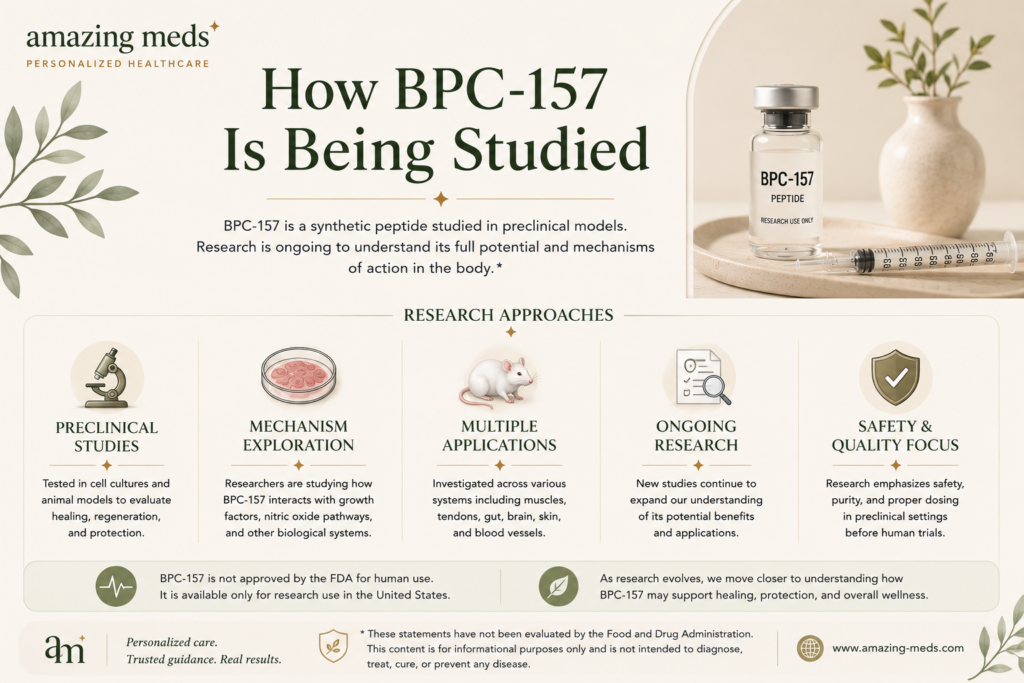
Although early findings are encouraging, most BPC-157 research has been conducted in laboratory and animal models. High-quality human clinical studies remain limited, and BPC-157 is not approved by the U.S. Food and Drug Administration (FDA) to treat any medical condition.
In this guide, we’ll review 27 potential BPC-157 benefits currently being explored in research, along with important safety and regulatory considerations.
Interested in Personalized Peptide Care?
Peptide therapy is not one-size-fits-all. A licensed healthcare provider can review your medical history, symptoms, and wellness goals to help you understand which evidence-based options may be appropriate.
What Is BPC-157?
BPC-157 is a synthetic peptide made up of 15 amino acids. It has primarily been studied for its possible protective and regenerative effects involving the digestive system, soft tissues, blood vessels, nerves, and other biological processes.
The peptide has attracted research interest because it may influence several pathways related to:
-
- Tissue repair
- Blood-vessel formation
- Inflammatory responses
- Cellular protection
- Gastrointestinal health
- Nitric oxide signaling
However, potential effects observed in preclinical research do not necessarily produce the same results in humans.
How Does BPC-157 Work?
The exact way BPC-157 works in the human body has not been established.
Preclinical research suggests that it may interact with pathways involved in tissue healing, circulation, inflammation, and cellular recovery. Researchers have also explored its possible relationship with growth factors, fibroblast activity, angiogenesis, and nitric oxide signaling.
More human research is needed to determine whether these effects are clinically meaningful.
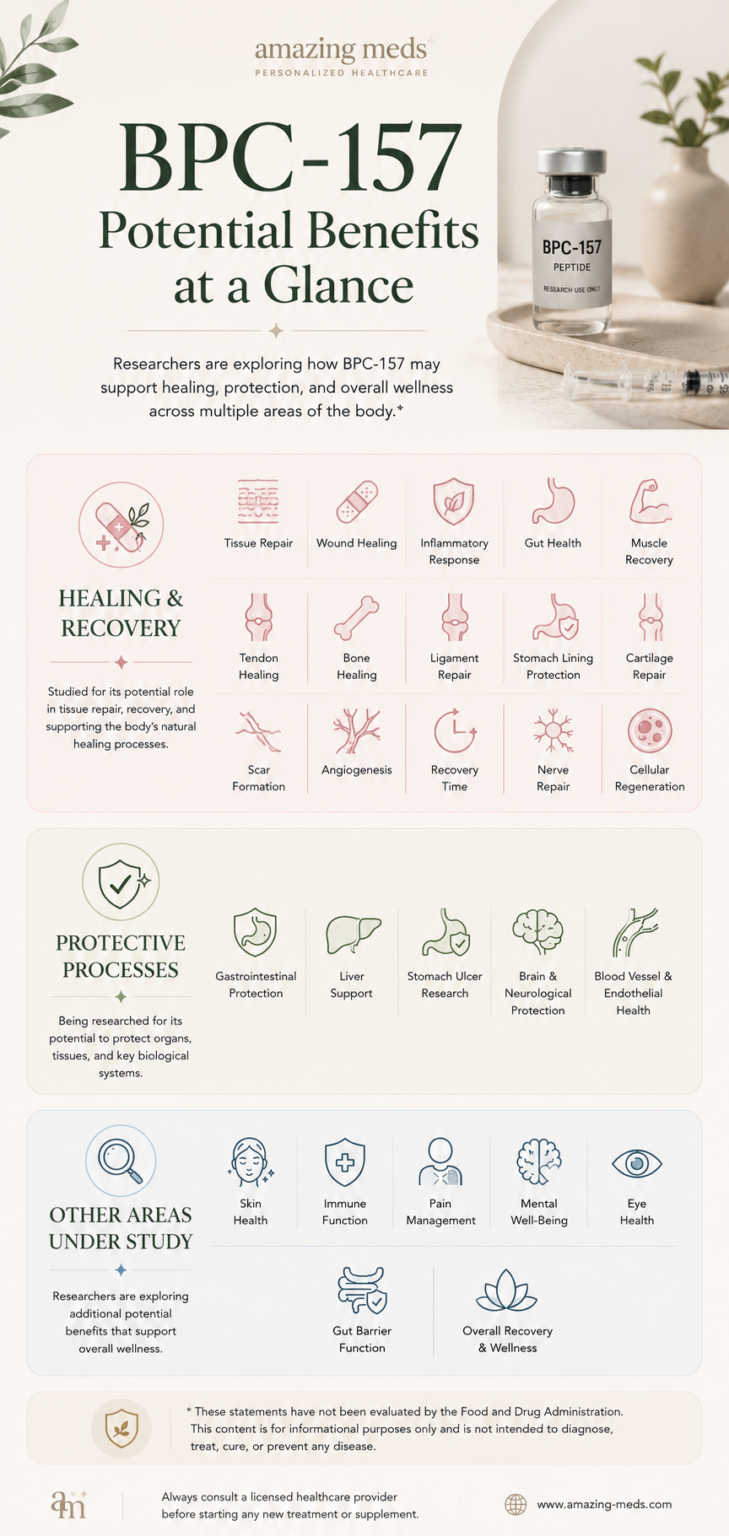
27 Potential Benefits of BPC-157
Healing and Recovery Benefits
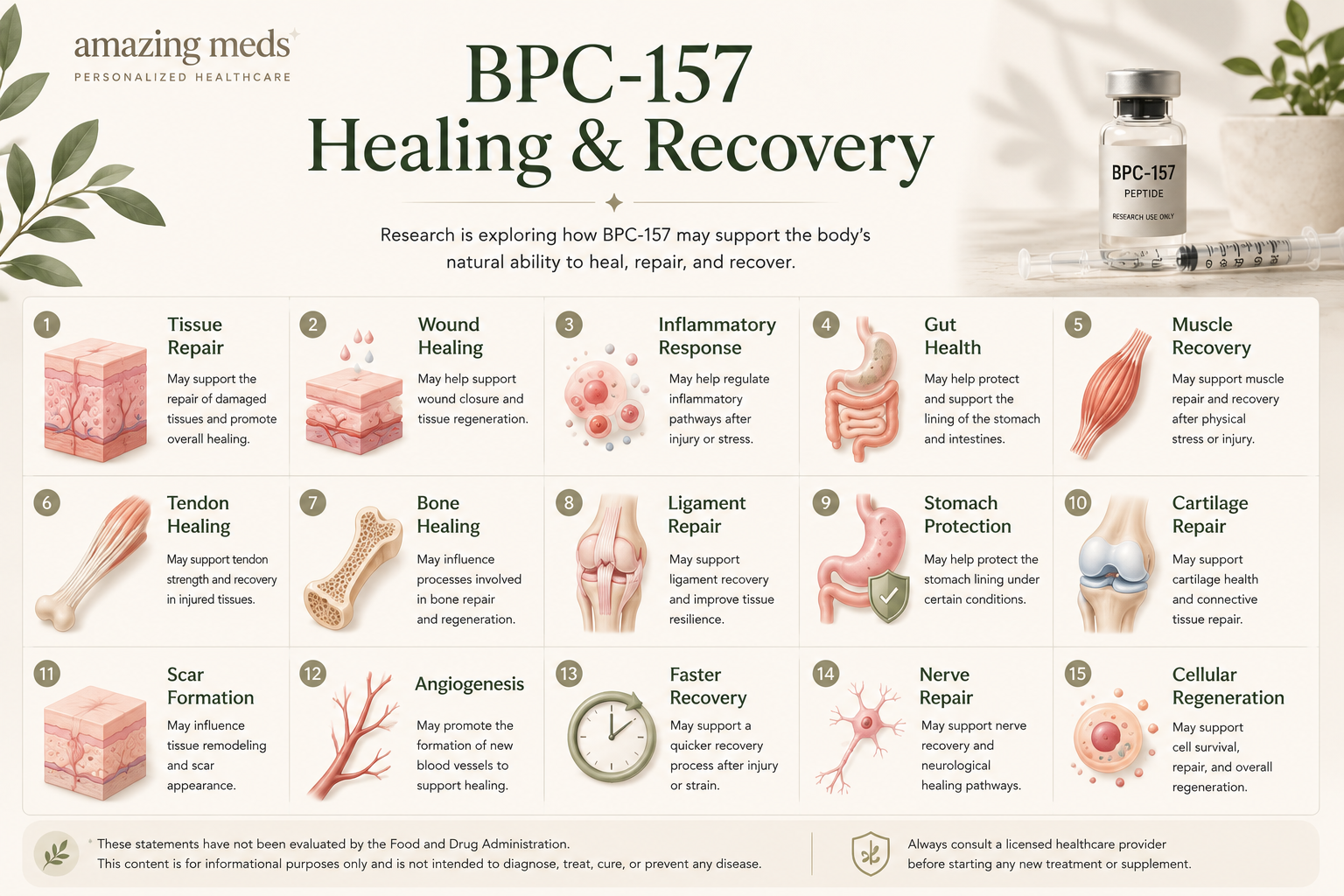
1. May Support Tissue Repair
BPC-157 has been studied for its possible role in repairing damaged tissue. Animal and laboratory findings suggest that it may influence biological processes involved in healing, although this has not been confirmed in controlled human trials.
2. May Promote Wound Healing
Preclinical research has explored whether BPC-157 may support wound closure and tissue regeneration. The available findings are promising, but more evidence is needed to understand its potential use in human wound care.
3. May Help Regulate Inflammatory Responses
Researchers have investigated whether BPC-157 may affect inflammatory signaling after injury. While some studies suggest potential anti-inflammatory activity, it should not be considered a proven treatment for inflammatory conditions.
4. May Support Gut Health
BPC-157 was originally studied in connection with the gastrointestinal system. Animal research suggests that it may help protect the stomach and intestinal lining, but there is not enough clinical evidence to confirm the same effects in people.
5. May Aid Muscle Recovery
Some animal studies have examined the peptide in models involving muscle injuries. Researchers observed possible effects on tissue repair and recovery, although human studies remain limited.
6. May Support Tendon Healing
BPC-157 has attracted significant attention for its possible role in tendon recovery. Preclinical findings suggest that it may influence tendon-cell activity and healing processes, but its effectiveness in humans has not been established.
7. May Support Bone Healing
Researchers have studied BPC-157 in experimental bone-injury models. Early results suggest a possible influence on healing pathways, but it is not an approved treatment for fractures or bone injuries.
8. May Assist Ligament Repair
Ligaments often have a limited blood supply and may heal slowly. Animal studies have explored whether BPC-157 could support ligament-repair mechanisms, though more research is necessary.
9. May Help Protect the Stomach Lining
Studies involving animals suggest that BPC-157 may help preserve the stomach lining under certain experimental conditions. It should not replace established treatment for gastritis, ulcers, or other gastrointestinal conditions.
10. May Support Cartilage Repair
BPC-157 has been explored for its possible effects on cartilage and connective tissues. Current evidence is preliminary, and there is not enough human research to confirm a cartilage-repair benefit.
11. May Influence Scar Formation
Some research suggests that BPC-157 could affect tissue remodeling following an injury. It remains unclear whether it can meaningfully reduce or alter scarring in humans.
12. May Promote Angiogenesis
Angiogenesis refers to the formation of new blood vessels. Preclinical studies suggest that BPC-157 may influence this process, potentially supporting blood flow to healing tissues.
However, angiogenesis is a complex biological mechanism, and its clinical implications require further study.
13. May Support Faster Recovery
Because BPC-157 is being studied across several tissue-repair pathways, it is sometimes associated with quicker recovery. At present, there is insufficient human evidence to confirm that it reliably reduces recovery time.
14. May Support Nerve Repair
Animal research has explored the potential effects of BPC-157 on damaged nerves and neurological recovery. These findings remain early, and its safety and effectiveness for human nerve injuries are unknown.
15. May Support Cellular Regeneration
Laboratory and animal studies suggest that BPC-157 may affect cellular survival, repair, and regeneration after injury. More research is needed to determine whether these effects translate into meaningful clinical outcomes.
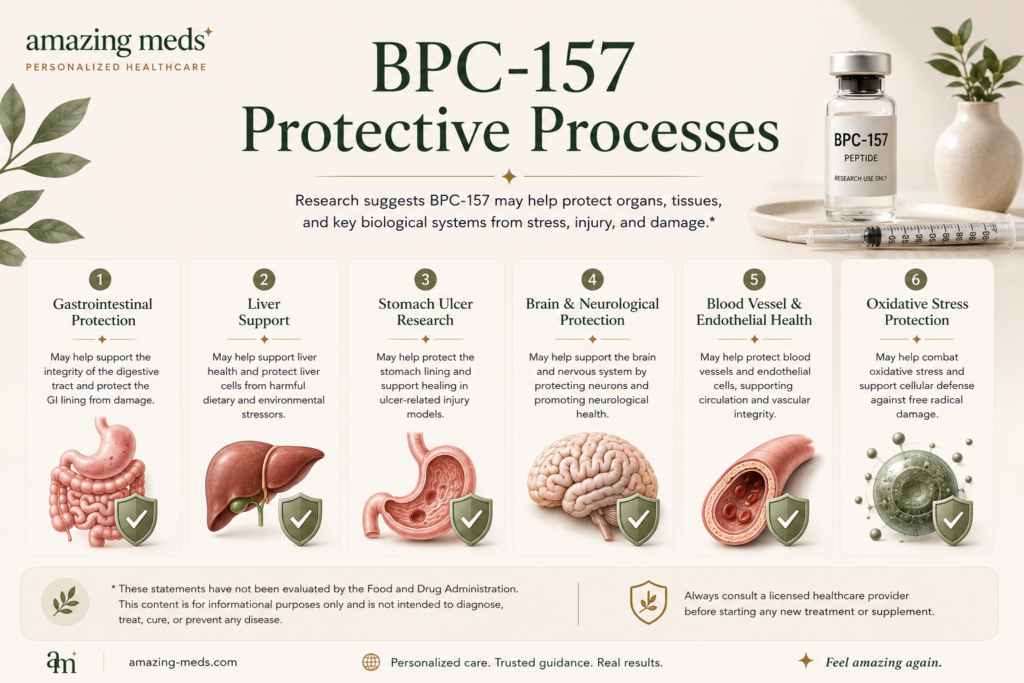
Protective Benefits Being Studied
16. May Help Protect the Digestive System
BPC-157 has been studied for possible protective effects throughout the gastrointestinal tract. Research has explored the stomach, intestines, and esophagus, but most findings come from animal models.
17. May Support Liver Health
Some experimental studies have investigated BPC-157 in models involving liver injury or exposure to harmful substances. These results do not prove that it can prevent or treat liver disease in humans.
18. May Help Protect Against Stomach Ulcers
Because of its association with gastric protective processes, BPC-157 has been studied in experimental ulcer models. It is not FDA-approved to prevent or treat ulcers, and established medical care remains essential.
19. May Support Brain Health
Researchers have investigated BPC-157 in several animal models involving the brain and nervous system. Although early findings have generated interest, its effects on human neurological health remain unknown.
20. May Support Blood-Vessel Health
The endothelium is the thin layer of cells lining the blood vessels. Preclinical research suggests that BPC-157 may influence pathways involving circulation and endothelial function, but the clinical significance is still unclear.
Other Potential BPC-157 Benefits Being Studied
21. May Support Skin Health
Healthy skin relies on effective tissue repair and collagen production. Because BPC-157 has been studied for its potential role in wound healing and cellular regeneration, researchers have explored whether it may also support skin recovery.
While early findings are encouraging, additional human studies are needed before any conclusions can be made regarding cosmetic or dermatological applications.
22. May Support Immune Function
Some researchers have investigated whether BPC-157 may influence inflammatory and immune-related pathways that play a role in the body’s natural healing response.
However, BPC-157 should not be considered an immune-boosting treatment, and its effects on the human immune system remain under investigation.
23. May Help Manage Pain
Pain relief is frequently discussed alongside BPC-157 because several animal studies have observed improvements in recovery following tissue injury.
These findings may be related to healing rather than a direct pain-relieving effect. More human clinical research is needed before determining whether BPC-157 has a meaningful role in pain management.
24. May Support Mental Well-Being
Researchers have explored BPC-157 in several neurological and behavioral models, leading to interest in its potential effects on stress responses and brain function.
Although these early findings have generated scientific interest, there is currently no high-quality clinical evidence supporting its use for mental health conditions.
25. May Support Eye Health
Some preclinical studies have investigated BPC-157 in experimental eye injury models. Researchers continue to explore whether it may influence tissue repair within the eye, although these findings have not been confirmed in humans.
26. May Help Maintain Gut Barrier Function
The intestinal lining acts as a protective barrier between the digestive tract and the rest of the body. Because BPC-157 has been studied extensively in gastrointestinal research, scientists have explored whether it may support the integrity of this barrier under certain experimental conditions.
More clinical research is needed before determining whether these findings apply to patients.
27. May Support Overall Recovery and Wellness
Many of the potential benefits associated with BPC-157 are connected through one common theme: supporting the body’s natural repair processes.
Rather than acting on a single organ or tissue, researchers believe BPC-157 may influence multiple biological pathways involved in recovery. However, these potential effects are still being investigated, and additional human studies are necessary to better understand its role in clinical care.
Is BPC-157 FDA Approved?
No.
BPC-157 is not approved by the U.S. Food and Drug Administration (FDA) for the treatment or prevention of any medical condition.
Although BPC-157 continues to be studied in laboratory and animal models, there is currently insufficient high-quality human clinical evidence to establish its safety, effectiveness, appropriate dosage, or long-term outcomes.
If you’re considering peptide therapy, it’s important to consult a licensed healthcare provider who can help you understand the available evidence and determine whether other evidence-based treatments may be more appropriate.
Why Choose Amazing Meds?
At Amazing Meds, we believe every patient deserves a personalized approach to healthcare.
Rather than focusing on one treatment, our licensed healthcare providers take time to understand your complete health picture before making recommendations.
Our approach includes:
Personalized Medical Evaluation
Your consultation begins with a comprehensive review of your symptoms, medical history, current medications, lifestyle, and health goals.
Evidence-Based Recommendations
Treatment recommendations are guided by current clinical evidence and may include hormone optimization, lifestyle interventions, FDA-approved therapies, peptide therapy where appropriate, or other individualized options.
Convenient Telehealth Care
Eligible patients can meet with a licensed healthcare provider through secure telehealth appointments, making personalized care accessible from the comfort of home.
Ongoing Follow-Up
Healthcare is an ongoing journey. Regular follow-up appointments allow your provider to monitor progress, answer questions, and adjust your treatment plan when appropriate.
Conclusion
BPC-157 continues to attract significant scientific interest because of its potential role in tissue repair, digestive health, inflammation, and recovery.
While early laboratory and animal studies have produced encouraging findings, many of the proposed benefits remain under investigation, and additional high-quality human clinical trials are needed before firm conclusions can be made.
If you’re interested in learning more about peptide therapy, the best place to start is with a personalized medical evaluation. A licensed healthcare provider can help you understand the current evidence, discuss your health goals, and recommend treatment options that are appropriate for your individual needs.
Ready to Explore Your Options?
Whether you’re interested in peptide therapy, hormone optimization, or improving your overall wellness, Amazing Meds is here to help you make informed healthcare decisions.
Frequently Asked Questions
Is BPC-157 FDA approved?
No. BPC-157 has not been approved by the FDA to treat any disease or medical condition.
Are all 27 benefits scientifically proven?
No. Most of the available evidence comes from laboratory and animal studies. Human clinical research remains limited, and more studies are needed before these potential benefits can be confirmed.
Is BPC-157 legal?
The legal status of BPC-157 depends on how it is manufactured, prescribed, compounded, and used. Regulations continue to evolve, so it’s important to obtain medical guidance from a qualified healthcare provider.
Is BPC-157 available through Amazing Meds?
If peptide therapy is appropriate based on your medical evaluation, your provider will discuss your options and determine whether a personalized treatment plan is suitable for your health goals.
How long does BPC-157 take to work?
There is currently no established timeline in humans. Research is ongoing, and responses may vary depending on the condition being studied and the individual patient.
Is BPC-157 safe?
The long-term safety profile of BPC-157 in humans has not been fully established. Anyone considering peptide therapy should discuss the potential risks and benefits with a licensed healthcare provider.
Research Resources
-
- FDA – BPC-157 Safety Information
https://www.fda.gov/drugs/human-drug-compounding/certain-bulk-drug-substances-use-compounding-may-present-significant-safety-risks - PubMed – BPC-157 and Musculoskeletal Healing
https://pubmed.ncbi.nlm.nih.gov/30915550/ - PubMed – BPC-157 and Angiogenesis Research
https://pubmed.ncbi.nlm.nih.gov/29998800/ - PMC – Narrative Review of BPC-157
https://pmc.ncbi.nlm.nih.gov/articles/PMC12446177/ - PMC – Multifunctionality and Medical Applications of BPC-157
https://pmc.ncbi.nlm.nih.gov/articles/PMC11859134/ - WADA – 2026 Prohibited List
https://www.wada-ama.org/sites/default/files/2025-09/2026list_en_final_clean_september_2025.pdf
- FDA – BPC-157 Safety Information