
One of the most common questions about BPC-157 is, “How long does it stay in your system?” The answer involves understanding an important pharmacological concept known as half-life.
A drug or peptide’s half-life describes how quickly its concentration decreases in the body, but it does not necessarily determine how long its biological effects may last. This distinction is especially important when discussing investigational peptides like BPC-157.
Although BPC-157 has attracted significant research interest for its potential role in tissue repair, gastrointestinal health, and recovery, human pharmacokinetic data remain limited. Much of what is currently known comes from laboratory and animal studies.
In this guide, we’ll explain what BPC-157 half-life means, the factors that may influence how long it remains in the body, how researchers believe it is processed, and why treatment decisions should always be guided by a licensed healthcare provider.
Looking for Personalized Peptide Therapy?
If you’re considering peptide therapy, understanding how a treatment works is only one part of the process. A licensed healthcare provider can review your medical history, recovery goals, and overall health to determine whether peptide therapy may be appropriate for you.
What Is Half-Life?
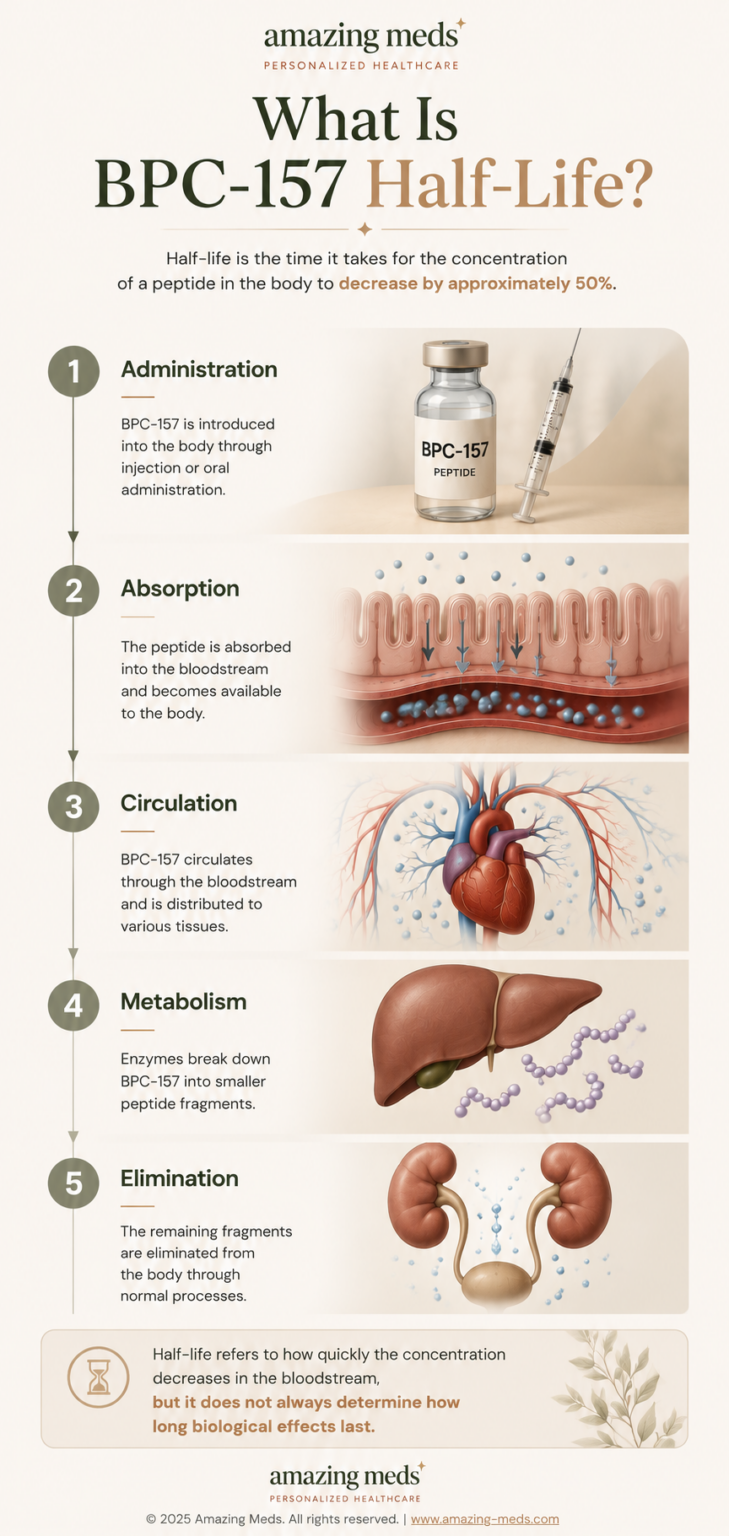
Half-life refers to the amount of time it takes for the concentration of a substance in the body to decrease by approximately 50%.
For medications and peptides, half-life helps researchers understand how quickly a compound is absorbed, distributed, metabolized, and eliminated. However, a short half-life does not always mean the biological effects disappear immediately.
Some compounds continue triggering cellular or biochemical responses even after circulating levels begin to decline.
This distinction is particularly important when discussing BPC-157 because ongoing research is still investigating how its biological activity relates to its pharmacokinetics.
Why Half-Life Matters in Peptide Therapy
Understanding half-life can help explain why healthcare providers may recommend different treatment schedules depending on the therapy being used.
A peptide’s half-life may influence:
-
- How frequently it is administered
- How long measurable levels remain in circulation
- The timing of repeat doses
- Overall treatment planning
- Clinical monitoring throughout therapy
It’s important to remember that dosing decisions should never be based on half-life alone. Individual health factors, treatment goals, and provider recommendations all play an important role in developing a personalized treatment plan.
Factors That May Influence BPC-157 Half-Life
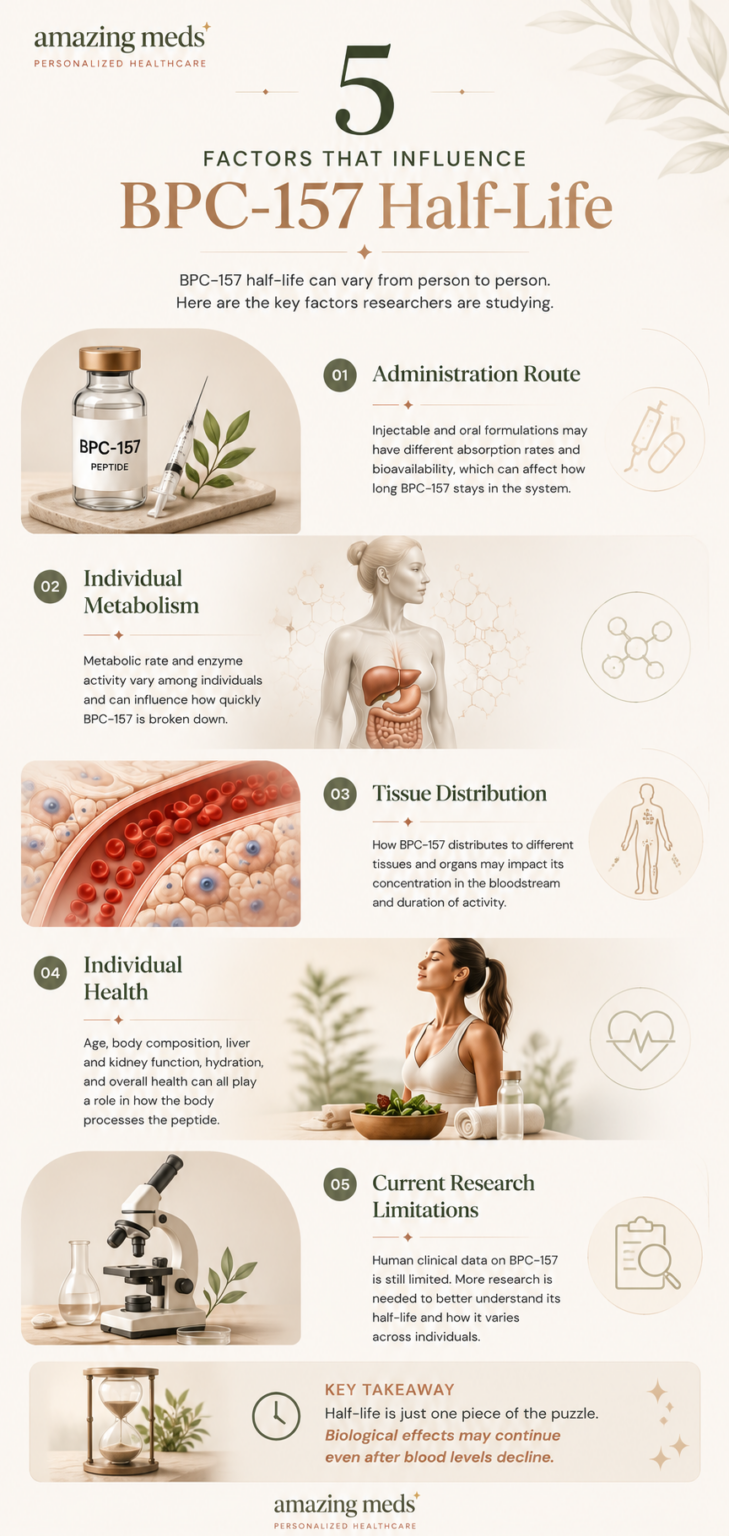
Several variables may affect how long BPC-157 remains in the body.
Route of Administration
The method of administration can influence how quickly BPC-157 enters the bloodstream and becomes available to tissues.
Research has explored several administration methods, including:
-
- Injectable formulations
- Oral formulations
- Experimental delivery systems
Each route may produce different absorption characteristics, although additional human studies are needed to better understand these differences.
Individual Metabolism
Every person’s metabolism is unique.
Factors that may influence peptide metabolism include:
-
- Age
- Body composition
- Liver function
- Kidney function
- Overall health status
- Concurrent medications
Because of these individual differences, treatment responses may vary from person to person.
Tissue Distribution
Researchers believe BPC-157 may distribute to multiple tissues after administration.
Current investigations continue exploring how the peptide interacts with:
-
- Gastrointestinal tissues
- Tendons
- Ligaments
- Muscles
- Connective tissue
- Blood vessels
More research is needed to fully understand these distribution patterns in humans.
Research Limitations
One of the biggest challenges in discussing BPC-157 half-life is the limited availability of high-quality human pharmacokinetic studies.
Many published findings are based on:
-
- Laboratory research
- Animal models
- Experimental investigations
As a result, researchers continue working to better understand how BPC-157 behaves in the human body under clinical conditions.
How BPC-157 Moves Through the Body
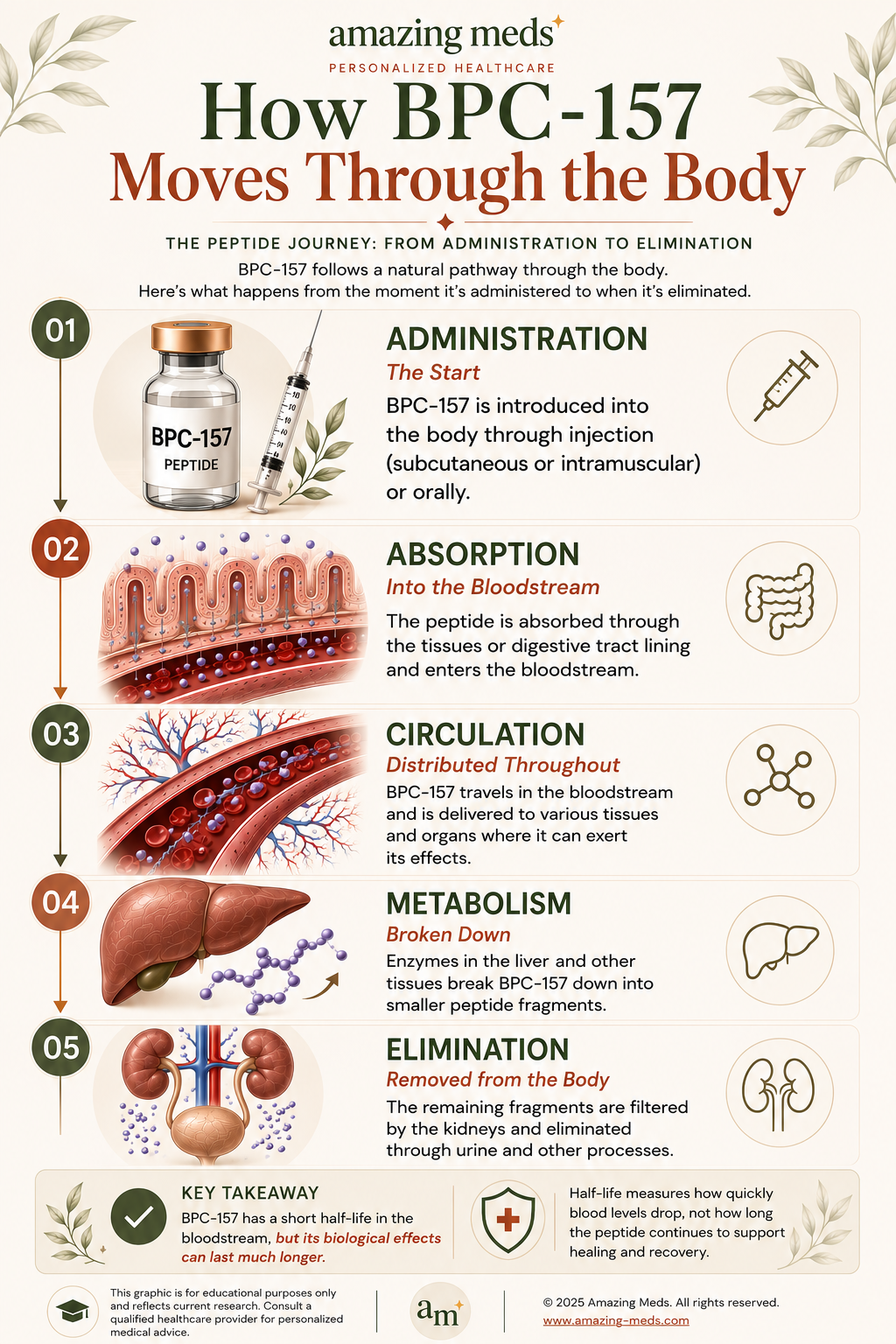
Understanding how BPC-157 moves through the body helps explain why researchers continue studying its pharmacokinetic profile and potential therapeutic applications.
Like many peptides, BPC-157 follows four general stages after administration:
1. Absorption
After administration, BPC-157 is absorbed into the body. The rate of absorption may vary depending on the route of administration, including injectable and oral formulations that have been explored in research.
Current evidence suggests absorption occurs relatively quickly, but additional human studies are needed to better understand these differences.
2. Distribution
Once absorbed, BPC-157 enters the bloodstream and is distributed throughout the body.
Researchers are investigating how the peptide interacts with several biological systems, including:
- Gastrointestinal tissues
- Tendons and ligaments
- Muscles
- Blood vessels
- Connective tissue
- Nervous system
These findings are primarily based on laboratory and animal studies.
3. Metabolism
As BPC-157 circulates through the body, it is gradually broken down into smaller peptide fragments.
Researchers continue investigating the metabolic pathways involved, including how enzymes process the peptide and how this may influence its duration of activity.
Because human pharmacokinetic data remain limited, the exact metabolic profile has not yet been fully established.
4. Elimination
Following metabolism, the remaining peptide fragments are eliminated from the body.
While researchers continue studying elimination pathways, available evidence suggests the kidneys and other normal physiological processes contribute to clearing peptide metabolites.
The elimination phase marks the reduction of measurable circulating levels but does not necessarily indicate that all biological activity has ended.
Half-Life vs. Duration of Action
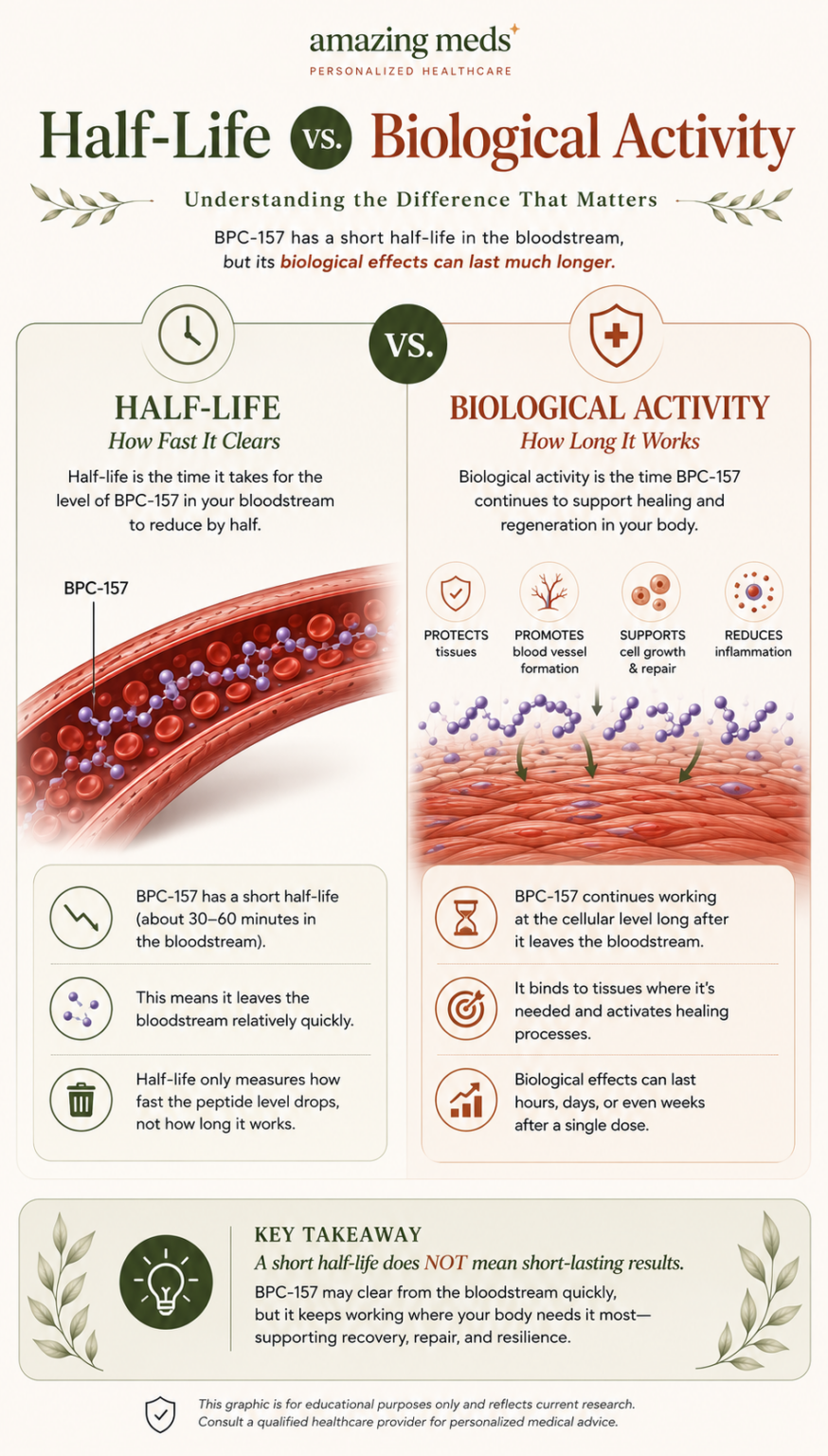
One of the most important concepts to understand is that half-life and duration of action are not the same.
Half-life describes how quickly the concentration of a peptide decreases in the bloodstream.
Duration of action refers to how long the biological effects may continue after administration.
For example, some peptides trigger cellular signaling pathways that continue even after circulating levels begin to decline. Researchers are currently investigating whether similar mechanisms may occur with BPC-157.
This distinction helps explain why treatment schedules are based on more than pharmacokinetic measurements alone.
What Does Current Research Suggest?
Current research involving BPC-157 continues to explore several important questions, including:
-
- How quickly it is absorbed
- How it is distributed throughout different tissues
- Which metabolic pathways are involved
- How long its biological effects may persist
- How different administration methods influence pharmacokinetics
Although early findings are encouraging, additional human clinical studies are needed before definitive conclusions can be made regarding optimal dosing schedules or therapeutic use.
How Amazing Meds Can Help
At Amazing Meds, every treatment plan begins with a comprehensive medical evaluation—not assumptions based on research alone.
Our licensed healthcare providers take the time to understand your health history, symptoms, recovery goals, and overall wellness before discussing whether peptide therapy may be appropriate for your individual situation.
We believe personalized care leads to better-informed treatment decisions and long-term health outcomes.
Why Choose Amazing Meds?
Personalized Care
Every treatment plan is tailored to your unique medical history, symptoms, and wellness goals.
Evidence-Based Guidance
Our providers stay informed on current medical research and discuss peptide therapy using an evidence-based approach.
Ongoing Medical Support
Your care doesn’t end after the first appointment. Regular follow-up visits help monitor progress and adjust your treatment plan when appropriate.
Convenient Telehealth
Eligible patients can consult with a licensed healthcare provider from the comfort of home through secure telehealth appointments.
What to Expect During Your Consultation
1. Medical Evaluation
Your provider will review your symptoms, medical history, medications, and health objectives.
2. Treatment Discussion
You’ll discuss available treatment options, including whether peptide therapy may be appropriate based on your individual needs.
3. Personalized Plan
If recommended, your provider will develop a treatment plan designed around your health goals and ongoing monitoring.
4. Follow-Up Care
Routine follow-up appointments allow your provider to assess your progress and make adjustments when needed.
Conclusion
Understanding BPC-157’s half-life can provide helpful insight into how researchers believe the peptide behaves within the body. However, half-life represents only one aspect of its pharmacokinetic profile.
Current evidence suggests that BPC-157’s biological effects may not always correspond directly to its circulating concentration, highlighting the importance of distinguishing between half-life and duration of biological activity.
Because human research remains limited, anyone considering peptide therapy should consult a licensed healthcare provider who can explain the available evidence and recommend an individualized treatment approach based on their unique health needs.
Learn More About Personalized Peptide Therapy
Whether you’re exploring BPC-157 for the first time or simply looking to better understand how peptide therapy works, Amazing Meds is here to provide evidence-based guidance tailored to your health goals.
Frequently Asked Questions
What is the half-life of BPC-157?
The exact half-life of BPC-157 in humans has not been firmly established. Most available pharmacokinetic information comes from laboratory and animal studies, and additional human research is needed.
Does a short half-life mean BPC-157 stops working quickly?
Not necessarily. A peptide’s half-life reflects how quickly its concentration decreases in the bloodstream, while biological activity may continue after circulating levels decline.
Does the route of administration affect half-life?
It may. Injectable and oral formulations can have different absorption characteristics, but more clinical research is needed to determine how these differences influence pharmacokinetics in humans.
Is BPC-157 FDA approved?
No. BPC-157 is not approved by the U.S. Food and Drug Administration (FDA) to diagnose, treat, cure, or prevent any disease.
Should dosing be based only on half-life?
No. Healthcare providers consider many factors, including your medical history, treatment goals, clinical response, and current scientific evidence when developing a personalized treatment plan.
Research Resources
-
- FDA – Compounding Safety Information
https://www.fda.gov/drugs/human-drug-compounding/certain-bulk-drug-substances-use-compounding-may-present-significant-safety-risks - PMC – Pharmacokinetics, Distribution, Metabolism and Excretion of BPC-157
https://pmc.ncbi.nlm.nih.gov/articles/PMC9794587/ - PubMed – BPC-157 and Musculoskeletal Healing
https://pubmed.ncbi.nlm.nih.gov/30915550/ - PMC – Narrative Review of BPC-157
https://pmc.ncbi.nlm.nih.gov/articles/PMC12446177/ - PMC – Multifunctionality and Medical Applications of BPC-157
https://pmc.ncbi.nlm.nih.gov/articles/PMC11859134/
- FDA – Compounding Safety Information