
Peptide therapy has become an area of growing interest in regenerative medicine, with researchers exploring how certain peptides may support tissue repair, recovery, and overall wellness.
Among the most discussed are BPC-157 and TB-500. While both peptides are commonly associated with healing and recovery, they differ in their origins, proposed mechanisms, and areas of research.
If you’re comparing BPC-157 vs TB-500, this guide explains how each peptide works, the conditions they’re being studied for, their potential differences, and why a personalized medical evaluation is important before considering peptide therapy.
Looking for Personalized Peptide Therapy?
Every patient has unique health goals. A licensed healthcare provider can review your symptoms, medical history, and treatment objectives to determine whether peptide therapy may be appropriate for you.
What Are BPC-157 and TB-500?
BPC-157: A Naturally Inspired Healing Peptide
BPC-157 (Body Protection Compound-157) is a synthetic peptide derived from a protective protein associated with gastric juice. It has attracted significant research interest because of its potential role in tissue repair, gastrointestinal health, blood vessel formation, and recovery following injury.
Preclinical studies suggest BPC-157 may influence several biological pathways involved in healing, although robust human clinical evidence remains limited.
TB-500: A Synthetic Version of Thymosin Beta-4
TB-500 is a synthetic peptide modeled after Thymosin Beta-4, a naturally occurring protein found throughout the body that plays a role in cell migration and tissue repair.
Researchers have explored TB-500 for its potential involvement in muscle recovery, connective tissue healing, inflammation, and cellular repair. Like BPC-157, most available evidence comes from laboratory and animal studies.
How Do BPC-157 and TB-500 Work?
Proposed Mechanisms of BPC-157
Researchers continue investigating several biological pathways that may explain BPC-157’s potential effects.
Current research suggests BPC-157 may:
-
- Support angiogenesis (formation of new blood vessels)
- Influence collagen production involved in tissue repair
- Help regulate inflammatory signaling
- Support gastrointestinal lining integrity
- Promote cellular repair processes after injury
These proposed mechanisms are primarily based on preclinical research and require additional human clinical investigation.
Proposed Mechanisms of TB-500
TB-500 has been studied for its potential effects on cellular movement and tissue remodeling.
Researchers have explored whether TB-500 may:
-
- Support cell migration during tissue repair
- Influence inflammatory responses
- Promote flexibility and mobility during recovery
- Assist muscle and connective tissue healing
- Support recovery following physical injury
More human studies are needed before these proposed mechanisms can be confirmed clinically.
Key Differences Between BPC-157 and TB-500
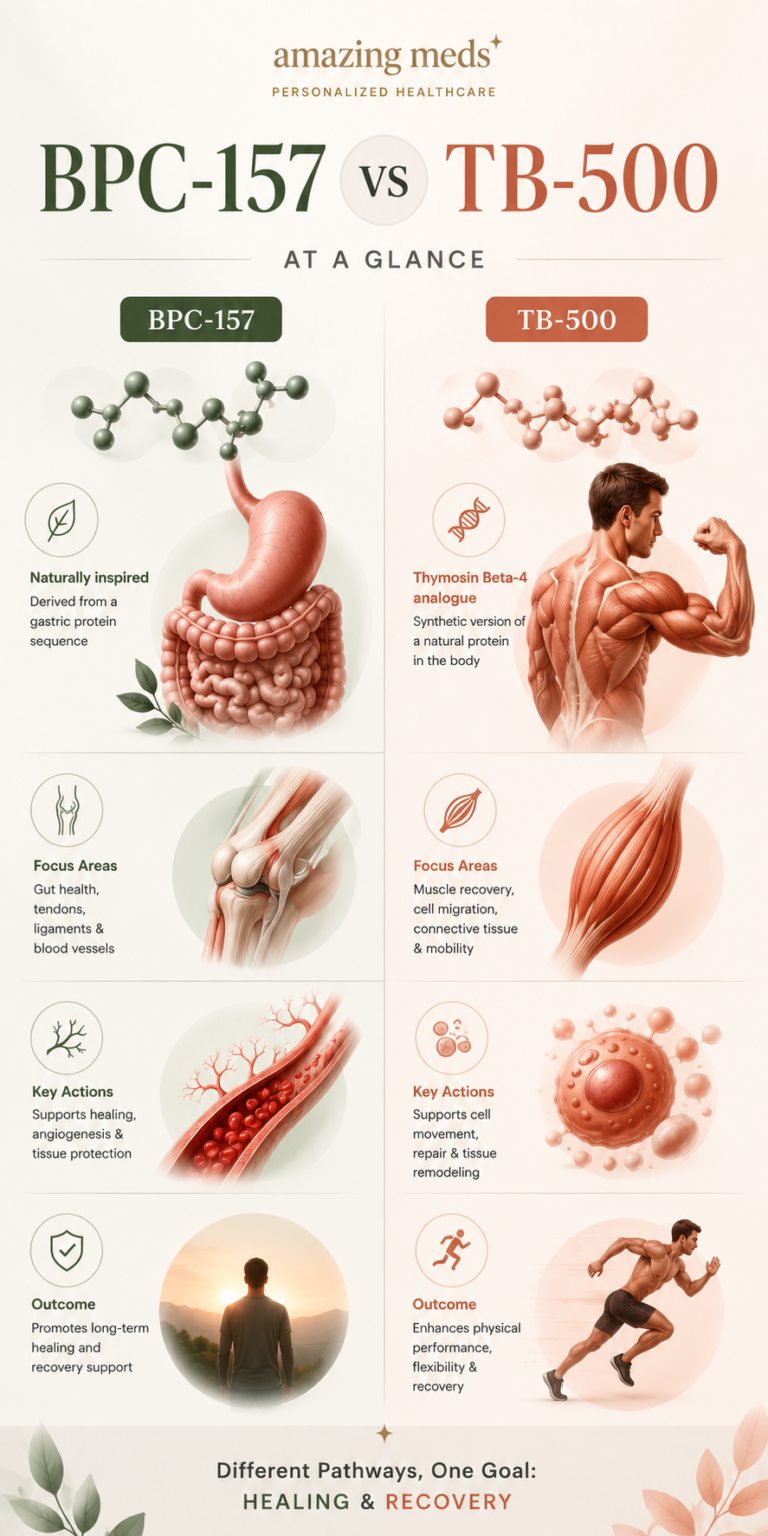
Although BPC-157 and TB-500 share some overlapping areas of research, they differ in their biological origins and the conditions researchers commonly investigate.
| Feature | BPC-157 | TB-500 |
|---|---|---|
| Origin | Synthetic peptide based on a gastric protein sequence | Synthetic version of Thymosin Beta-4 |
| Primary Research Focus | Gut health, tendons, ligaments, tissue repair | Muscles, connective tissue, mobility |
| Proposed Mechanisms | Angiogenesis, collagen support, gastrointestinal protection | Cell migration, tissue remodeling, inflammation |
| Administration | Oral or injectable formulations have been studied | Typically studied as an injectable peptide |
| Current Evidence | Primarily laboratory and animal research | Primarily laboratory and animal research |
| FDA Status | Not FDA-approved | Not FDA-approved |
Primary Uses Being Studied
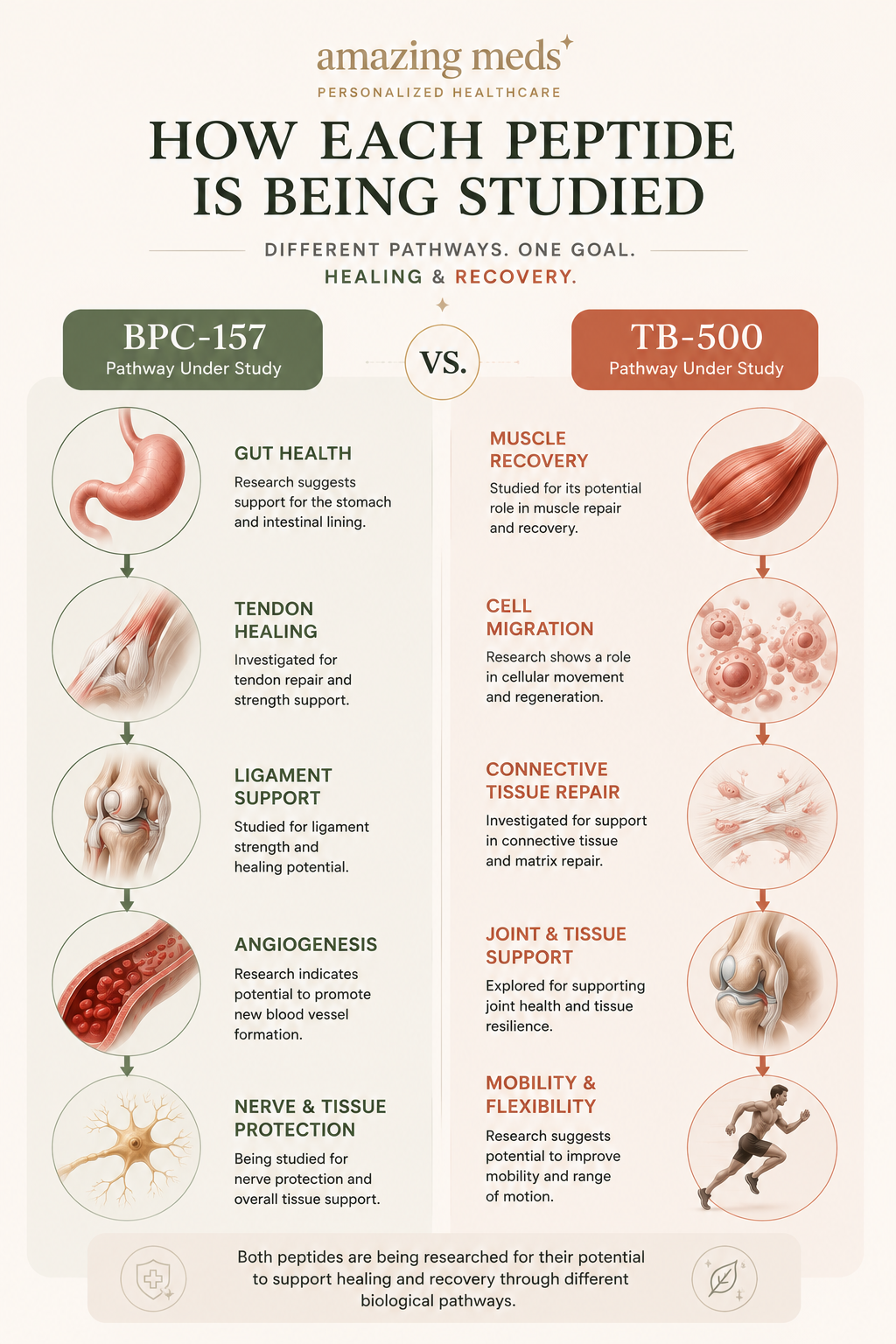
BPC-157 Research Applications
Researchers have explored BPC-157 in studies involving:
-
- Tendon and ligament recovery
- Gastrointestinal health
- Muscle recovery
- Skin and soft tissue repair
- Nerve regeneration
- Blood vessel formation
While early findings are promising, these applications remain investigational.
TB-500 Research Applications
Current research has investigated TB-500 in relation to:
-
- Muscle recovery
- Joint and tendon healing
- Inflammatory responses
- Mobility following injury
- Connective tissue repair
Most of these findings come from animal models and require further validation in humans.
Can BPC-157 and TB-500 Be Used Together?
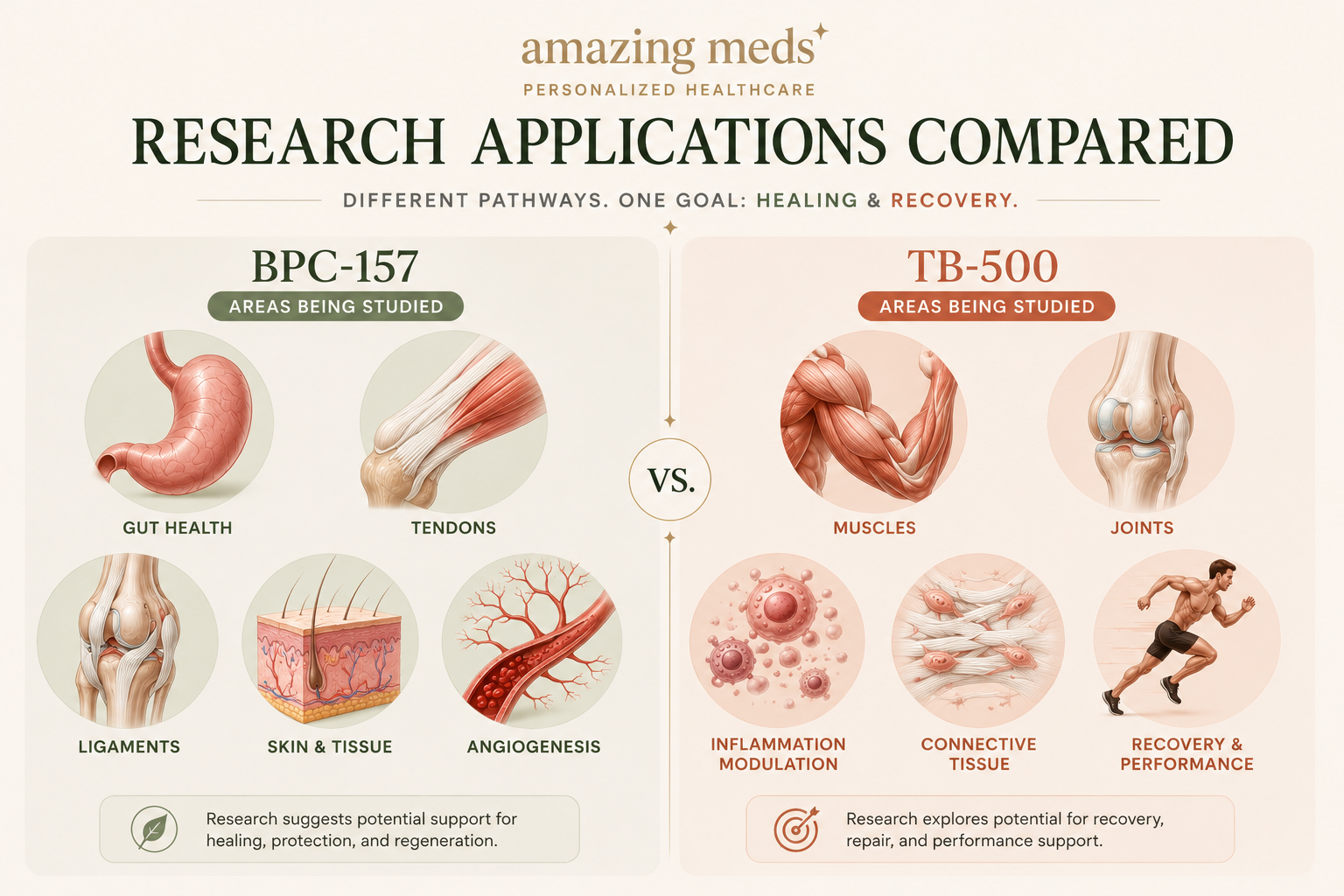
Because BPC-157 and TB-500 are being studied for different biological pathways, some researchers have explored whether they may have complementary roles in tissue repair and recovery.
For example, BPC-157 has primarily been investigated for its potential effects on gastrointestinal health, tendons, ligaments, and blood vessel formation, while TB-500 has been studied for muscle recovery, connective tissue remodeling, and cellular migration.
Although these differences have led to interest in combining the two peptides, there is currently insufficient human clinical evidence to confirm that using them together provides superior outcomes. Additional research is needed to better understand their safety, effectiveness, and potential interactions.
Any decision regarding peptide therapy should be made in consultation with a licensed healthcare provider who can recommend an individualized treatment approach based on your medical history and health goals.
How Amazing Meds Can Help
At Amazing Meds, we believe personalized care is the foundation of successful treatment. Rather than recommending a one-size-fits-all approach, our licensed healthcare providers take the time to understand your symptoms, medical history, lifestyle, and long-term wellness goals.
Whether you’re recovering from an injury, looking to improve mobility, or exploring peptide therapy as part of a broader wellness plan, we’re here to guide you with evidence-based recommendations tailored to your needs.
Why Choose Amazing Meds?
Personalized Treatment Plans
Every patient receives an individualized evaluation to determine the most appropriate treatment options based on their health concerns and goals.
High-Quality Care
Our providers stay informed on the latest medical research and prioritize patient safety when discussing peptide therapy and other wellness treatments.
Ongoing Medical Support
Healthcare is an ongoing journey. We provide continued follow-up appointments to monitor your progress, answer questions, and adjust your treatment plan when appropriate.
Convenient Telehealth Visits
Eligible patients can meet with a licensed healthcare provider through secure telehealth appointments from the comfort of home.
What to Expect During Your Consultation
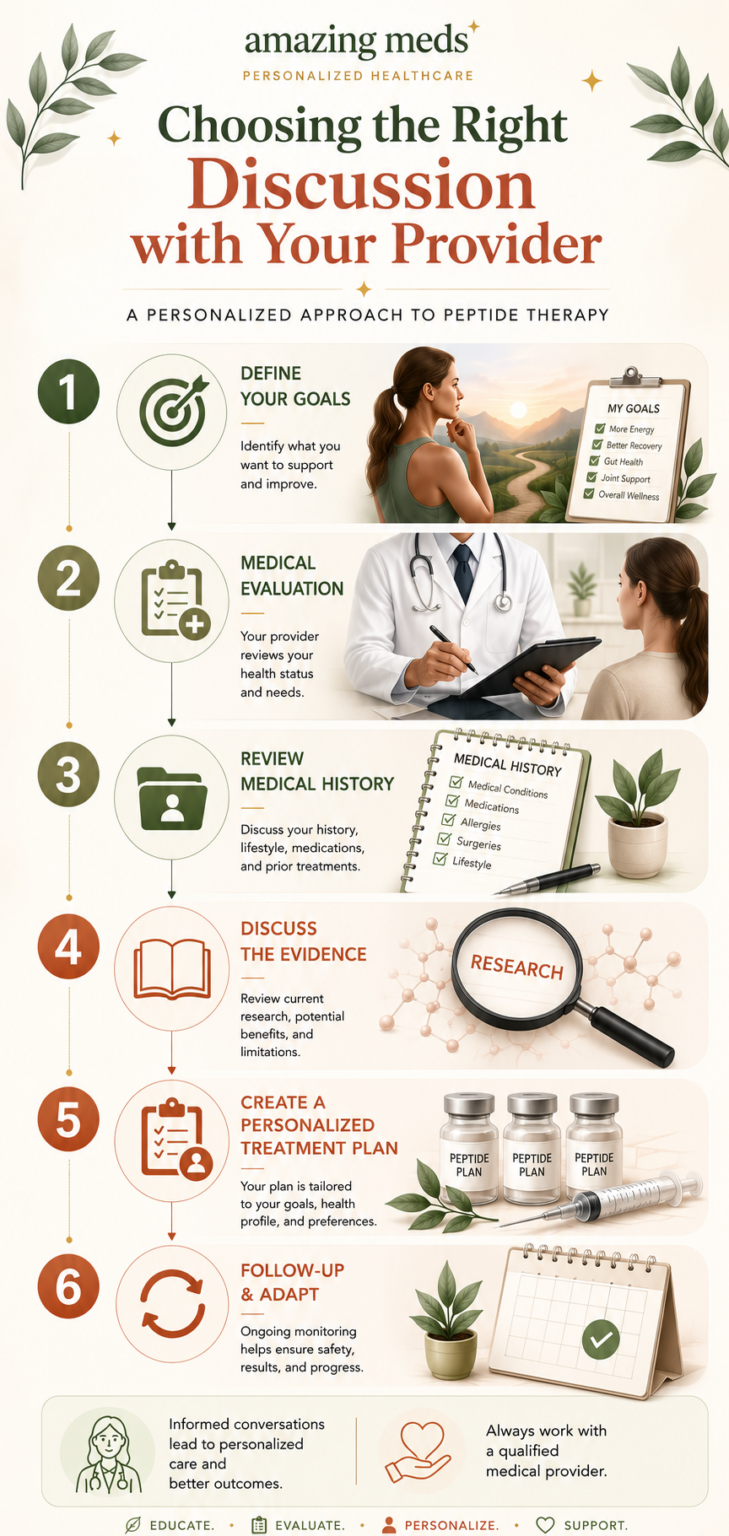
1. Comprehensive Medical Evaluation
Your provider will review your symptoms, medical history, current medications, lifestyle, and wellness objectives.
2. Personalized Discussion
Based on your evaluation, you’ll discuss treatment options that may include hormone optimization, lifestyle modifications, peptide therapy where appropriate, or other evidence-based approaches.
3. Customized Treatment Plan
If peptide therapy is considered appropriate, your provider will develop a personalized treatment plan based on your unique health needs.
4. Ongoing Follow-Up
Regular follow-up appointments allow your provider to monitor your progress and make adjustments as needed to support your long-term health.
Conclusion
BPC-157 and TB-500 are two of the most widely discussed peptides in regenerative medicine research. While both have been investigated for their potential roles in healing and recovery, they differ in their biological origins, proposed mechanisms, and areas of scientific interest.
Current evidence remains largely limited to laboratory and animal studies, and more high-quality human clinical trials are needed to better understand their safety, effectiveness, and potential therapeutic applications.
If you’re considering peptide therapy, a personalized medical evaluation is the best place to start. A licensed healthcare provider can review your health history, discuss the available evidence, and recommend treatment options that align with your individual needs and wellness goals.
Explore Your Peptide Therapy Options
Whether you’re interested in BPC-157, TB-500, or other peptide therapies, Amazing Meds provides personalized, evidence-based care designed around your unique health goals.
Frequently Asked Questions
Is BPC-157 better than TB-500?
Neither peptide has been proven to be superior. They are being studied for different biological processes, and the appropriate approach depends on your individual health goals and your provider’s clinical evaluation.
Can BPC-157 and TB-500 be combined?
Some clinicians and researchers have explored using both peptides because they may target different aspects of tissue repair. However, high-quality human clinical evidence supporting combination therapy remains limited.
Are BPC-157 and TB-500 FDA approved?
No. Neither BPC-157 nor TB-500 is approved by the U.S. Food and Drug Administration (FDA) to diagnose, treat, cure, or prevent any disease.
Which peptide is being studied for gut health?
BPC-157 has been more commonly investigated in gastrointestinal research, particularly in laboratory and animal studies involving the stomach and intestinal lining.
Which peptide is being studied for muscle recovery?
TB-500 has attracted research interest for its potential role in muscle recovery, connective tissue repair, and mobility. However, these findings are largely based on preclinical research.
Are these peptides safe?
The long-term safety and effectiveness of BPC-157 and TB-500 in humans have not been fully established. Anyone considering peptide therapy should consult a licensed healthcare provider before beginning treatment.
Research Resources
-
- FDA – Compounding Safety Information
https://www.fda.gov/drugs/human-drug-compounding/certain-bulk-drug-substances-use-compounding-may-present-significant-safety-risks - PubMed – BPC-157 and Musculoskeletal Healing
https://pubmed.ncbi.nlm.nih.gov/30915550/ - PMC – Narrative Review of BPC-157
https://pmc.ncbi.nlm.nih.gov/articles/PMC12446177/ - PubMed – Thymosin Beta-4 in Tissue Repair
https://pubmed.ncbi.nlm.nih.gov/18688070/ - PMC – Multifunctionality and Medical Applications of BPC-157
https://pmc.ncbi.nlm.nih.gov/articles/PMC11859134/
- FDA – Compounding Safety Information