

Pentadeca Arginate is an investigational peptide that has gained attention in regenerative medicine for its potential role in supporting tissue repair, recovery, and overall healing. Researchers continue to study how this peptide may influence the body’s natural repair processes, particularly in areas such as musculoskeletal recovery, inflammation, and gastrointestinal health.
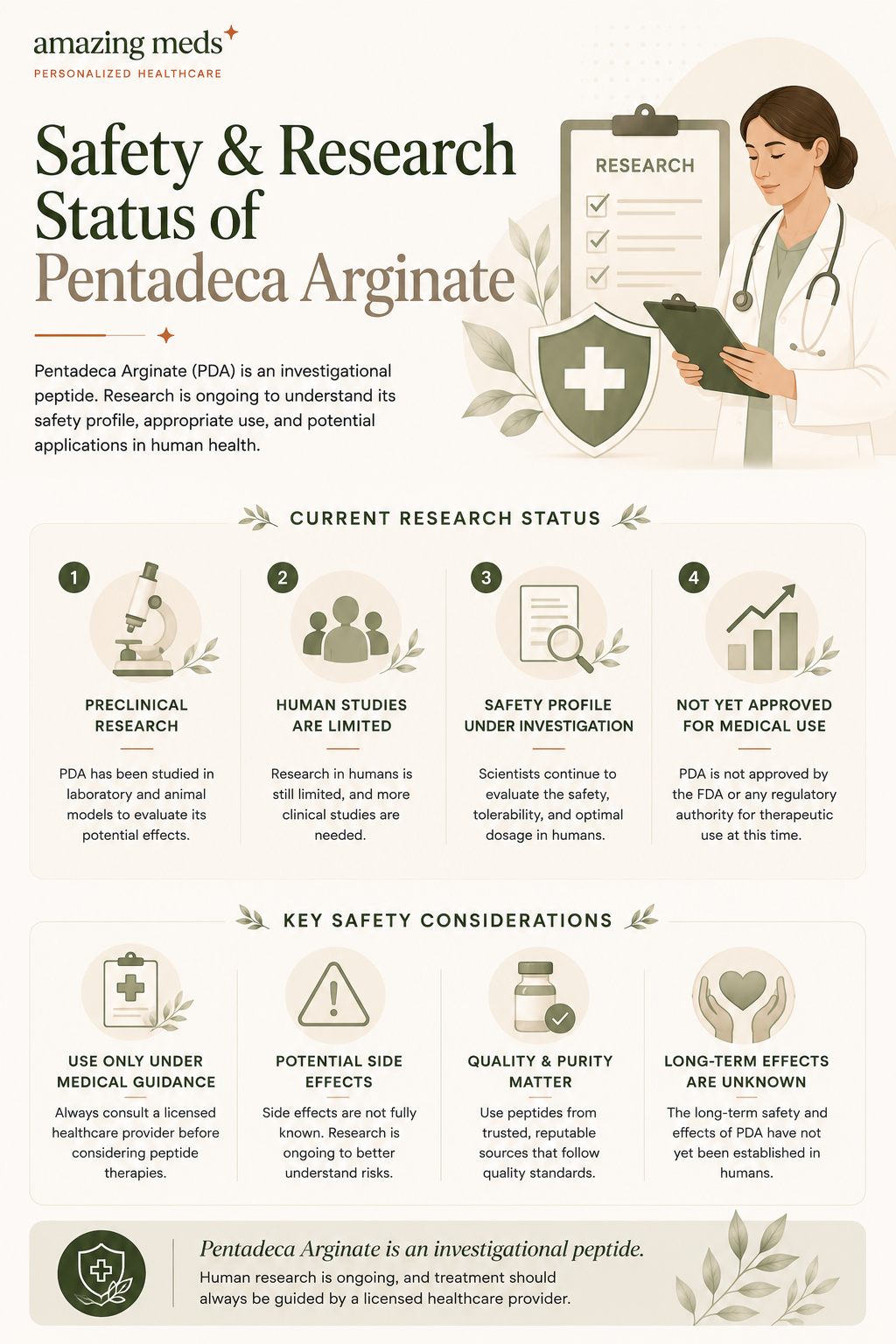
Although interest in Pentadeca Arginate has grown, much of the available evidence comes from laboratory and preclinical studies. Human clinical research is still evolving, meaning many proposed benefits require further investigation before definitive conclusions can be made.
This guide explains what Pentadeca Arginate is, how it may work, the potential applications currently being explored, and how to pursue peptide therapy safely under the supervision of a licensed healthcare provider.
Looking for Personalized Peptide Therapy?
If you’re interested in learning whether peptide therapy may be appropriate for your health goals, the first step is a comprehensive medical evaluation. A licensed provider can review your medical history, symptoms, and treatment objectives to determine whether peptide therapy fits into your personalized care plan.
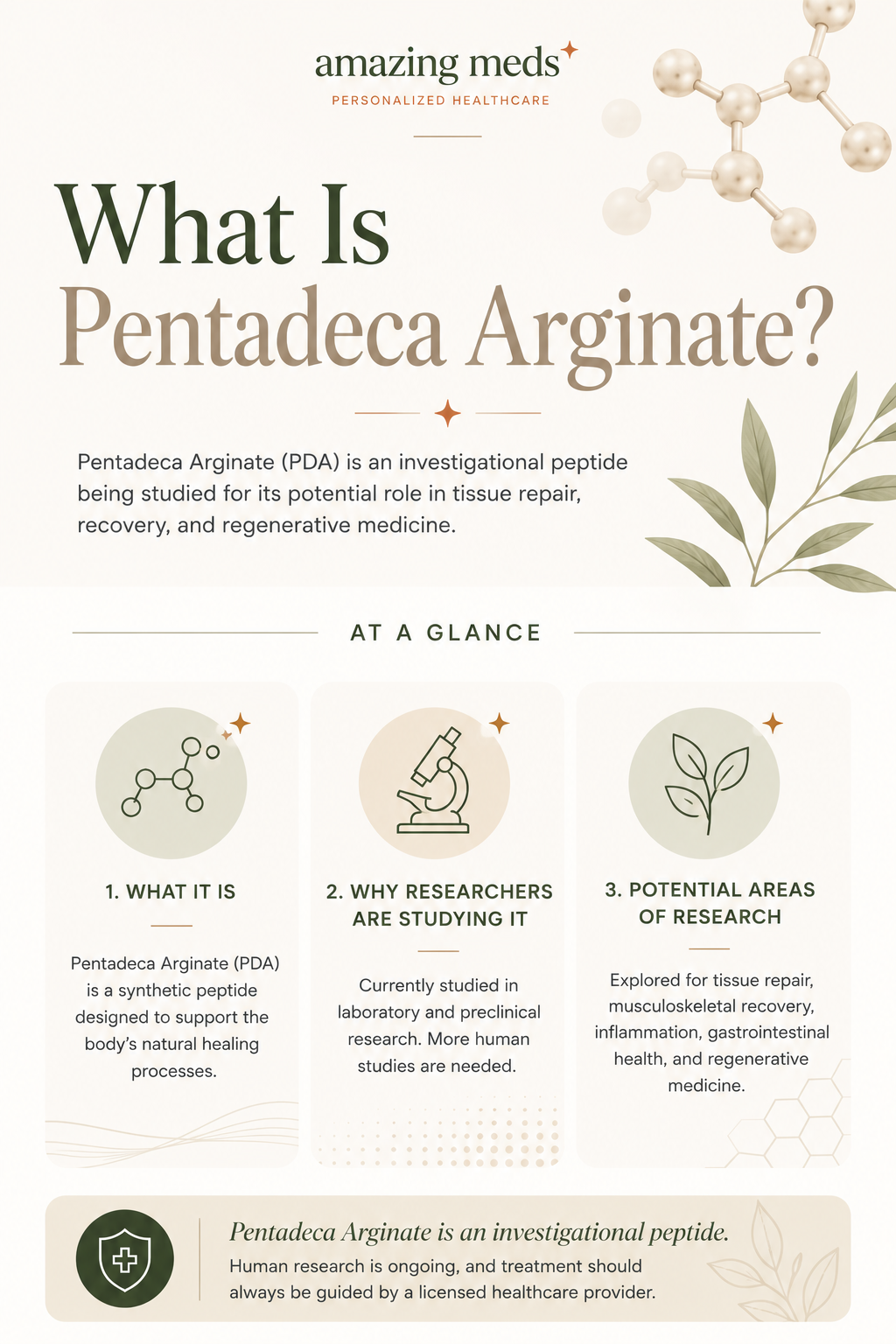
What Is Pentadeca Arginate (PDA)?
Pentadeca Arginate (PDA) is a synthetic peptide designed to support the body’s natural healing processes. It belongs to a growing class of investigational peptides that researchers are studying for their potential regenerative properties and possible therapeutic applications.
Like many peptides, Pentadeca Arginate consists of a sequence of amino acids that may interact with biological signaling pathways involved in tissue maintenance and repair. Researchers are investigating whether these interactions could help support recovery following injury or physical stress.
Current research has explored Pentadeca Arginate in areas including:
-
- Tissue repair
- Musculoskeletal recovery
- Gastrointestinal health
- Inflammatory responses
- Cellular regeneration
While these findings are encouraging, larger human clinical trials are still needed to better understand its safety, effectiveness, and long-term therapeutic role.
How Does Pentadeca Arginate Work?
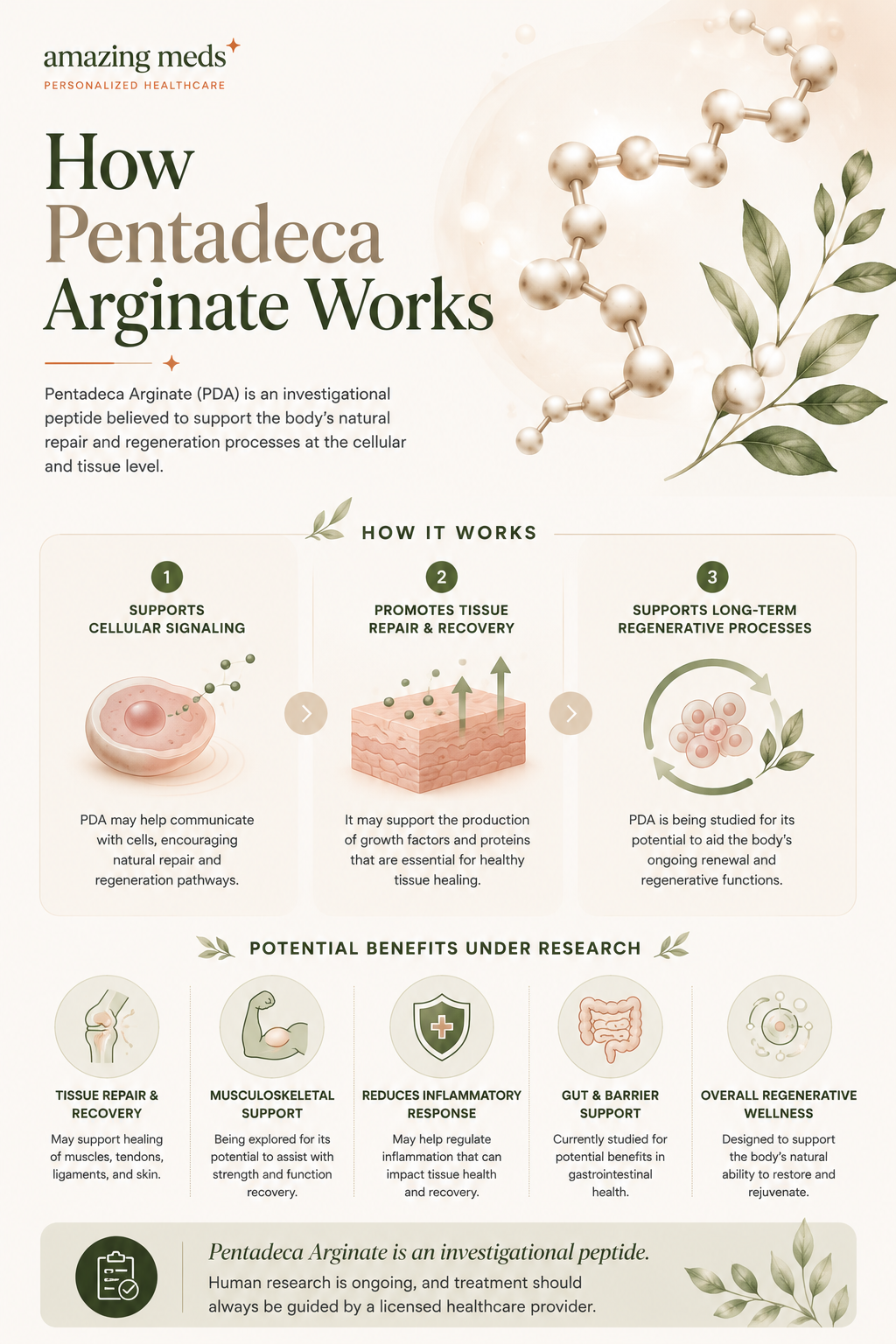
Researchers believe Pentadeca Arginate may influence several biological processes involved in tissue healing and recovery. Although the exact mechanisms continue to be investigated, current studies suggest the peptide may support communication between cells involved in repair and regeneration.
Rather than acting as a traditional medication that targets a single pathway, Pentadeca Arginate is believed to interact with multiple biological systems associated with healing. These mechanisms remain an active area of scientific research.
Proposed Mechanisms
Current research suggests Pentadeca Arginate may:
-
- Support cellular communication involved in tissue repair
- Help regulate inflammatory responses following injury
- Encourage blood vessel formation that supports tissue recovery
- Promote healthy collagen production during the healing process
- Support regeneration of muscles, tendons, ligaments, and connective tissues
These proposed mechanisms are based primarily on preclinical research, and additional human studies are needed to confirm their clinical significance.
Potential Applications
Researchers continue exploring Pentadeca Arginate across several areas of regenerative medicine.
Current investigations include:
-
- Soft tissue injuries
- Tendon and ligament recovery
- Joint support
- Exercise recovery
- Gastrointestinal healing
- Chronic inflammatory conditions
These applications remain investigational, and Pentadeca Arginate has not been established as a standard treatment for these conditions.
Key Uses of Pentadeca Arginate
Although research is ongoing, Pentadeca Arginate is most commonly discussed for its potential role in supporting recovery and tissue health.
1. Supporting Tissue Repair
Healthy tissue repair is essential after injury, surgery, or repetitive physical stress.
Researchers are studying whether Pentadeca Arginate may support the body’s natural healing response by promoting cellular activity involved in tissue regeneration. Early findings have generated interest in its possible role in musculoskeletal recovery, although additional human studies are required.
2. Supporting Healthy Inflammatory Responses
Inflammation is a normal part of healing, but prolonged or excessive inflammation may delay recovery.
Preclinical research suggests Pentadeca Arginate may help regulate inflammatory signaling pathways involved in tissue repair. Researchers continue investigating how these effects may translate into clinical practice.
3. Supporting Joint Health
Joints, ligaments, and connective tissues experience ongoing stress through daily movement and physical activity.
Pentadeca Arginate is being studied for its potential to support connective tissue health and recovery, particularly following overuse or injury. Current evidence remains limited, and more human research is needed to determine its effectiveness.
4. Supporting Recovery in Active Individuals
Athletes and physically active individuals often seek strategies to optimize recovery between training sessions.
Researchers are exploring whether Pentadeca Arginate may support normal recovery processes by promoting tissue repair and maintaining healthy inflammatory responses. It should not be viewed as a replacement for appropriate training, nutrition, or medical care.
5. Research Into Chronic Conditions
Scientists are also investigating whether Pentadeca Arginate may have broader applications in regenerative medicine.
Areas of ongoing research include:
-
- Chronic musculoskeletal conditions
- Degenerative tissue disorders
- Gastrointestinal health
- Long-term inflammatory processes
Because these studies are still developing, Pentadeca Arginate should be considered an investigational therapy rather than an established treatment.
Potential Benefits of Pentadeca Arginate
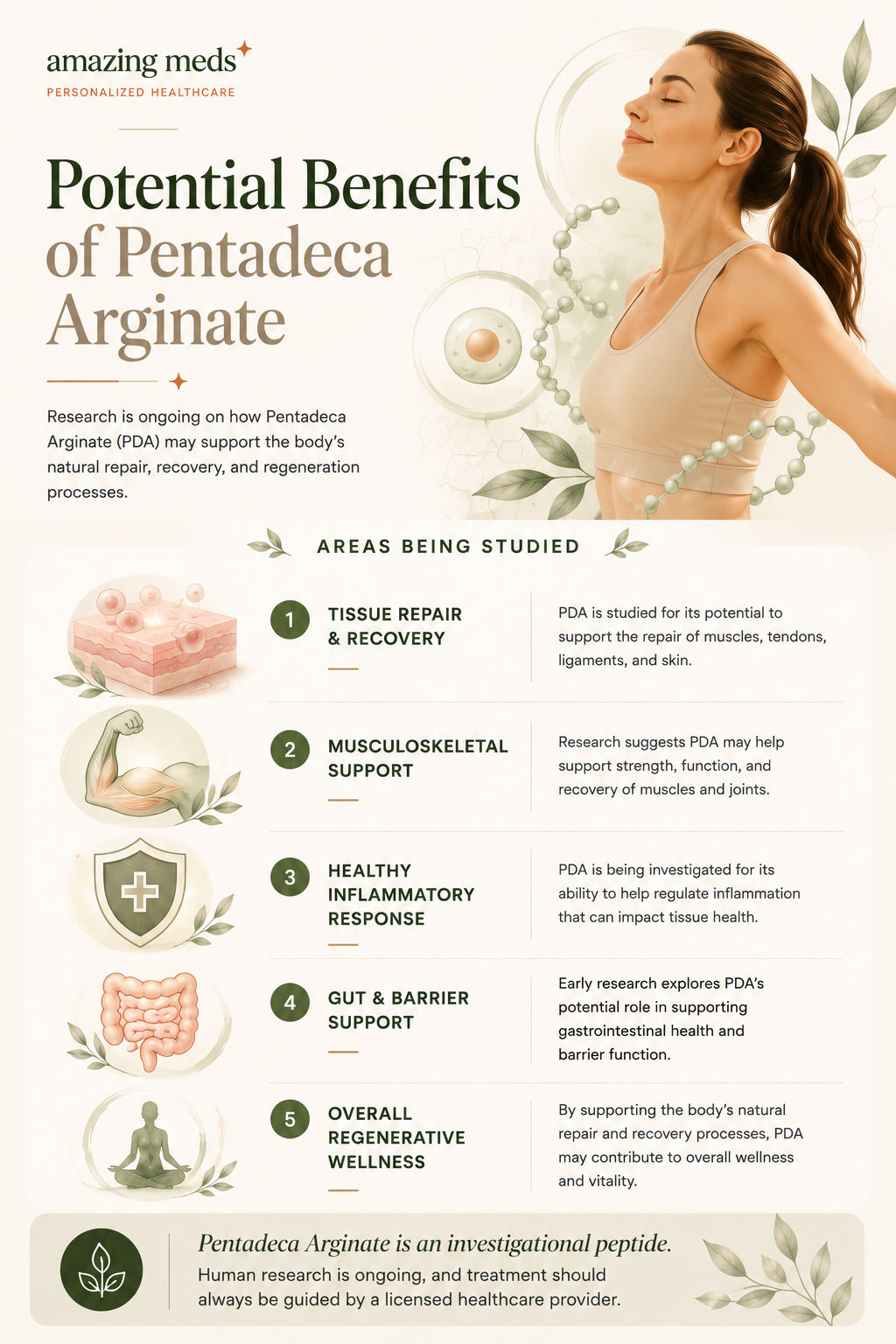
Current research has identified several areas where Pentadeca Arginate may offer therapeutic potential. While evidence continues to evolve, researchers are studying its possible role in supporting:
Faster Tissue Recovery
By promoting biological processes involved in tissue repair, Pentadeca Arginate may help support the body’s natural recovery response following injury or physical stress.
Healthy Inflammatory Balance
Maintaining a balanced inflammatory response is an important part of healing. Researchers continue investigating how Pentadeca Arginate may influence these pathways.
Joint and Connective Tissue Support
Research is exploring whether Pentadeca Arginate may help maintain healthy connective tissues, including tendons, ligaments, and cartilage.
Gastrointestinal Health
Some early studies suggest Pentadeca Arginate may support gastrointestinal tissue integrity and recovery, though additional clinical research is needed.
Research Into Cellular Regeneration
Investigators continue exploring how Pentadeca Arginate may interact with cellular pathways involved in regeneration and tissue maintenance.
How to Get Pentadeca Arginate Safely
If you’re considering Pentadeca Arginate, it’s important to approach peptide therapy under the guidance of a licensed healthcare provider. Because Pentadeca Arginate remains an investigational peptide, professional medical oversight helps ensure that treatment decisions are based on your individual health needs and the latest available evidence.
Working with a qualified provider also helps reduce the risks associated with unregulated products, improper dosing, or self-administration.
Prescription and Medical Oversight
Peptide therapy should always begin with a comprehensive medical evaluation.
During your consultation, your provider may review:
-
- Your medical history
- Current medications and supplements
- Symptoms and treatment goals
- Previous injuries or chronic conditions
- Lifestyle factors that may influence recovery
Based on this assessment, your provider can determine whether peptide therapy may be appropriate for your individual situation and discuss realistic expectations based on current research.
Quality and Sourcing
Not all peptide products are manufactured to the same standards.
Choosing a reputable medical provider helps ensure that any prescribed peptide is sourced from trusted compounding pharmacies or manufacturers that follow appropriate quality and safety standards.
Using products from unverified online vendors may increase the risk of contamination, inaccurate dosing, or counterfeit ingredients.
Administration Methods
Depending on your personalized treatment plan, Pentadeca Arginate may be administered using different methods.
Your healthcare provider will determine the most appropriate approach based on factors such as:
-
- Your medical condition
- Treatment goals
- Clinical response
- Safety considerations
Administration instructions should always be followed exactly as prescribed. Do not change your dosage or treatment schedule without consulting your provider.
Monitoring and Follow-Up
Peptide therapy is not a one-time decision—it requires ongoing evaluation.
Regular follow-up appointments allow your provider to:
-
- Monitor your progress
- Assess your response to treatment
- Identify any side effects or concerns
- Adjust your treatment plan when appropriate
Routine monitoring helps ensure that therapy continues to align with your health goals while maintaining patient safety.
Who May Be a Candidate for Pentadeca Arginate?
Researchers continue exploring Pentadeca Arginate for a variety of potential applications in regenerative medicine. A healthcare provider may consider peptide therapy for individuals based on their unique medical history and treatment objectives.
People who may discuss Pentadeca Arginate with their provider include those who are interested in:
-
- Supporting recovery after musculoskeletal injuries
- Maintaining healthy joints and connective tissues
- Optimizing recovery from physical activity
- Exploring regenerative medicine options
- Supporting gastrointestinal health as part of a broader treatment plan
Eligibility depends on your overall health, current medications, medical history, and individual treatment goals.
Tips for Supporting Your Treatment Plan
Peptide therapy is most effective when combined with healthy lifestyle habits and ongoing medical supervision.
Maintain a Healthy Lifestyle
Recovery involves more than one treatment.
Supporting your overall health through balanced nutrition, regular physical activity, quality sleep, and stress management may help promote the body’s natural healing processes.
Follow Your Provider’s Instructions
Take Pentadeca Arginate exactly as prescribed.
Avoid increasing your dose or changing your treatment schedule without discussing it with your healthcare provider.
Consistency and appropriate monitoring are important parts of any treatment plan.
Attend Follow-Up Appointments
Regular check-ins allow your provider to evaluate your progress and determine whether adjustments are needed.
These visits also provide an opportunity to discuss new symptoms, recovery goals, or questions about your treatment.
Report Any Side Effects
Although research on Pentadeca Arginate continues to evolve, it’s important to notify your provider if you experience any unexpected symptoms during treatment.
Prompt communication helps ensure that any concerns are evaluated appropriately and allows your provider to make changes if necessary.
What's Next? Understanding Regenerative Medicine
Regenerative medicine is an evolving field focused on supporting the body’s natural repair mechanisms.
Researchers continue studying investigational peptides such as Pentadeca Arginate to better understand how they may influence tissue repair, inflammation, and recovery. While early findings are promising, many potential applications still require larger, well-designed human clinical trials.
As scientific knowledge grows, healthcare providers can help patients interpret emerging research and determine whether peptide therapy fits within a personalized treatment strategy.
Conclusion
Pentadeca Arginate is an emerging peptide that has attracted interest for its potential role in regenerative medicine, tissue repair, and recovery. While early laboratory and preclinical research has identified several promising areas of investigation, robust human clinical evidence remains limited.
Anyone considering Pentadeca Arginate should work closely with a licensed healthcare provider who can explain the current evidence, discuss potential risks and benefits, and develop a personalized treatment plan based on individual health needs.
As research continues to evolve, Pentadeca Arginate may offer new insights into regenerative medicine, but it should be approached with informed expectations and appropriate medical supervision.
Explore Personalized Peptide Therapy
If you’re interested in learning whether peptide therapy may be right for you, Amazing Meds offers personalized consultations with licensed healthcare providers who can evaluate your health goals and discuss evidence-based treatment options.
Frequently Asked Questions
What is Pentadeca Arginate, and how is it related to BPC-157?
Pentadeca Arginate is an investigational peptide being studied for its potential regenerative properties. It is often discussed alongside BPC-157 because both are being researched for tissue repair and recovery. However, they are distinct compounds, and more clinical research is needed to fully understand their similarities and differences.
What are the potential advantages of Pentadeca Arginate?
Researchers are investigating whether Pentadeca Arginate may support tissue repair, healthy inflammatory responses, joint health, and gastrointestinal recovery. These potential benefits remain under investigation and have not been conclusively established in large human clinical trials.
Can Pentadeca Arginate support healing?
Early laboratory and preclinical studies suggest Pentadeca Arginate may influence biological pathways involved in tissue repair. However, additional human research is necessary before definitive conclusions can be made regarding its effectiveness.
What administration methods are used?
Your healthcare provider will recommend the administration method that best aligns with your treatment plan. You should only use Pentadeca Arginate according to professional medical guidance.
How soon might results be noticed?
Individual experiences vary depending on the reason for treatment, overall health, and other factors. Because research is still developing, there is no established timeline that applies to every patient.
Are there any potential side effects?
Current information remains limited. As with any medical treatment, potential side effects should be discussed with your healthcare provider before beginning therapy. Ongoing monitoring helps identify and manage any concerns that arise during treatment.
How can I access Pentadeca Arginate?
If your provider believes peptide therapy may be appropriate, they can discuss available treatment options and explain how therapy is obtained through legitimate medical channels.
Who may be a good candidate?
Eligibility varies from person to person. A comprehensive medical evaluation is the best way to determine whether Pentadeca Arginate aligns with your health goals and medical history.
Research Resources
-
- FDA – Human Drug Compounding Information
https://www.fda.gov/drugs/human-drug-compounding - PubMed – Peptides in Regenerative Medicine
https://pubmed.ncbi.nlm.nih.gov/ - PubMed Central (PMC) – Advances in Regenerative Peptide Research
https://pmc.ncbi.nlm.nih.gov/ - National Institutes of Health (NIH) – Peptide Therapeutics Overview
https://www.nih.gov/ - American Academy of Orthopaedic Surgeons – Tissue Healing Resources
https://orthoinfo.aaos.org/
- FDA – Human Drug Compounding Information