
By Dr. Jennifer Frangos, D.O. Updated November 2026.
Semaglutide has quickly become one of the most talked-about medications in weight management. It is the active ingredient in Ozempic® and Wegovy®, and it works on one of the biggest challenges in weight loss: controlling hunger.
Unlike many traditional weight loss approaches that rely only on willpower, semaglutide works with your body’s natural appetite-regulation system. It mimics a hormone called GLP-1, which can help you feel fuller for longer, eat less, and better manage cravings.
In this guide, we explain the science behind semaglutide in simple terms and how it supports weight loss.
How Does Semaglutide Work?
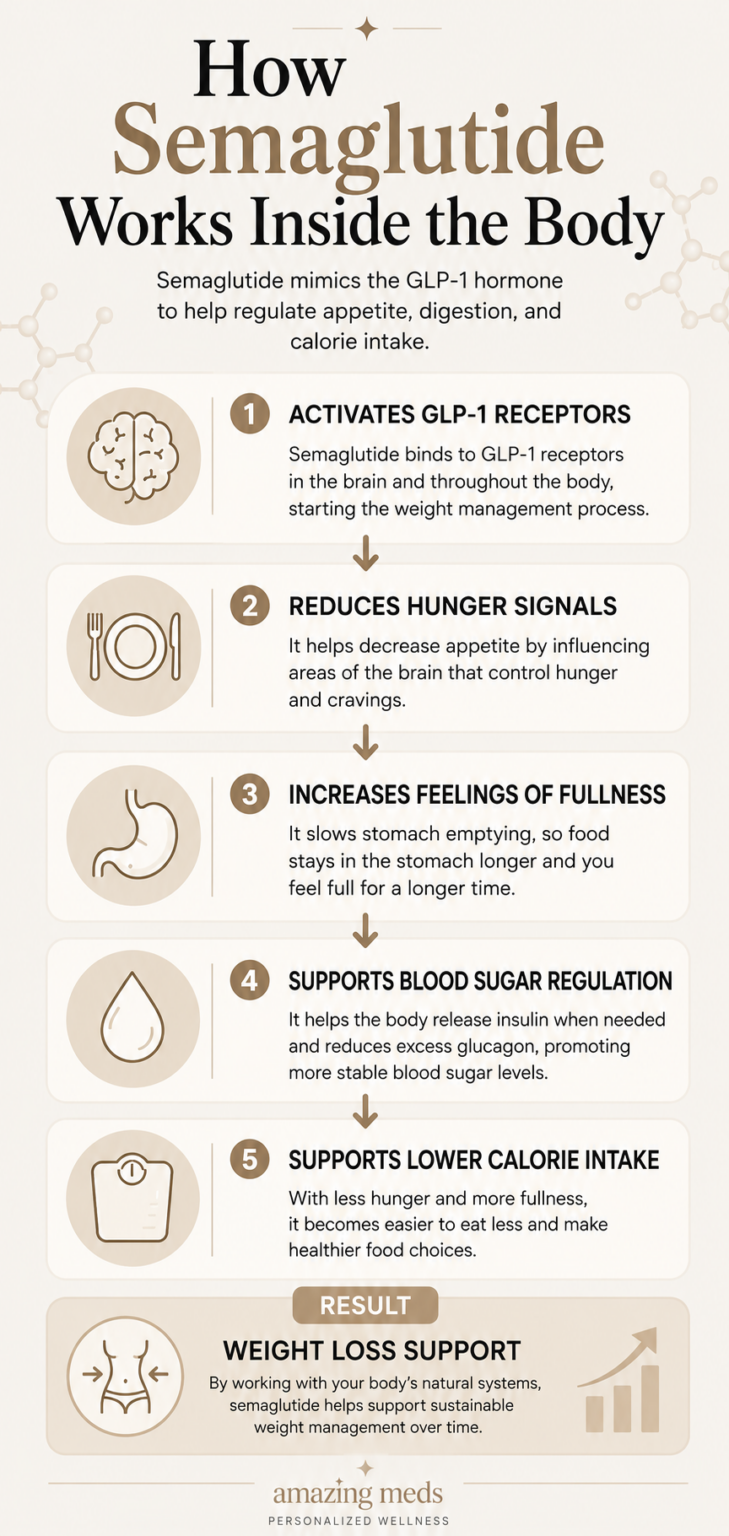
Semaglutide works by mimicking GLP-1 (glucagon-like peptide-1), a naturally occurring hormone that helps regulate appetite, digestion, and blood sugar levels. The Wegovy prescribing information describes GLP-1 as a physiological regulator of appetite and calorie intake.
By activating GLP-1 receptors in the body, semaglutide can:
- Reduce hunger signals
- Increase feelings of fullness
- Slow stomach emptying
- Support blood sugar regulation
- Help reduce overall calorie intake
Together, these effects may make it easier to follow healthier eating habits.
What Is Semaglutide?
Understanding GLP-1 Medications
Semaglutide belongs to a class of medications known as GLP-1 receptor agonists.
GLP-1 is a hormone your body naturally releases after eating. It plays an important role in regulating appetite, digestion, and blood sugar levels.
Semaglutide mimics this hormone, helping your body respond to food in ways that support weight management.
Today, FDA-approved semaglutide is sold under brand names such as Ozempic® and Wegovy®, according to the National Institute of Diabetes and Digestive and Kidney Diseases (NIDDK).
Why Semaglutide Was Originally Developed
Semaglutide was first approved to help manage type 2 diabetes, as Ozempic (Ozempic prescribing information).
Weight loss seen with semaglutide led to larger weight management studies, including the STEP 1 trial, and eventually to the approval of Wegovy® for chronic weight management in eligible patients.
How Semaglutide Works Inside the Body
Weight loss with semaglutide comes from several biological processes that affect how hungry you feel, how much you eat, and how your body responds to food.
It Communicates With Appetite Centers in the Brain
One of semaglutide’s most important actions occurs in the brain.
The Wegovy label notes that GLP-1 receptors are present in several areas of the brain involved in appetite regulation, and that semaglutide lowers calorie intake, likely by affecting appetite. When these receptors are activated, people may experience:
- Less frequent hunger
- Reduced cravings
- Improved portion control
- Increased satisfaction after meals
As a result, eating fewer calories may feel more manageable.
It Helps You Feel Full Longer
Semaglutide slows the rate at which food leaves the stomach (Wegovy label).
This process, known as delayed gastric emptying, helps food remain in the stomach longer, so fullness can last longer after meals.
Some people find they feel satisfied with smaller portions and snack less often.
It Supports Blood Sugar Regulation
Semaglutide also helps the body regulate blood sugar. It increases insulin release and lowers glucagon release, both in a glucose-dependent way, meaning mainly when blood sugar is elevated (Ozempic prescribing information).
The Role of GLP-1 in Weight Management
GLP-1 is one of the body’s natural appetite-regulating hormones.
Its purpose is to help coordinate digestion, appetite, and energy intake after eating.
The GLP-1 Weight Loss Mechanism
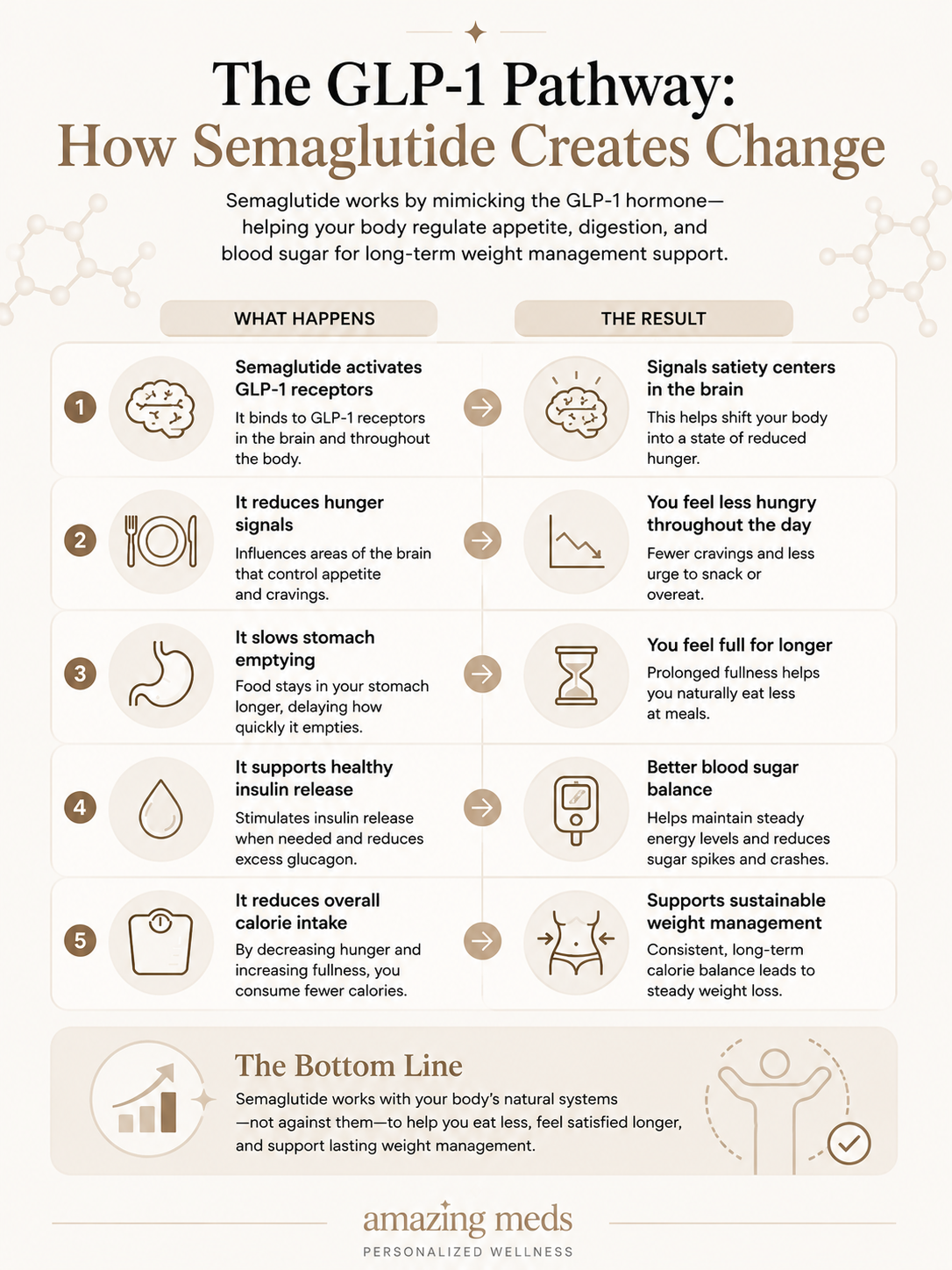
Connected effects:
- Reduced appetite
- Less hunger
- Longer fullness
- Blood sugar support
- Lower calorie intake
Appetite Regulation
GLP-1 helps signal to the brain that you have eaten enough, making it easier to stop eating when satisfied.
Digestion and Fullness
The hormone slows digestion, helping fullness last longer and reducing the urge to eat again shortly after meals.
Cravings and Food Choices
In a clinical study of adults with obesity, people taking semaglutide reported less hunger and fewer food cravings than with placebo, better control of eating, and a lower preference for high-fat foods.
Calorie Intake Over Time
Because hunger is reduced and fullness is increased, many people eat fewer calories through the day.
Why Semaglutide Can Help With Weight Loss
Every person’s experience is different, but semaglutide can support weight loss through several practical effects.
Reduced Hunger
Many people simply feel less hungry through the day.
Better Portion Control
Smaller meals often feel more satisfying than before treatment.
Fewer Food Cravings
Cravings for snacks and high-calorie foods may become easier to manage.
Improved Consistency With Healthy Habits
When appetite feels more manageable, many people find it easier to keep healthy eating patterns over time.
How Long Does Semaglutide Take to Work?
Many people wonder how quickly semaglutide starts working after beginning treatment. Semaglutide begins acting on GLP-1 receptors soon after it is started, but noticeable changes usually build gradually.
What You May Notice During the First Few Weeks
People may notice:
- Reduced appetite
- Earlier feelings of fullness
- Less interest in snacking
- Improved portion control
What Happens After One to Three Months
As treatment continues, some people may notice:
- Greater consistency with healthy eating habits
- Improved control over cravings
- Continued appetite regulation
- Gradual weight loss
According to NIDDK, most weight loss with weight management medications takes place within the first 6 months of starting the medication. Individual experiences vary with nutrition, activity level, sleep quality, overall health, and the treatment plan your provider sets.
Want a detailed breakdown of what happens week by week? Read our guide: Semaglutide for Weight Loss: What to Expect in the First 3 Months.
Ozempic vs Wegovy: Do They Work Differently?
Many people assume Ozempic and Wegovy are completely different medications, but both contain semaglutide.
Ozempic vs Wegovy
| Feature | Ozempic | Wegovy |
|---|---|---|
| Active ingredient | Semaglutide | Semaglutide |
| Medication class | GLP-1 receptor agonist | GLP-1 receptor agonist |
| FDA-approved for type 2 diabetes | Yes | No |
| FDA-approved for chronic weight management | No | Yes |
| FDA-approved heart risk reduction | Adults with type 2 diabetes and heart disease | Adults with heart disease and obesity or overweight |
Sources: Ozempic prescribing information and Wegovy prescribing information.
What They Have in Common
Both medications contain semaglutide and work through the same GLP-1 pathway.
Key Differences
The main difference is their FDA-approved uses. Ozempic is approved for adults with type 2 diabetes, while Wegovy is approved for weight management and heart risk reduction in people with obesity or overweight, and it is also approved to treat a type of fatty liver disease with liver scarring (MASH) in certain adults (Wegovy prescribing information).
Which One Is Used for Weight Loss?
Wegovy is specifically approved for chronic weight management in eligible patients, alongside a reduced-calorie diet and increased physical activity (Wegovy prescribing information).
If you are also comparing semaglutide with tirzepatide, see our guide to tirzepatide vs semaglutide.
Compounded Semaglutide vs Brand Name Options
People researching semaglutide often come across both brand-name medications and compounded versions.
Brand-Name Semaglutide
Brand-name medications such as Ozempic® and Wegovy® contain semaglutide, are made by Novo Nordisk, and are FDA-approved.
Compounded Semaglutide
Compounded semaglutide may be prepared by licensed compounding pharmacies when appropriate and legally permitted. Compounded drugs are not FDA-approved, and the FDA does not review compounded drugs for safety, effectiveness or quality before they are marketed.
The FDA declared the semaglutide injection shortage resolved in February 2025. Since then, federal rules limit compounding of drugs that are essentially copies of commercially available FDA-approved products (FDA policy update for compounders). Availability and formulation can vary with individual circumstances and these regulations.
Which Option Is Right for You?
The most appropriate option depends on factors such as:
- Medical history
- Treatment goals
- Cost considerations
- Your provider’s recommendation
A qualified medical provider can help you weigh which approach fits your needs.
What Semaglutide Does NOT Do
Understanding what semaglutide does not do is just as useful as understanding how it works.
It Is Not a Fat Burner
Semaglutide does not directly burn fat. Its effect on calorie intake is likely driven by changes in appetite (Wegovy prescribing information).
It Does Not Replace Healthy Habits
NIDDK notes that weight management medications do not replace physical activity or healthy eating habits, and work best when combined with a lifestyle program. Sleep and stress management matter too.
Results Vary From Person to Person
Weight loss outcomes differ based on factors such as starting weight, nutrition, activity level, sleep quality, and overall health. No medication can promise a specific result.
Learn More About Medical Weight Loss
Semaglutide can be a useful tool for some people pursuing weight loss, but it is not the right option for everyone. A medical evaluation can help determine whether it fits your health history and goals.
At Amazing Meds, care starts with a free call with our care team, then labs, then a telehealth provider visit. If semaglutide is a fit, and the provider and pharmacy consider it permissible, we prescribe compounded semaglutide. We do not prescribe brand Wegovy, Ozempic, Zepbound or Mounjaro, and we do not handle prior authorizations. Insurance may cover provider visits and labs when we are in network, and medication is self-pay. See how Amazing Meds works or learn about our weight management care.
Frequently Asked Questions
Does semaglutide increase metabolism?
Semaglutide is not a stimulant, and it does not mainly work by raising metabolic rate. The Wegovy label says it lowers calorie intake, likely by affecting appetite, and that the weight lost includes more fat mass than lean mass (Wegovy prescribing information). In a clinical study of adults with obesity, resting metabolic rate did not differ between semaglutide and placebo.
Is Ozempic different from Wegovy?
Both contain semaglutide, but they have different FDA-approved uses. Ozempic is approved only for adults with type 2 diabetes, including to lower heart and kidney risks in certain patients, and is not approved for weight management (Ozempic prescribing information).
Can semaglutide work without diet and exercise?
Wegovy is approved for use together with a reduced-calorie diet and more physical activity, and NIDDK says weight medications work best alongside a lifestyle program (NIDDK).
Is compounded semaglutide the same as Ozempic or Wegovy?
No. Both contain semaglutide, but compounded semaglutide is not FDA-approved and is not reviewed by the FDA for safety, effectiveness or quality before it is marketed (FDA). The FDA has also said companies may not claim compounded products are generic versions of, or the same as, FDA-approved drugs (FDA announcement).
What happens if I stop taking semaglutide?
According to NIDDK, you will probably regain some weight after stopping a weight management medication. Keeping healthy eating habits and staying active may help you regain less.
Who should not take semaglutide?
Semaglutide products carry a boxed warning about thyroid C-cell tumors seen in rodents, and they should not be used by people with a personal or family history of medullary thyroid carcinoma or with Multiple Endocrine Neoplasia syndrome type 2 (Wegovy prescribing information). Your provider reviews your full history first.
Sources
- Wegovy (semaglutide) prescribing information, DailyMed
- Ozempic (semaglutide) prescribing information, DailyMed
- Wilding JPH, et al. Semaglutide in Adults with Overweight or Obesity (STEP 1). New England Journal of Medicine, 2021
- Effects of semaglutide on appetite, energy intake, control of eating, food preference and body weight in subjects with obesity. Diabetes, Obesity and Metabolism, 2017
- NIDDK. Prescription Medications to Treat Overweight and Obesity
- FDA. FDA’s Concerns with Unapproved GLP-1 Drugs Used for Weight Loss
- FDA. FDA clarifies policies for compounders as national GLP-1 supply begins to stabilize
- FDA. FDA Intends to Take Action Against Non-FDA-Approved GLP-1 Drugs (February 2026)
This article is for general education and is not medical advice. Talk with a licensed provider about your own health before starting, stopping or changing any treatment.