

Medically reviewed by Dr. Frangos, MD — board-certified physician with experience in hormone therapy and insurance-supported treatment coordination.
Many adults notice changes in their energy, body composition, and recovery as they get older. While some of these changes are a normal part of aging, others may be linked to an underlying hormone imbalance.
One condition that often goes unnoticed is Adult Growth Hormone Deficiency (AGHD).
Adult Growth Hormone Deficiency occurs when the body does not produce enough human growth hormone (HGH), a hormone that continues to play an important role long after childhood growth has ended.
Because many symptoms of AGHD overlap with normal aging, stress, and other health conditions, proper evaluation is often needed to identify the root cause.
In this guide, we’ll cover the symptoms, causes, testing process, and treatment options for adult growth hormone deficiency.
What Is Adult Growth Hormone Deficiency?
Human Growth Hormone (HGH) is produced by the pituitary gland, a small gland located at the base of the brain.
Although HGH is best known for supporting growth during childhood, it remains important throughout adulthood.
Growth hormone helps support:
✓ Lean muscle maintenance
✓ Healthy body composition
✓ Exercise performance
✓ Recovery and tissue repair
✓ Bone health
✓ Metabolic function
✓ Overall quality of life
When HGH production becomes too low, adults may develop Adult Growth Hormone Deficiency.
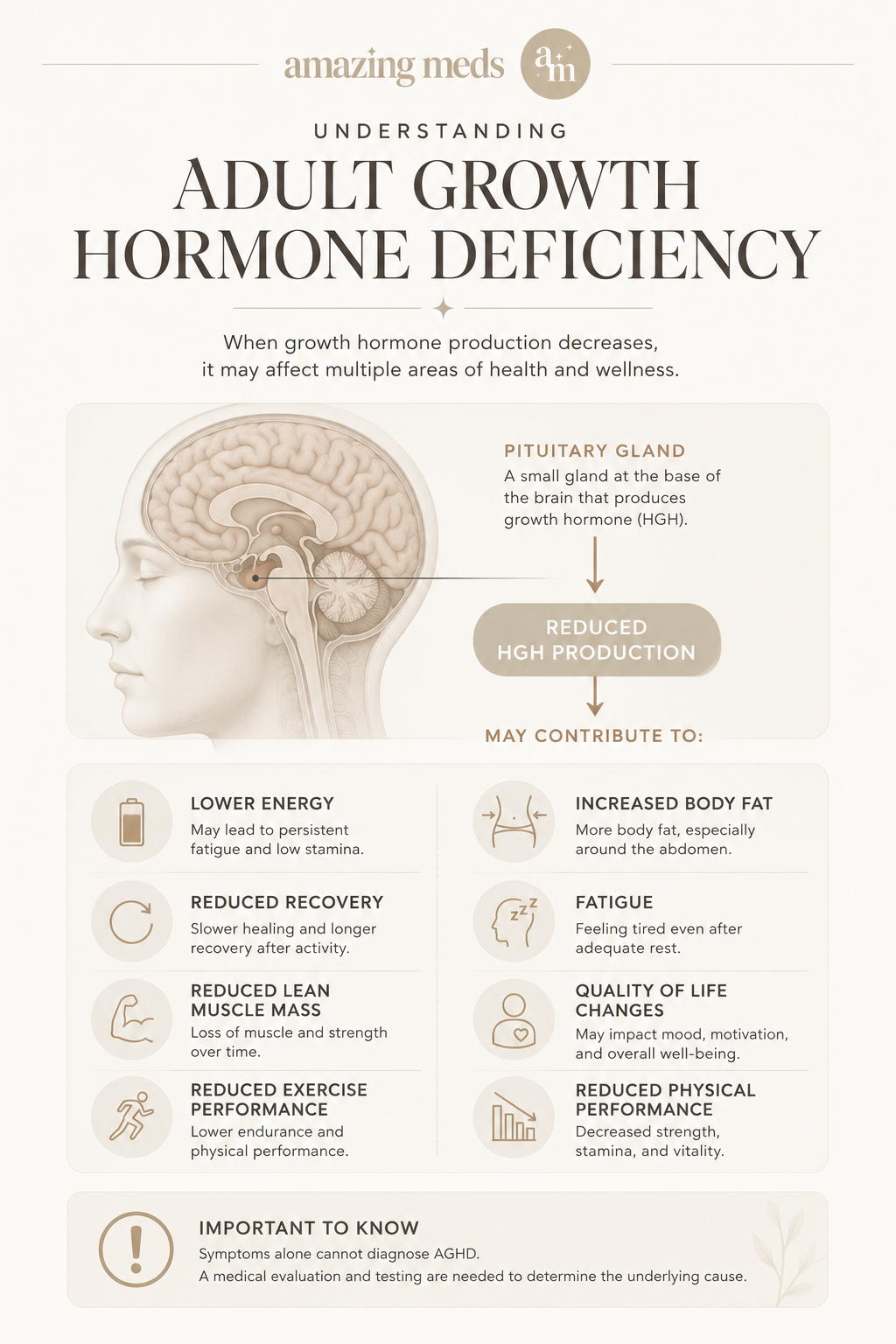
Common Symptoms of Adult Growth Hormone Deficiency
Symptoms vary from person to person and often develop gradually.
Because the changes occur slowly, many people assume they’re simply experiencing the effects of aging.
Physical Symptoms
Increased Body Fat
Many adults with AGHD experience an increase in body fat, particularly around the midsection.
Reduced Muscle Mass
Growth hormone plays a role in maintaining lean muscle tissue.
Some adults notice:
✓ Loss of strength
✓ Reduced muscle definition
✓ Difficulty maintaining muscle mass
Lower Energy Levels
Persistent fatigue is one of the most commonly reported symptoms.
Many individuals describe:
- Reduced stamina
- Lower motivation
- Difficulty maintaining physical activity
Slower Recovery
Recovery after exercise or physical activity may take longer than expected.
Cognitive and Emotional Symptoms
Some adults report:
✓ Brain fog
✓ Reduced concentration
✓ Lower motivation
✓ Mood changes
✓ Reduced overall well-being
Symptoms Checklist
Common AGHD Symptoms
✓ Persistent fatigue
✓ Increased body fat
✓ Reduced muscle mass
✓ Slower exercise recovery
✓ Reduced exercise performance
✓ Brain fog
✓ Lower motivation
✓ Mood changes
✓ Reduced quality of life
Why Adult Growth Hormone Deficiency Often Goes Undiagnosed
Many adults live with symptoms of AGHD for years without realizing a hormone deficiency may be contributing to how they feel.
One reason is that the symptoms can develop gradually. Unlike a sudden illness or injury, changes in energy, body composition, and recovery often occur over time.
AGHD symptoms may also overlap with:
✓ Normal aging
✓ Thyroid disorders
✓ Low testosterone
✓ Poor sleep
✓ Chronic stress
✓ Depression
✓ Nutritional deficiencies
Because these symptoms are not unique to growth hormone deficiency, specialized testing is often needed to determine the underlying cause.
Many adults seek evaluation only after symptoms begin affecting their daily activities, exercise performance, or overall quality of life.
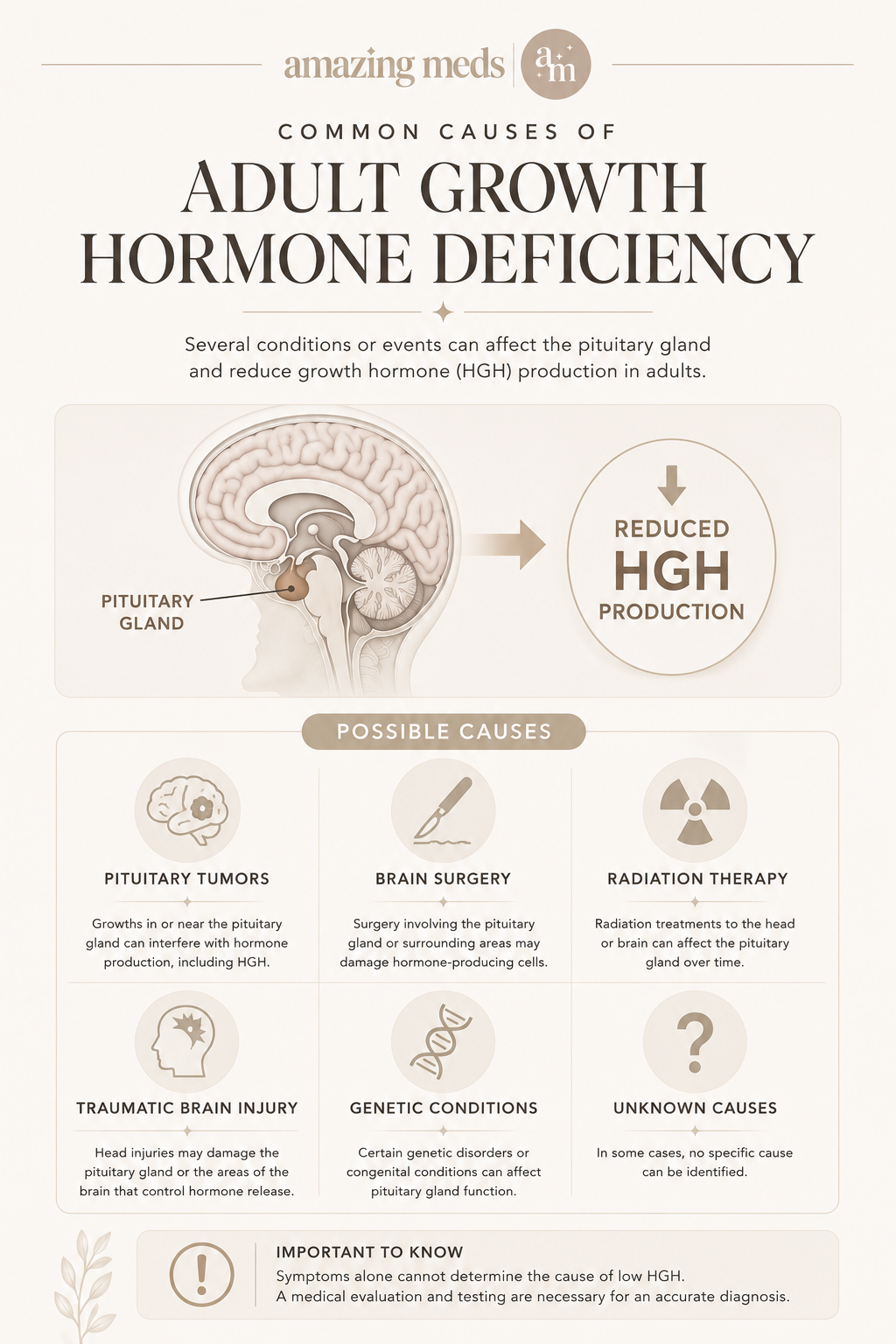
What Causes Adult Growth Hormone Deficiency?
Several factors can affect the pituitary gland’s ability to produce growth hormone.
Common causes include:
Pituitary Tumors
Growths affecting the pituitary gland can interfere with hormone production.
Brain Surgery
Surgery involving the pituitary gland or surrounding structures may impact HGH production.
Radiation Therapy
Radiation treatments near the brain can sometimes damage the pituitary gland.
Traumatic Brain Injury
Head injuries have been associated with hormone deficiencies in some adults.
Childhood Growth Hormone Deficiency
Some adults were diagnosed with growth hormone deficiency as children and may continue to have deficiency into adulthood.
Unknown Causes
In some cases, no clear cause can be identified.
Can Low HGH Affect Body Composition?
Growth hormone plays an important role in how the body uses and stores energy.
Adults with growth hormone deficiency may experience:
✓ Increased abdominal fat
✓ Reduced lean muscle mass
✓ Changes in strength
✓ Lower exercise capacity
✓ Reduced metabolic efficiency
These changes can make it more difficult to maintain a healthy body composition, even when following the same diet and exercise routine that worked in the past.
While many factors influence body composition, growth hormone is one piece of the larger hormonal picture.
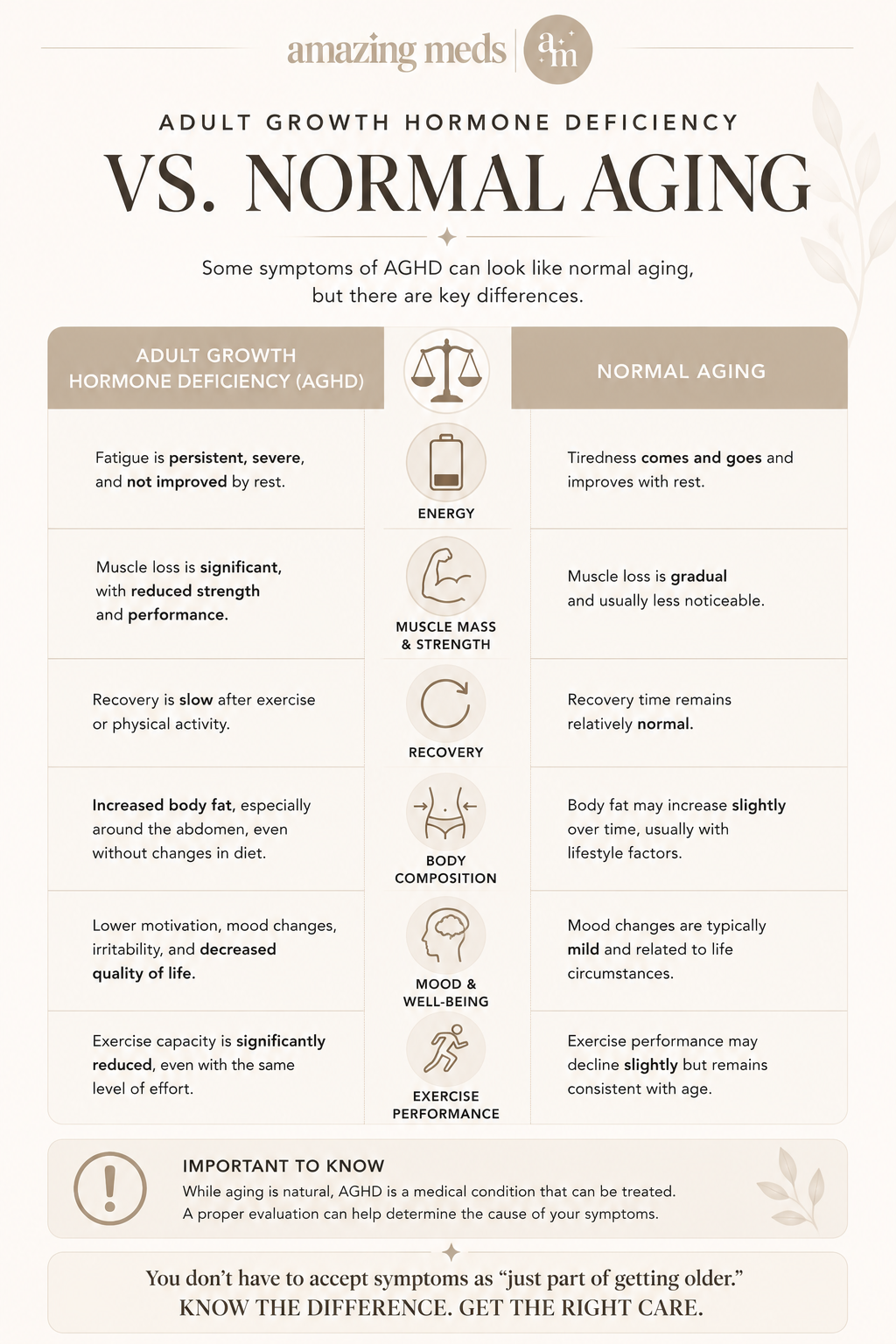
Adult Growth Hormone Deficiency vs Normal Aging
Many symptoms of AGHD resemble common age-related changes.
However, AGHD may cause symptoms that feel more persistent, noticeable, or disruptive than expected.
| Normal Aging | Possible AGHD |
|---|---|
| Gradual energy decline | Persistent fatigue |
| Mild muscle loss | Noticeable muscle loss |
| Slight recovery changes | Significant recovery issues |
| Gradual body composition changes | Increased body fat |
| Minor lifestyle impact | Reduced quality of life |
It is important to remember that symptoms alone cannot diagnose AGHD.
Testing and medical review are needed to understand what is really happening.
How Adult Growth Hormone Deficiency Is Diagnosed
Diagnosing AGHD involves more than a single blood test.
Growth hormone is released in pulses throughout the day, which means a random HGH blood level may not give an accurate picture.
Healthcare providers may use several steps to evaluate possible AGHD.
Medical History
Your provider may review:
✓ Current symptoms
✓ Past medical conditions
✓ History of pituitary problems
✓ Prior brain surgery or radiation
✓ Head injuries
✓ Current medications
✓ Other hormone concerns
This helps determine whether AGHD is likely or whether another condition may better explain the symptoms.
Physical Evaluation
A physical evaluation may include reviewing weight changes, body composition, exercise tolerance, and overall health markers.
IGF-1 Testing
IGF-1 is often measured because it is more stable than HGH throughout the day.
Low IGF-1 may suggest possible growth hormone deficiency, but it does not always confirm the diagnosis by itself.
Growth Hormone Stimulation Testing
In some cases, specialized stimulation testing may be needed.
These tests evaluate how well the body can produce growth hormone when stimulated under controlled medical conditions.

Can Adult Growth Hormone Deficiency Affect Sleep?
Sleep and growth hormone production are closely connected.
Most natural HGH release occurs during deep sleep. Poor sleep may affect hormone production, while hormone imbalances may also contribute to poor sleep quality.
Some adults with AGHD report:
✓ Feeling less rested
✓ Reduced recovery overnight
✓ Daytime fatigue
✓ Lower energy despite adequate sleep duration
Because sleep issues can both influence and mimic hormone deficiency symptoms, providers often evaluate sleep quality as part of a comprehensive assessment.
Treatment Options for Adult Growth Hormone Deficiency
Treatment recommendations depend on the cause and severity of the deficiency.
Not everyone with fatigue or body composition changes needs HGH therapy. Treatment should only be considered after proper evaluation.
HGH Replacement Therapy
Adults diagnosed with AGHD may be candidates for prescription growth hormone therapy under medical supervision.
Treatment plans are individualized and may involve:
✓ Personalized dosing
✓ Regular follow-up visits
✓ Follow-up lab testing
✓ Monitoring symptoms and progress
✓ Adjustments based on response
The goal is not to create excessive HGH levels, but to restore appropriate levels when deficiency is confirmed.
Lifestyle Support
Lifestyle habits can also play an important role in overall hormone health and treatment outcomes.
Areas often discussed include:
✓ Sleep quality
✓ Protein intake
✓ Balanced nutrition
✓ Resistance training
✓ Physical activity
✓ Stress management
These habits may not “fix” confirmed AGHD on their own, but they can support better overall results.
Potential Benefits of Treatment
For adults with confirmed AGHD, treatment may help support:
✓ Energy levels
✓ Recovery
✓ Lean muscle maintenance
✓ Exercise capacity
✓ Bone health
✓ Body composition
✓ Overall quality of life
Individual results vary, and treatment should always be monitored by a qualified healthcare provider.
What Happens If AGHD Is Left Untreated?
Not everyone diagnosed with AGHD requires immediate treatment, but untreated deficiency may continue to affect quality of life.
Potential long-term concerns may include:
✓ Ongoing fatigue
✓ Reduced physical performance
✓ Loss of lean muscle mass
✓ Increased body fat
✓ Reduced bone density
✓ Lower overall well-being
The severity of symptoms varies from person to person, which is why treatment decisions should always be individualized.
Is HGH Therapy Right for Everyone?
No.
Not every adult experiencing fatigue, weight gain, or reduced performance has growth hormone deficiency.
HGH therapy may not be appropriate for individuals with certain medical conditions, and it should never be used without proper medical supervision.
A healthcare provider can determine whether testing is appropriate and whether AGHD may be contributing to your symptoms.
Questions to Ask Your Healthcare Provider About AGHD
If you suspect low HGH may be contributing to your symptoms, consider asking:
-
- Could my symptoms be related to a hormone imbalance?
- Would IGF-1 testing be appropriate?
- Are there other hormones that should be evaluated?
- What causes AGHD?
- What testing is required for diagnosis?
- What treatment options are available?
- What are the potential risks and benefits of HGH therapy?
- How would treatment be monitored?
These questions can help guide a productive conversation with your healthcare provider.
Monitoring and Safety
If HGH therapy is prescribed, ongoing monitoring is important.
Your provider may monitor:
✓ Symptoms
✓ IGF-1 levels
✓ Side effects
✓ Blood sugar markers
✓ Fluid retention
✓ Joint discomfort
✓ Overall response to treatment
This helps ensure the treatment plan remains safe, appropriate, and personalized.
Could Low HGH Be Affecting How You Feel?
Persistent fatigue, reduced recovery, changes in body composition, and declining exercise performance may have underlying causes worth exploring.
At Amazing Meds, our medical team can help evaluate your symptoms and determine whether hormone testing may be appropriate.
Why Patients Choose Amazing Meds
✓ Comprehensive hormone evaluations
✓ Personalized treatment plans
✓ Ongoing medical monitoring
✓ Convenient telehealth consultations
✓ Experienced hormone specialists
Schedule Your Free Consultation
Speak with a licensed medical provider to learn whether hormone testing may be appropriate for your symptoms.
Frequently Asked Questions
What are the symptoms of adult growth hormone deficiency?
Common symptoms include fatigue, increased body fat, reduced muscle mass, slower recovery, brain fog, mood changes, and reduced quality of life.
How is AGHD diagnosed?
Diagnosis typically involves medical history, symptom review, IGF-1 testing, and in some cases, growth hormone stimulation testing.
Can adults develop growth hormone deficiency later in life?
Yes. AGHD can develop during adulthood due to pituitary disorders, surgery, radiation, head injuries, or other medical conditions.
Is adult growth hormone deficiency common?
AGHD is not as common as general fatigue or age-related changes, but it can be missed because symptoms overlap with many other conditions.
Can HGH therapy help adults with deficiency?
For adults with confirmed AGHD, growth hormone replacement therapy may help support energy, body composition, recovery, and quality of life under medical supervision.
Can low HGH cause weight gain?
Low HGH may contribute to changes in body composition, including increased body fat, especially around the abdomen. However, weight gain can have many causes.
Is HGH therapy safe?
HGH therapy should only be used when medically appropriate and monitored by a healthcare provider. Safety depends on proper diagnosis, dosing, and follow-up care.
Research Resources
- Endocrine Society — https://www.endocrine.org
- Hormone Health Network — https://www.hormone.org
- Merck Manual — https://www.merckmanuals.com
- National Institute of Diabetes and Digestive and Kidney Diseases (NIDDK) — https://www.niddk.nih.gov