

If you’ve been researching peptides for recovery, gut health, or overall wellness, you’ve likely come across BPC-157. Interest in this peptide has grown rapidly in recent years, particularly among people looking to learn about tissue healing and regenerative medicine.
BPC-157—short for Body Protection Compound-157—is a synthetic peptide derived from a protective protein naturally found in the stomach. Most of what we currently know comes from laboratory and animal studies, where researchers have explored its potential effects on tissue repair, inflammation, and gastrointestinal health.
Although these early findings are promising, BPC-157 is not approved by the U.S. Food and Drug Administration (FDA) for human use, and high-quality clinical research in humans remains limited. Any discussion of its potential benefits should be viewed within that context.
In this guide, we’ll explain what BPC-157 is, how it works, what current research suggests, its potential risks, and the questions you should ask before considering peptide therapy.
Curious About Peptide Therapy?
Every person’s health goals are unique. If you’re interested in learning more about peptides and other wellness therapies, our licensed providers can help determine whether an evidence-based treatment plan may be appropriate for your individual needs.
What Is BPC-157?
BPC-157 is a laboratory-produced peptide consisting of 15 amino acids. It was originally developed from a naturally occurring protective protein found in human gastric juice, which is where its name—Body Protection Compound—comes from.
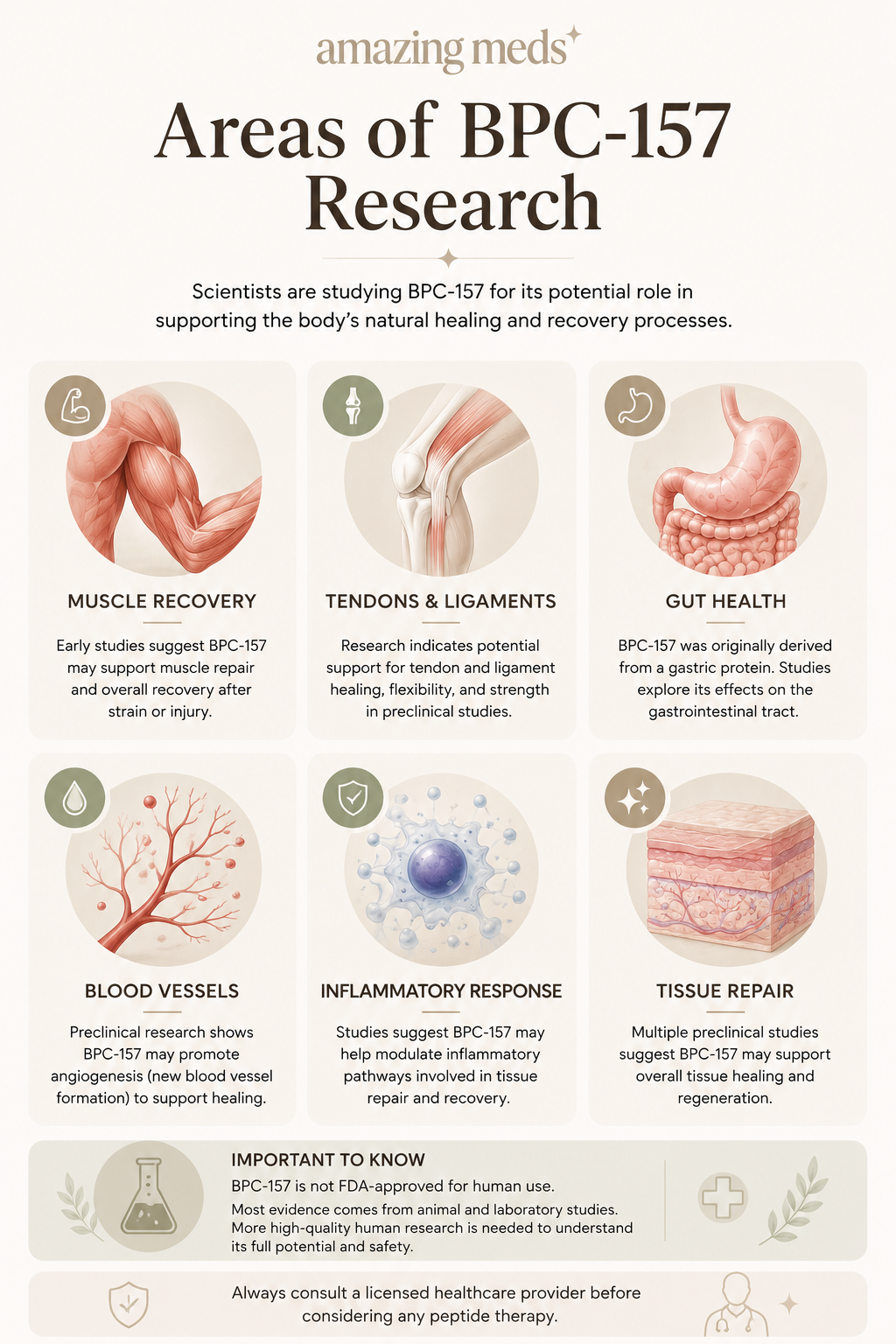
Researchers have studied BPC-157 because of its potential role in supporting the body’s natural healing processes. Laboratory studies have explored its effects on:
-
- Soft tissue repair
- Tendons and ligaments
- Muscle recovery
- Blood vessel formation (angiogenesis)
- Gastrointestinal tissues
- Inflammatory responses
While these findings have generated interest, it’s important to remember that most published evidence comes from animal or preclinical studies. More well-designed human clinical trials are needed before clear conclusions can be made regarding safety or effectiveness.
How Does BPC-157 Work?
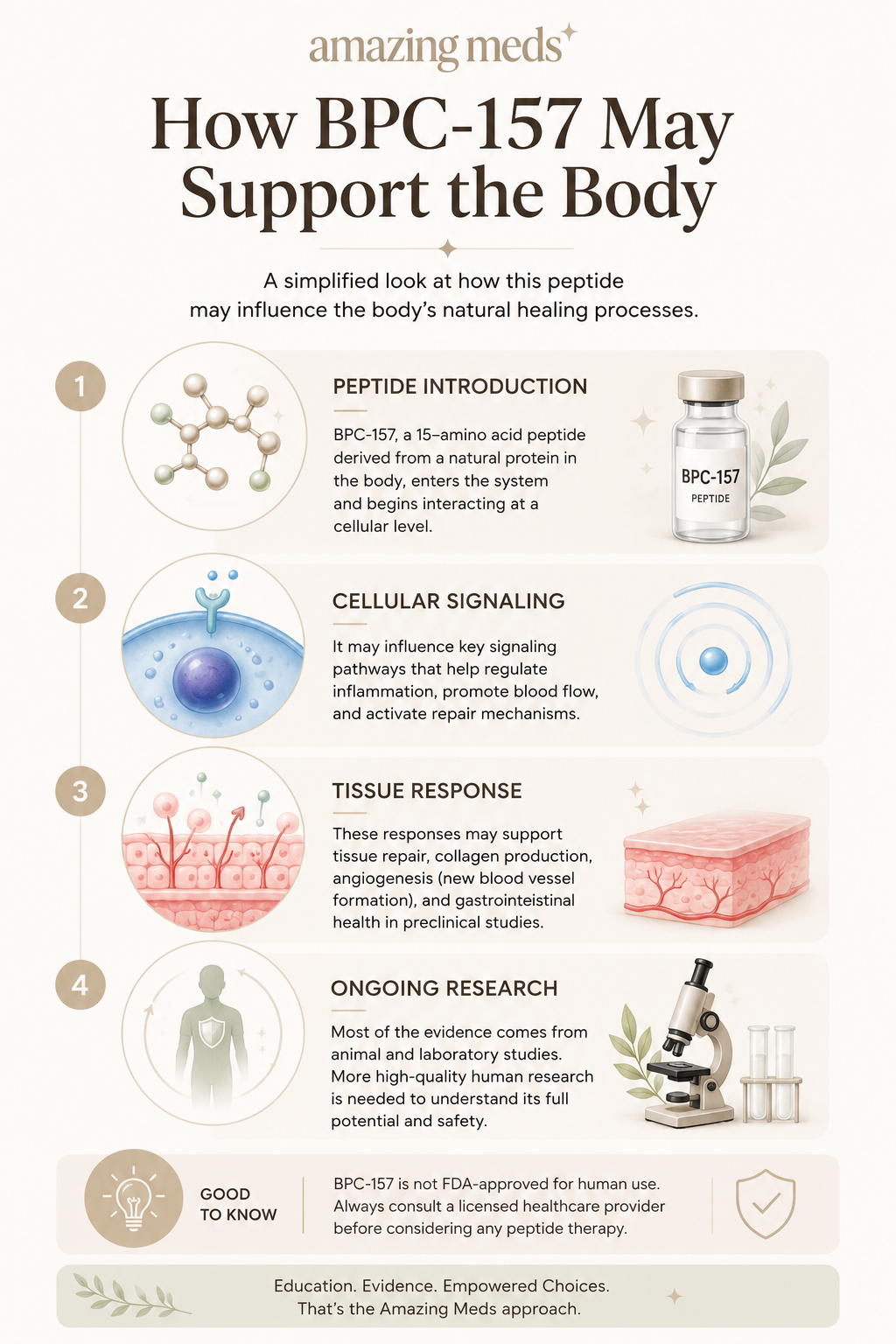
Researchers believe BPC-157 may influence several biological pathways involved in tissue repair and recovery. Although the exact mechanisms are still being studied, current research suggests it may help regulate processes associated with healing.
Potential mechanisms being investigated include:
-
- Supporting normal tissue repair
- Promoting healthy blood vessel development
- Modulating inflammatory responses
- Supporting collagen formation
- Helping maintain the integrity of the gastrointestinal lining
These proposed mechanisms are based primarily on experimental research and should not be interpreted as proven clinical effects in humans.
Potential Benefits Being Studied
Research into BPC-157 continues to evolve. While no therapeutic claims can currently be made, scientists are investigating several areas where the peptide may play a role.
Tissue Recovery
Experimental studies have explored whether BPC-157 may support the body’s natural healing response following injuries involving muscles, tendons, and ligaments.
Gut Health
Because BPC-157 originates from a gastric protein, researchers have investigated its potential role in maintaining the integrity of the digestive tract and supporting gastrointestinal tissues.
Blood Vessel Formation
Some laboratory studies suggest BPC-157 may influence angiogenesis—the process by which new blood vessels develop—which could contribute to normal tissue repair.
Inflammatory Response
Researchers are also studying whether BPC-157 may help regulate certain inflammatory pathways involved in tissue healing.
Overall Recovery
The combination of these mechanisms has led scientists to explore BPC-157 within the broader field of regenerative medicine. However, more human research is necessary before any medical conclusions can be drawn.
Is BPC-157 FDA-Approved?
No. BPC-157 is not approved by the U.S. Food and Drug Administration (FDA) for human use.
This is one of the most important points to understand before considering any peptide therapy. While BPC-157 is widely discussed online, the FDA has identified limited safety information for proposed routes of administration and has noted concerns around peptide-related impurities, product characterization, and potential immunogenicity in compounded products containing BPC-157.
Because of this, BPC-157 should be viewed as an experimental peptide rather than an established medical treatment.
Is BPC-157 Safe?
At this time, there is not enough high-quality human research to confirm the safety of BPC-157.
Most studies have been conducted in animals or laboratory settings. While those studies have generated interest, they do not provide the same level of evidence as large, controlled human clinical trials.
Potential safety concerns may include:
-
- Unknown long-term effects
- Product purity or contamination issues
- Incorrect dosing from unregulated sources
- Injection-site irritation or infection
- Immune reactions
- Unclear interactions with medications or medical conditions
Because safety information remains limited, anyone considering peptide therapy should speak with a licensed healthcare provider and avoid products sold online as “research chemicals” or without medical oversight.
Possible Side Effects of BPC-157
Because BPC-157 has not been widely studied in humans, its full side effect profile is not well established.
Reported or potential risks may include:
-
- Nausea
- Headache
- Dizziness
- Fatigue
- Injection-site irritation
- Swelling or redness
- Allergic-type reactions
- Unknown long-term risks
The absence of extensive reported side effects does not mean the peptide is proven safe. It often means that the available human data is too limited to fully understand the risks.

Why Medical Supervision Matters
Peptide therapy should never be treated as a one-size-fits-all wellness trend. Even when a compound is being studied for potential benefits, your health history, current medications, allergies, and treatment goals all matter.
A licensed healthcare provider can help assess:
-
- Whether peptide therapy is appropriate
- Whether safer, FDA-approved options exist
- Potential medication interactions
- Risk factors based on your medical history
- Proper monitoring and follow-up
This is especially important with peptides like BPC-157, where human safety and effectiveness data remain limited.
BPC-157 vs Other Peptides
BPC-157 is often discussed alongside other peptides used in wellness and regenerative medicine conversations. However, not all peptides have the same level of evidence, regulatory status, or safety profile.
Some peptides are FDA-approved medications for specific medical uses. Others, including BPC-157, remain experimental and are not approved for human clinical use.
| Peptide Type | Example | Important Note |
|---|---|---|
| FDA-approved peptide medications | GLP-1 medications | Approved for specific medical indications |
| Cosmetic peptides | GHK-Cu in topical skincare | Used in cosmetic formulations |
| Experimental peptides | BPC-157 | Not FDA-approved for human use |
This distinction matters. Just because something is called a “peptide” does not mean it has been proven safe or effective as a medical treatment.
Questions to Ask Before Considering Peptide Therapy
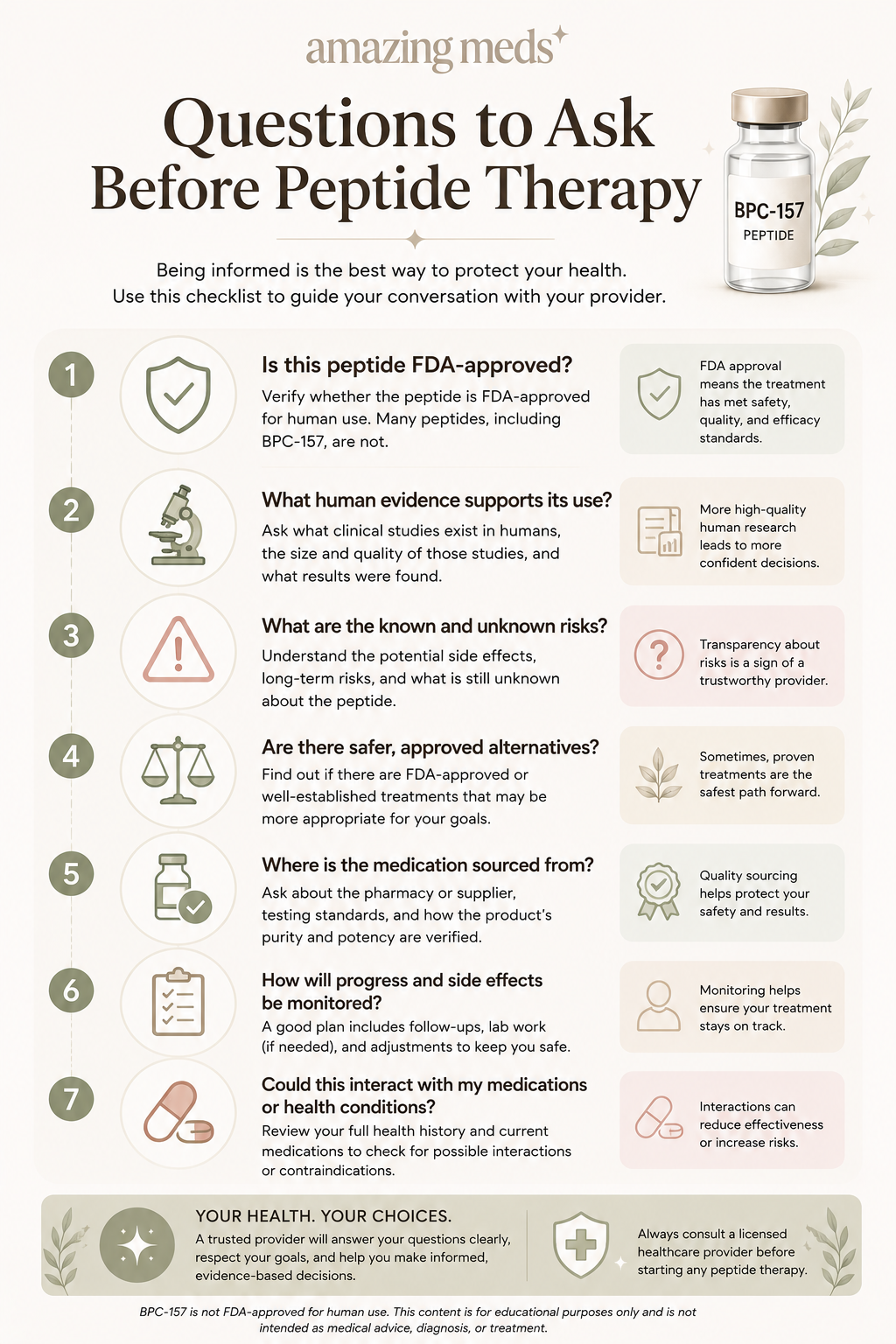
Before exploring any peptide treatment, ask your provider:
-
- Is this peptide FDA-approved?
- What human studies support its use?
- What are the known and unknown risks?
- Are there safer approved alternatives?
- Where is the medication sourced from?
- How will progress and side effects be monitored?
- Could this interact with my medications or health conditions?
A trustworthy provider should be transparent about what is known, what is still uncertain, and whether a treatment is appropriate for your individual situation.
Explore Peptide Therapy Safely
Peptides are an exciting area of wellness research, but not every peptide is appropriate for every person. At Amazing Meds, our licensed providers focus on evidence-informed care, safety, and personalized treatment planning.
If you are curious about peptide therapy, our team can help you understand your options, review your health history, and determine whether a medically guided approach may be right for you.
Frequently Asked Questions
What is BPC-157?
BPC-157 is a synthetic peptide made of 15 amino acids. It is derived from a protective protein found in the stomach and has been studied mainly in animal and laboratory research.
What is BPC-157 used for?
BPC-157 is often discussed for tissue recovery, gut health, and inflammation-related research. However, it is not FDA-approved for human use, and more clinical studies are needed.
Is BPC-157 FDA-approved?
No. BPC-157 is not FDA-approved for human use.
Is BPC-157 safe?
There is not enough high-quality human research to confirm its safety. The FDA has noted limited safety information and potential concerns related to compounded products containing BPC-157.
Does BPC-157 help with injuries?
Animal and laboratory studies have explored its role in tissue repair, but human evidence remains limited. It should not be considered a proven treatment for injuries.
Can athletes use BPC-157?
Competitive athletes should be cautious. BPC-157 appears under WADA’s prohibited category for unapproved substances, so athletes subject to testing should avoid it unless cleared by the appropriate governing body.
Can I buy BPC-157 online?
Buying BPC-157 online is risky. Products sold as research chemicals may be mislabeled, contaminated, improperly dosed, or not intended for human use.
Should I talk to a provider before using BPC-157?
Yes. Because BPC-157 is experimental and not FDA-approved, it should only be discussed with a licensed healthcare provider who can explain the risks, limitations, and alternatives.
Research Resources
-
- U.S. Food & Drug Administration (FDA). Certain Bulk Drug Substances for Use in Compounding May Present Significant Safety Risks.
https://www.fda.gov/drugs/human-drug-compounding/certain-bulk-drug-substances-use-compounding-may-present-significant-safety-risks - World Anti-Doping Agency (WADA). 2026 Prohibited List.
https://www.wada-ama.org/en/prohibited-list - U.S. Anti-Doping Agency (USADA). BPC-157 Peptide Prohibited Under the S0 Category.
https://www.usada.org/spirit-of-sport/bpc-157-peptide-prohibited/ - National Library of Medicine (PubMed). BPC-157 Research Publications.
https://pubmed.ncbi.nlm.nih.gov/?term=BPC-157 - National Center for Biotechnology Information (NCBI). Stable Gastric Pentadecapeptide BPC-157: Review of Experimental Findings.
https://pmc.ncbi.nlm.nih.gov/articles/PMC8504390/ - MedlinePlus. Medicines and Supplements.
https://medlineplus.gov/druginformation.html
- U.S. Food & Drug Administration (FDA). Certain Bulk Drug Substances for Use in Compounding May Present Significant Safety Risks.