
If you’re researching BPC-157 oral vs injection, you’re likely wondering which administration method may be more appropriate and what the current evidence suggests.
BPC-157 has generated growing interest in research involving tissue repair, gastrointestinal health, and recovery. As interest in peptide therapy continues to expand, patients frequently ask whether oral capsules or injectable forms differ in how they’re absorbed, how they’re used, and whether one approach offers potential advantages over another.
This guide compares oral and injectable BPC-157, explains how each administration method is currently understood, and reviews the importance of personalized medical guidance when considering peptide therapy.
Looking for Personalized Peptide Therapy?
Amazing Meds provides individualized medical evaluations to determine whether peptide therapy or other evidence-based treatment options may be appropriate for your health goals.
What Is BPC-157?
BPC-157 (Body Protection Compound-157) is a synthetic peptide derived from a naturally occurring protective protein found in gastric juice.
Researchers have investigated BPC-157 for its potential role in tissue repair, inflammatory responses, blood vessel formation, and gastrointestinal health. However, much of the available evidence comes from laboratory and animal studies, while human clinical research remains limited.
Importantly, BPC-157 has not been approved by the U.S. Food and Drug Administration (FDA) for treating any medical condition.
Understanding this distinction is essential before comparing different methods of administration.
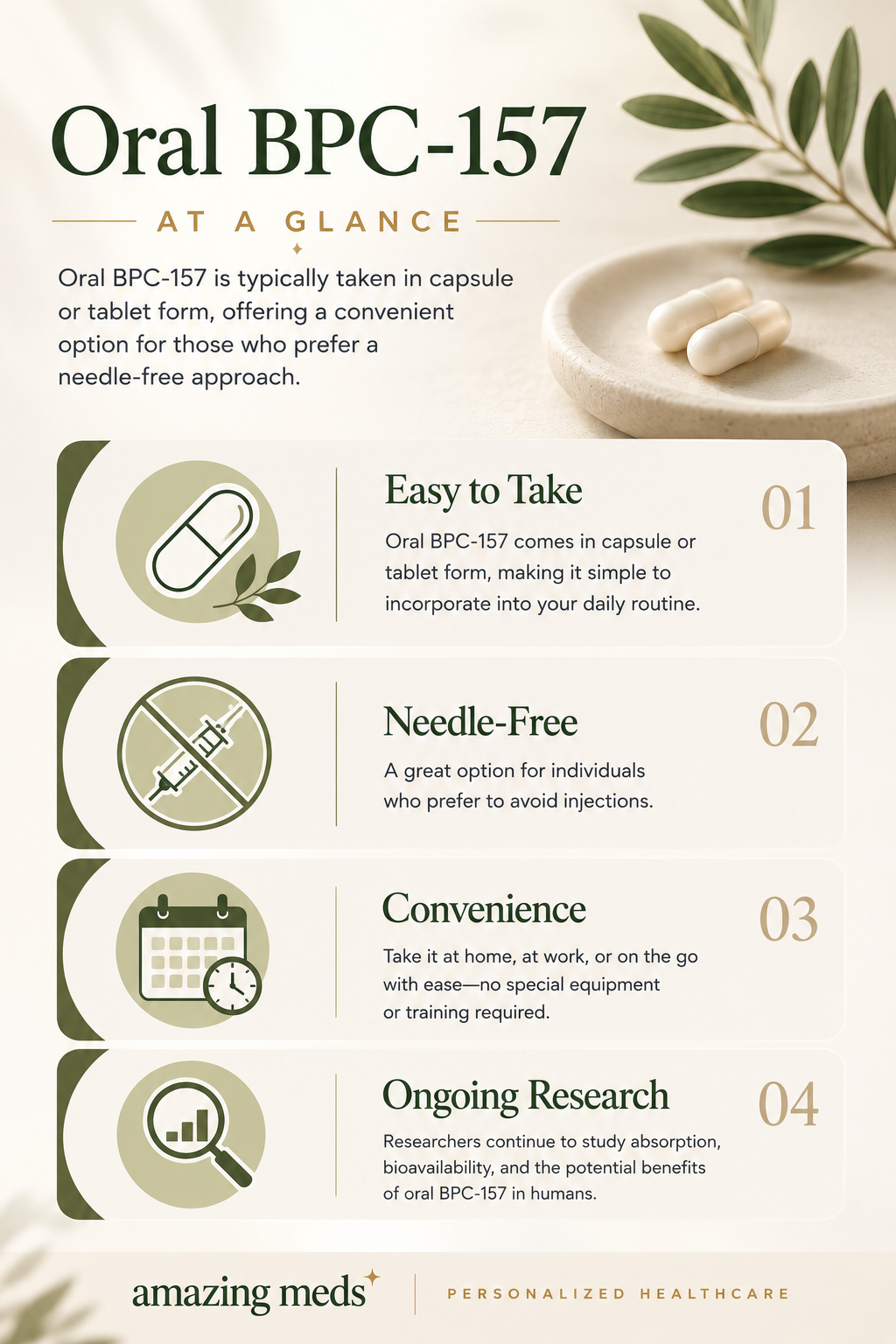
Oral BPC-157
Oral BPC-157 is typically discussed in the form of capsules or tablets.
Researchers have explored oral administration because of its convenience and its potential interaction with the gastrointestinal tract. However, questions remain regarding absorption, bioavailability, and clinical effectiveness in humans.
Potential Advantages
-
- Convenient and easy to take
- No needles required
- Familiar administration method
- May be appropriate for patients who prefer oral medications
Considerations
-
- Human research remains limited
- Absorption characteristics continue to be studied
- Appropriate dosing has not been established
- Effectiveness may vary depending on individual circumstances
Injectable BPC-157
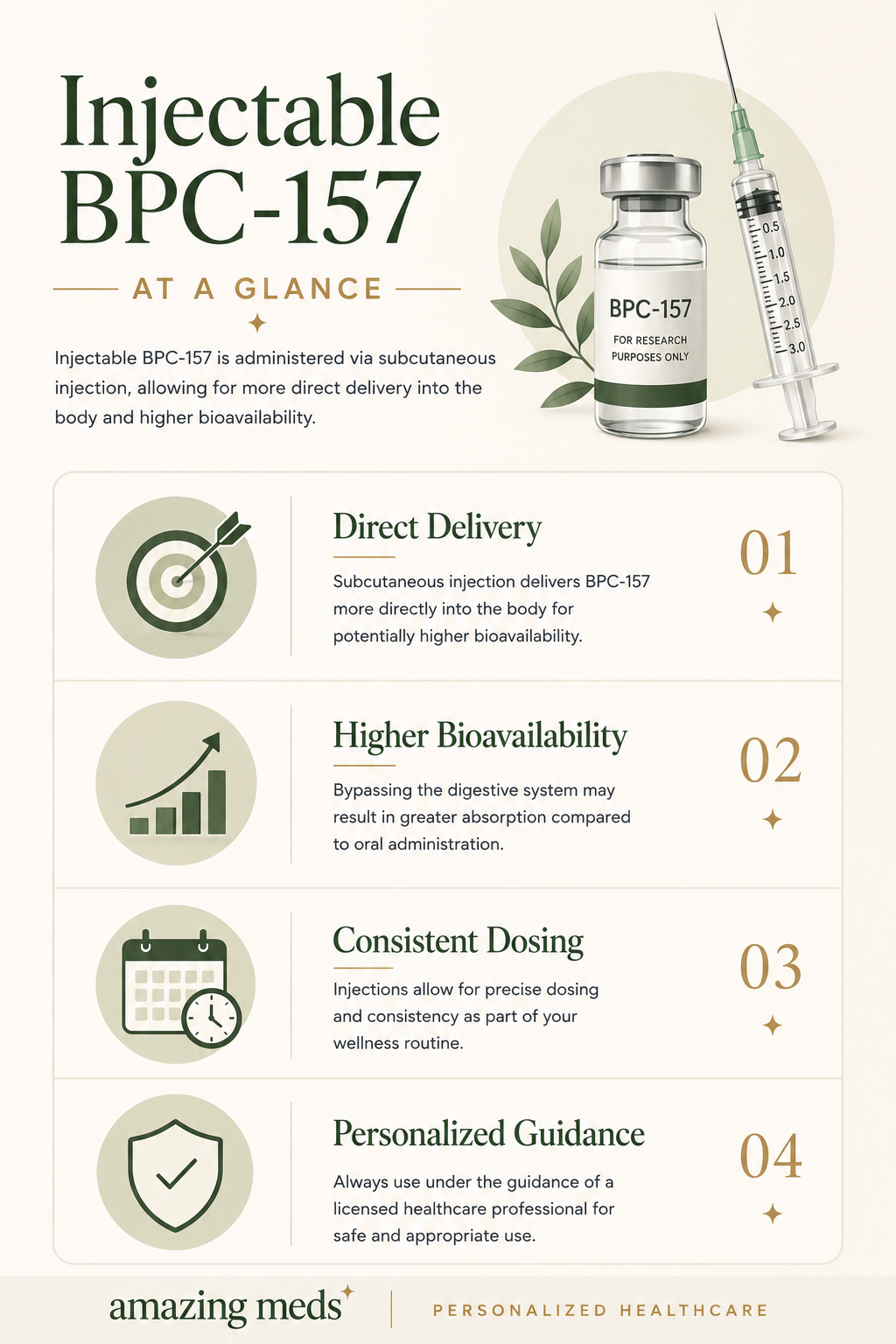
Injectable BPC-157 is commonly discussed in research settings because injections bypass the digestive system and may influence how the peptide is delivered into the body.
Although some researchers have explored this administration route, high-quality human evidence remains limited, and questions regarding optimal dosing, safety, and long-term outcomes have not yet been fully answered.
Potential Advantages
- Direct administration
- Avoids digestive breakdown
- Frequently used in preclinical research
Considerations
- Requires injections
- Administration technique is important
- Human clinical evidence remains limited
- Long-term safety requires further study
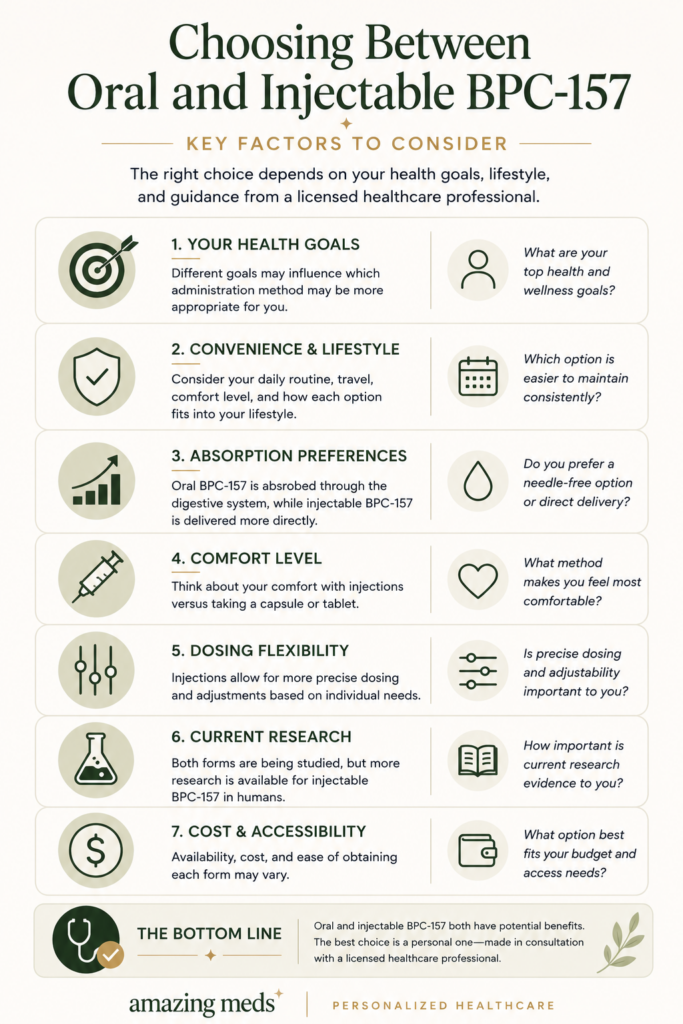
Oral vs Injection: Key Differences
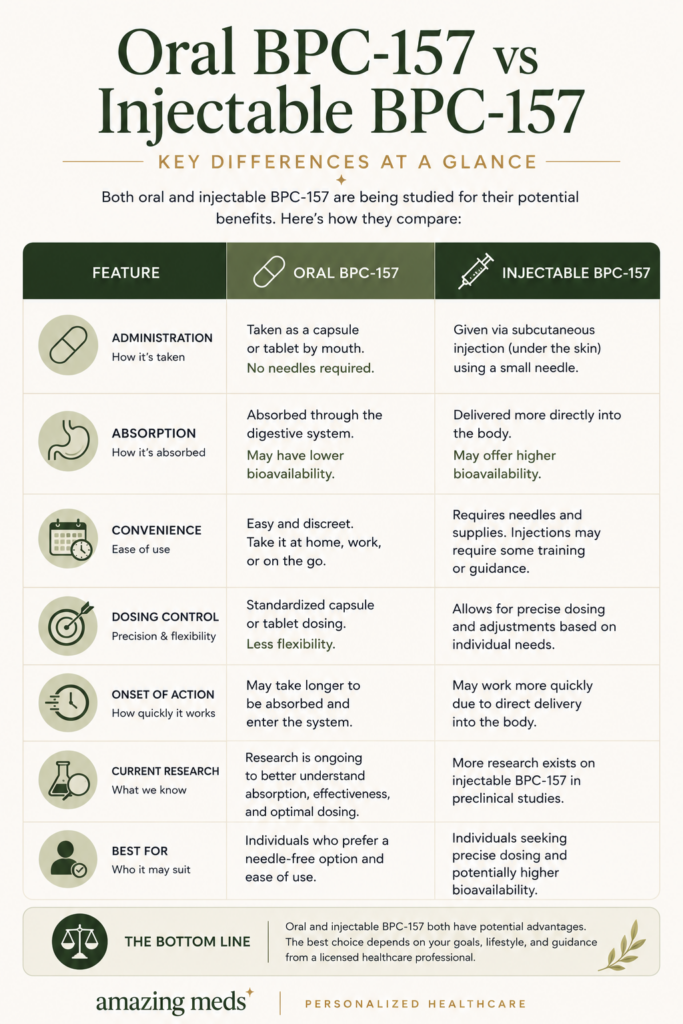
When comparing oral and injectable BPC-157, it’s important to remember that current evidence does not clearly establish one method as superior.
Researchers continue investigating differences in:
Absorption
Injectable administration bypasses the digestive tract, while oral forms must first pass through the gastrointestinal system.
Bioavailability
Researchers continue studying how much BPC-157 reaches target tissues through different administration routes.
Convenience
Oral administration is generally easier for patients, while injections require proper technique and medical guidance.
Current Evidence
High-quality human studies comparing oral and injectable BPC-157 remain limited.
Because of these uncertainties, administration decisions should always be discussed with a licensed healthcare provider.
Choosing the Right Approach
When considering any peptide therapy, it’s important to remember that treatment decisions should never be based solely on online information or anecdotal experiences.
A licensed healthcare provider can evaluate your overall health, review your medical history, discuss your treatment goals, and recommend evidence-based options that align with your individual needs.
Medical supervision also helps ensure that any treatment plan includes appropriate follow-up, monitoring, and adjustments when necessary.
FDA Status of BPC-157
BPC-157 has attracted growing attention in scientific research, but it’s important to understand its current regulatory status.
At this time, BPC-157 has not been approved by the U.S. Food and Drug Administration (FDA) for treating any medical condition.
Most available evidence comes from laboratory and animal studies, while high-quality human clinical trials remain limited. Researchers continue to investigate its potential biological effects, but more clinical data is needed before conclusions can be made regarding its safety, effectiveness, or appropriate therapeutic use.
Because of these limitations, patients should always discuss peptide therapy with a qualified healthcare provider rather than relying on unverified online sources.
Why Choose Amazing Meds?
At Amazing Meds, we believe healthcare should be personalized, evidence-based, and centered around your individual health goals—not just a specific treatment.
Our licensed healthcare providers take the time to understand your complete health picture before making recommendations.
Our approach includes:
Personalized Medical Evaluations
Every patient receives an individualized assessment based on symptoms, medical history, lifestyle, and treatment objectives.
Evidence-Based Recommendations
Treatment recommendations are guided by current clinical evidence and may include lifestyle modifications, FDA-approved therapies, hormone evaluation, or other personalized options when appropriate.
Convenient Telehealth Appointments
Eligible patients can consult with licensed healthcare providers from the comfort of home through secure telehealth visits.
Ongoing Follow-Up
Healthcare is an ongoing process. Follow-up appointments help monitor progress, review treatment effectiveness, and make adjustments when appropriate.
Ready to Learn More?
If you’re considering peptide therapy and want to better understand your options, Amazing Meds is here to help.
Our licensed healthcare providers offer comprehensive evaluations designed to create personalized treatment plans based on your health history, symptoms, and wellness goals.
Whether you’re exploring peptide therapy, hormone optimization, or other evidence-based approaches, we’re committed to helping you make informed healthcare decisions.
Frequently Asked Questions
Is oral BPC-157 better than injectable BPC-157?
Current human research does not clearly show that one administration method is superior. The most appropriate approach depends on individual circumstances and should be discussed with a licensed healthcare provider.
Is BPC-157 approved by the FDA?
No. BPC-157 has not been approved by the U.S. Food and Drug Administration (FDA) for treating any medical condition.
Why do some people choose oral BPC-157?
Oral administration is often considered more convenient because it does not require injections. However, researchers continue to study absorption, bioavailability, and clinical effectiveness.
Why do some researchers study injectable BPC-157?
Injectable administration bypasses the digestive system, making it useful for studying how the peptide is delivered into the body. More human clinical research is still needed.
Which form is right for me?
The answer depends on your medical history, health goals, symptoms, and your healthcare provider’s recommendations. A personalized medical evaluation is the best place to begin.
Can I receive a consultation through Amazing Meds?
Yes. Amazing Meds offers personalized consultations and telehealth appointments for eligible patients throughout the United States.
Research Resources
- U.S. Food & Drug Administration (FDA). Certain Bulk Drug Substances for Use in Compounding May Present Significant Safety Risks.
https://www.fda.gov/drugs/human-drug-compounding/certain-bulk-drug-substances-use-compounding-may-present-significant-safety-risks - National Library of Medicine (PubMed). BPC-157 Research Publications.
https://pubmed.ncbi.nlm.nih.gov/?term=BPC-157 - National Center for Biotechnology Information (NCBI). Stable Gastric Pentadecapeptide BPC-157: Review of Experimental Findings.
https://pmc.ncbi.nlm.nih.gov/articles/PMC8504390/ - MedlinePlus. Medicines and Supplements.
https://medlineplus.gov/druginformation.html - World Anti-Doping Agency (WADA). Prohibited List.
https://www.wada-ama.org/en/prohibited-list