

Pentadeca Arginate vs. BPC-157: What's the Difference?
As interest in peptide therapy continues to grow, many people researching regenerative medicine eventually encounter two names: Pentadeca Arginate (PDA) and BPC-157. Both peptides are being investigated for their potential roles in tissue repair and recovery, but they differ in their origins, proposed mechanisms, and the amount of research currently available.
Understanding these differences can help you have a more informed conversation with your healthcare provider if you’re exploring personalized peptide therapy.
While both peptides have generated interest among researchers, it’s important to recognize that much of the available evidence comes from laboratory and preclinical studies. Human clinical research remains limited, and neither peptide has been established as a standard medical treatment for tissue repair or regenerative medicine.
This guide compares Pentadeca Arginate and BPC-157, including how researchers believe they may work, the areas they’re being studied for, and what current evidence says about their potential applications.
Interested in Personalized Peptide Therapy?
If you’re interested in learning whether peptide therapy may be appropriate for your health goals, the first step is a comprehensive medical evaluation. A licensed provider can review your medical history, symptoms, and treatment objectives to determine whether peptide therapy fits into your personalized care plan.
What Are Peptides?
Peptides are short chains of amino acids that serve as important signaling molecules throughout the body. They help regulate a wide range of biological processes, including hormone activity, immune responses, cellular communication, and tissue maintenance.
Some naturally occurring peptides have been used in medicine for decades, while others—including investigational peptides like Pentadeca Arginate and BPC-157—continue to be studied for their potential therapeutic applications.
Researchers are exploring whether certain peptides may influence the body’s natural repair processes following injury or physical stress. However, the effectiveness and safety of many investigational peptides have not yet been confirmed through large-scale human clinical trials.
What Is Pentadeca Arginate?
Pentadeca Arginate (PDA) is an investigational synthetic peptide that researchers are studying for its potential role in tissue repair and regenerative medicine. It has attracted attention because of its proposed ability to support cellular signaling pathways involved in healing and recovery.
Although early laboratory findings have been encouraging, Pentadeca Arginate remains an emerging area of research, and additional human studies are needed to better understand its clinical applications.
How Pentadeca Arginate May Work
Researchers believe Pentadeca Arginate may interact with biological pathways involved in tissue maintenance and repair. Rather than acting as a conventional medication, it is thought to influence communication between cells involved in regeneration.
Current research suggests Pentadeca Arginate may:
-
- Support cellular signaling involved in tissue repair
- Help maintain healthy inflammatory responses
- Encourage tissue regeneration following injury
- Support recovery of connective tissues such as muscles, tendons, and ligaments
- Promote healing processes being investigated in regenerative medicine
These proposed mechanisms are based primarily on preclinical research and require further validation through human clinical studies.
Potential Areas of Research
Scientists continue exploring Pentadeca Arginate across several areas of regenerative medicine.
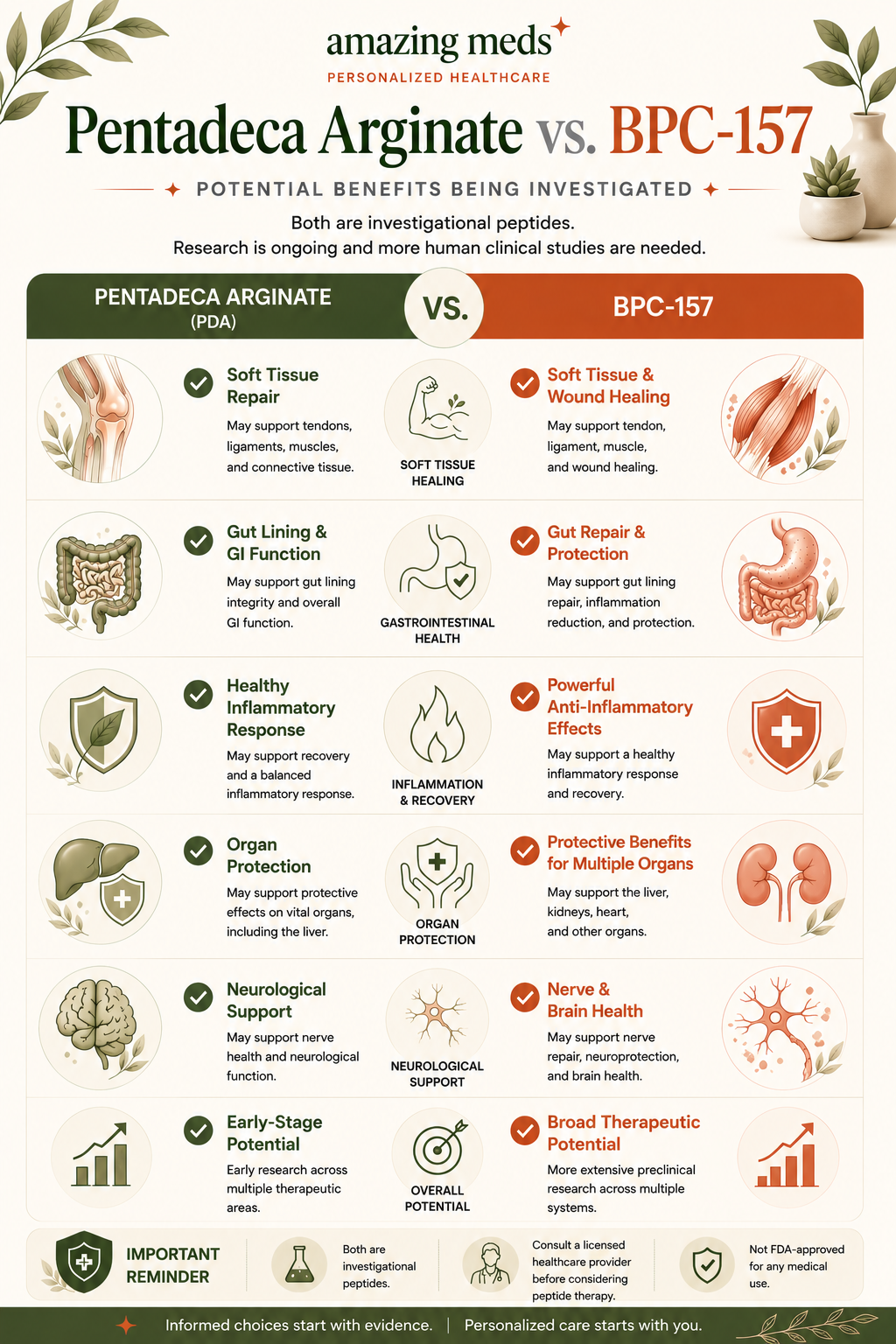
Current areas of investigation include:
-
- Soft tissue recovery
- Tendon and ligament health
- Musculoskeletal injuries
- Exercise recovery
- Healthy inflammatory responses
- Gastrointestinal tissue support
Although these areas are promising, Pentadeca Arginate remains investigational, and additional research is needed before conclusions can be drawn regarding its effectiveness in clinical practice.
What Is BPC-157?
BPC-157 (Body Protection Compound-157) is another investigational peptide that has received significant attention within regenerative medicine research. It is a synthetic peptide derived from a protein naturally found in gastric juice and has been studied extensively in laboratory and animal models.
Compared with Pentadeca Arginate, BPC-157 has been the subject of a larger body of preclinical research. However, high-quality human clinical trials remain limited, and the peptide has not been approved by the U.S. Food and Drug Administration (FDA) for therapeutic use.
Researchers continue investigating BPC-157 for its potential influence on tissue repair, gastrointestinal health, and inflammatory pathways.
How BPC-157 May Work
Although the exact mechanisms continue to be investigated, researchers believe BPC-157 may influence several biological processes associated with healing and recovery.
Preclinical studies suggest BPC-157 may:
-
- Support communication between cells involved in tissue repair
- Influence healthy inflammatory responses
- Promote blood vessel formation involved in healing
- Support gastrointestinal tissue integrity
- Encourage recovery of muscles, tendons, and ligaments following injury
Much of this evidence comes from animal and laboratory research, and additional human studies are required before these findings can be confirmed in clinical practice.
Potential Areas of Research
BPC-157 is being investigated across a broad range of regenerative medicine applications.
Current areas of research include:
-
- Gastrointestinal tissue health
- Tendon and ligament recovery
- Musculoskeletal injuries
- Exercise recovery
- Healthy inflammatory signaling
- Nerve and connective tissue regeneration
While these findings have generated considerable interest, BPC-157 remains an investigational peptide and should not be considered an established treatment for these conditions.
Pentadeca Arginate vs. BPC-157: Key Differences
Although Pentadeca Arginate and BPC-157 are both investigational peptides being studied for their potential roles in tissue repair and regenerative medicine, they differ in their origins, research history, and proposed biological activity.
Importantly, there are no large head-to-head human clinical trials directly comparing the two peptides. Most available information comes from laboratory studies, animal research, and limited early human evidence. As a result, neither peptide can currently be considered superior to the other based on high-quality clinical evidence.
The comparison below summarizes what researchers currently understand.
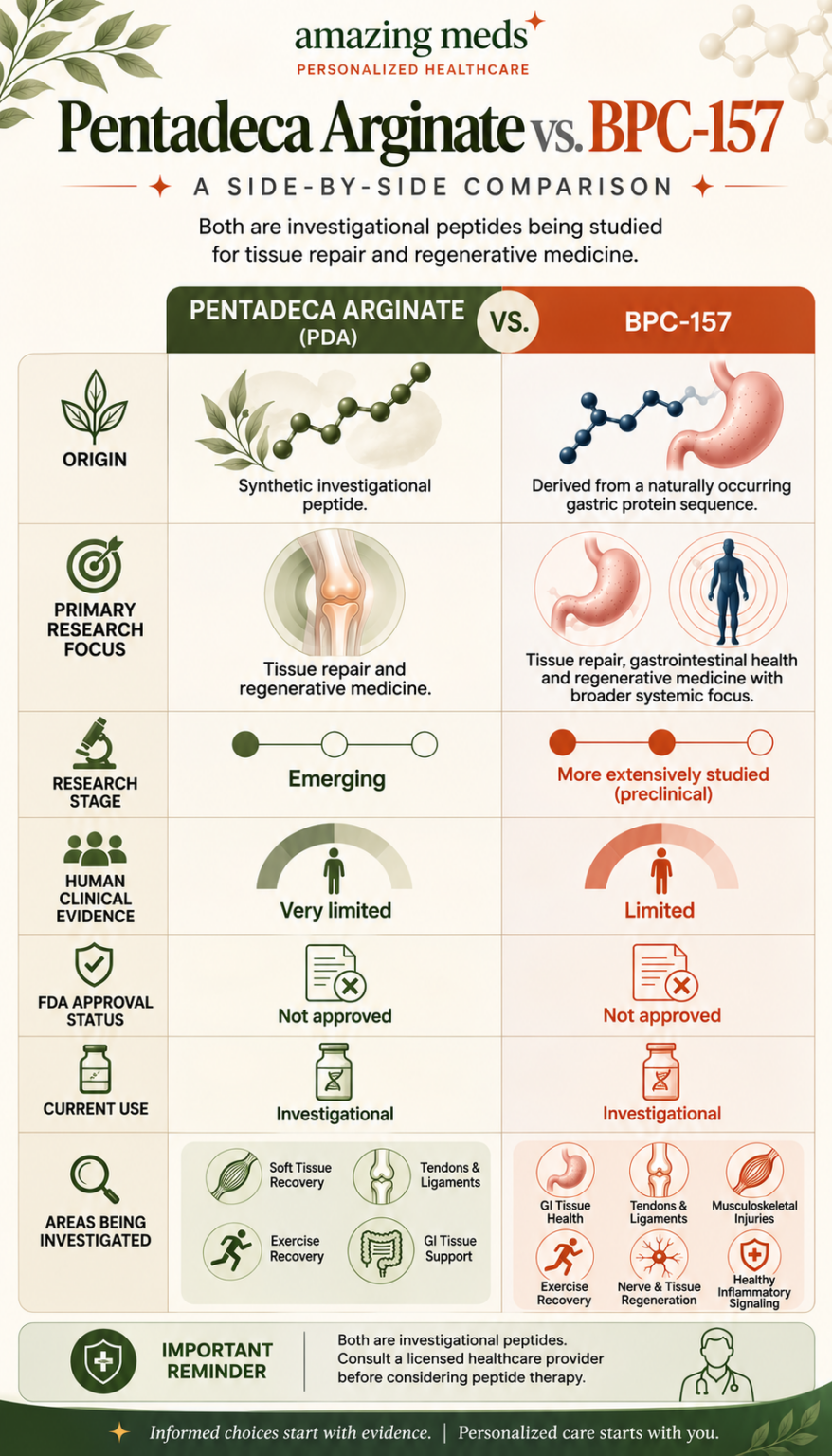
| Feature | Pentadeca Arginate | BPC-157 |
|---|---|---|
| Origin | Synthetic investigational peptide | Synthetic peptide derived from a naturally occurring gastric protein sequence |
| Primary Research Focus | Tissue repair and regenerative medicine | Tissue repair, gastrointestinal health, and regenerative medicine |
| Research History | Emerging | More extensively studied in preclinical research |
| Human Clinical Evidence | Very limited | Limited |
| FDA Approval | Not approved | Not approved |
| Clinical Use | Investigational | Investigational |
Comparing Their Proposed Mechanisms
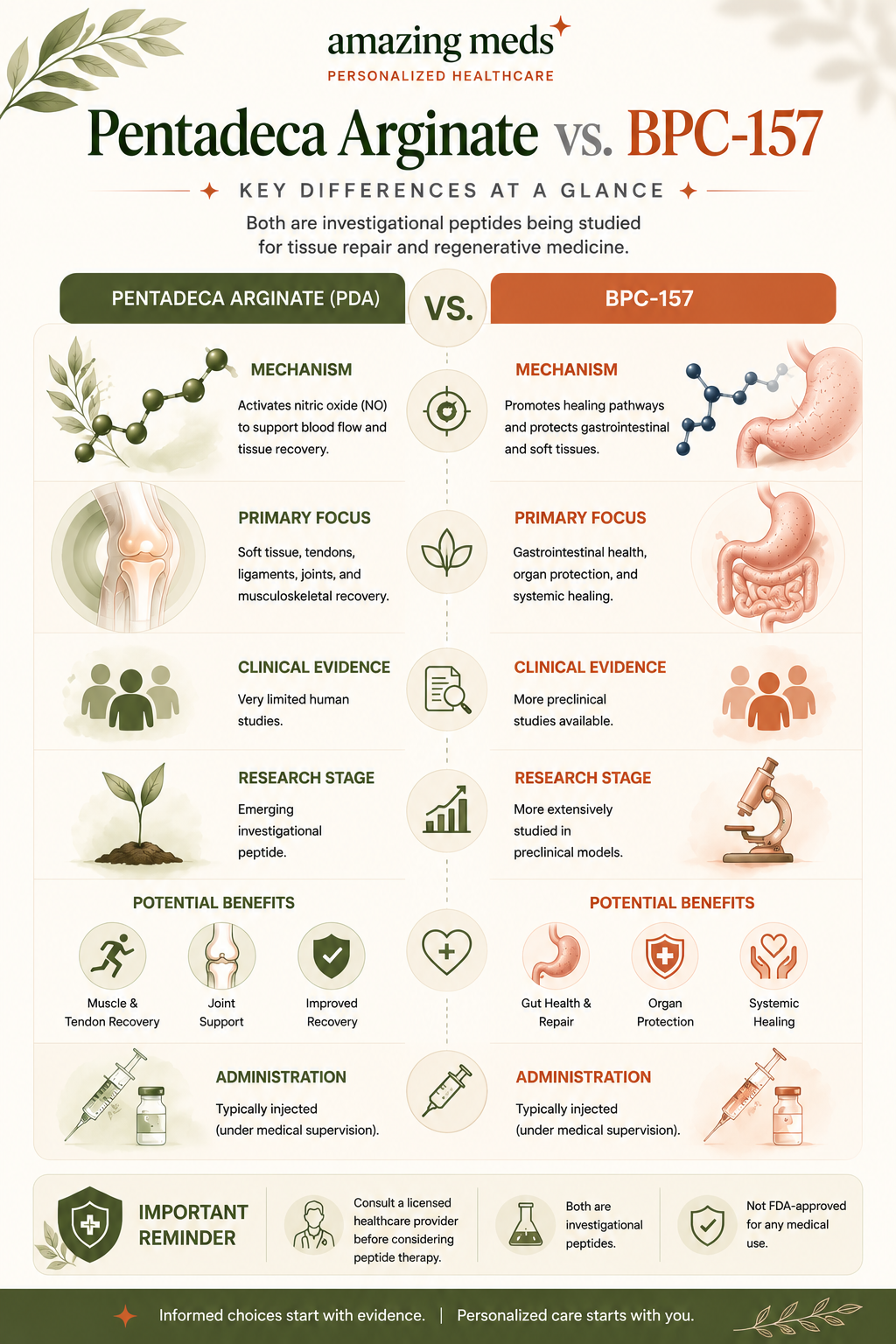
Researchers believe both peptides may influence tissue repair, but they appear to do so through different biological pathways.
Pentadeca Arginate
Current research suggests Pentadeca Arginate may primarily influence:
-
- Cellular communication involved in tissue repair
- Connective tissue recovery
- Healthy inflammatory responses
- Regenerative signaling pathways
Scientists continue investigating whether these mechanisms may support localized healing and recovery following injury.
BPC-157
Preclinical studies suggest BPC-157 may influence several biological systems, including:
-
- Tissue repair pathways
- Blood vessel formation involved in healing
- Gastrointestinal tissue integrity
- Healthy inflammatory signaling
- Connective tissue regeneration
Researchers continue exploring these mechanisms in laboratory and animal studies, while human clinical evidence remains limited.
Research and Human Clinical Evidence
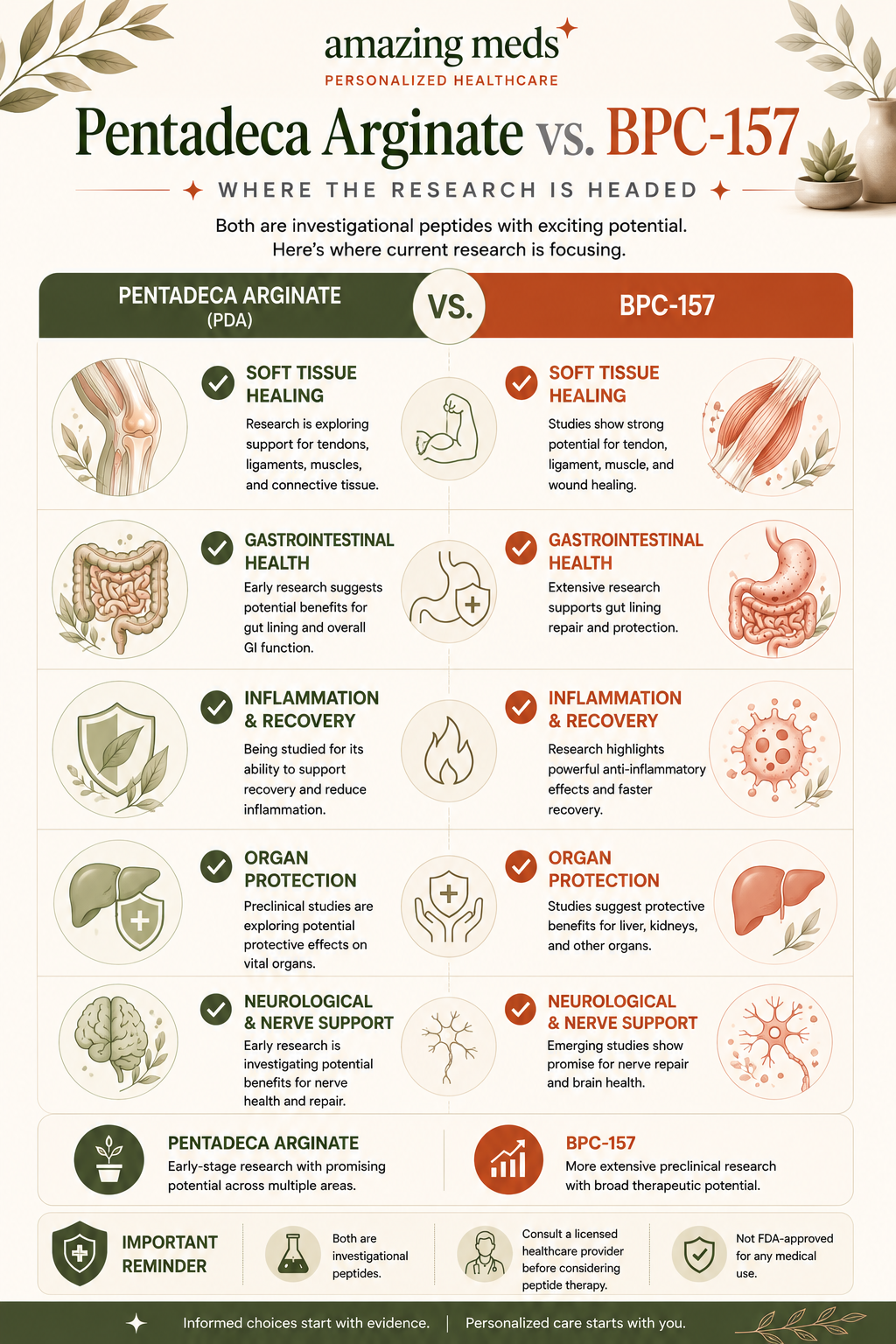
One of the biggest differences between Pentadeca Arginate and BPC-157 is the amount of available research—not necessarily the strength of evidence.
Pentadeca Arginate
Pentadeca Arginate is a relatively new investigational peptide.
Current research includes:
-
- Laboratory studies
- Preclinical models
- Early exploratory investigations
Because published human clinical trials remain scarce, researchers are still working to better understand its safety profile, appropriate dosing, and potential therapeutic applications.
BPC-157
BPC-157 has been investigated for a longer period and has generated a larger body of preclinical research.
Studies have explored its potential role in:
-
- Tendon and ligament recovery
- Gastrointestinal tissue support
- Musculoskeletal healing
- Healthy inflammatory responses
However, most of these findings come from animal and laboratory research. High-quality human clinical trials remain limited, meaning additional research is necessary before its effectiveness can be confirmed in routine medical practice.
Safety and Regulatory Status
When researching peptide therapy, it’s important to distinguish between scientific interest and established medical treatment.
Neither Pentadeca Arginate nor BPC-157 has been approved by the U.S. Food and Drug Administration (FDA) as a treatment for tissue repair, musculoskeletal injuries, gastrointestinal disease, or regenerative medicine.
Because both peptides remain investigational:
-
- Long-term safety has not been fully established.
- Optimal dosing protocols continue to be studied.
- Potential side effects require further investigation.
- Product quality may vary significantly between sources.
Anyone considering peptide therapy should do so only under the supervision of a qualified healthcare provider.
Availability and Medical Supervision
Although investigational peptides are widely discussed online, obtaining products from unverified sources may expose patients to significant risks, including contamination, inaccurate dosing, or counterfeit ingredients.
If peptide therapy is being considered, the safest approach is to consult a licensed healthcare provider who can:
-
- Review your medical history
- Discuss current evidence
- Evaluate potential risks and benefits
- Determine whether peptide therapy fits your individualized treatment plan
- Ensure treatment is obtained through reputable medical channels when appropriate
Professional guidance is particularly important because research in this field continues to evolve.
Is One Better Than the Other?
At this time, there is no definitive evidence demonstrating that Pentadeca Arginate is superior to BPC-157—or vice versa.
Each peptide is being investigated for different potential applications, and the existing evidence does not support declaring one as the preferred option for all patients or conditions.
The most appropriate treatment depends on many individual factors, including:
-
- Medical history
- Current symptoms
- Overall health
- Existing medical conditions
- Treatment goals
- Provider recommendations
- The evolving scientific evidence
Rather than focusing on finding the “better” peptide, it’s more helpful to determine whether peptide therapy is appropriate for your unique circumstances through a comprehensive medical evaluation.
Final Thoughts
Pentadeca Arginate and BPC-157 represent two promising areas of ongoing research within regenerative medicine. While both peptides have generated scientific interest for their potential roles in tissue repair and recovery, much of the available evidence remains preclinical, and important questions regarding safety, effectiveness, and long-term outcomes are still being investigated.
If you’re considering peptide therapy, the most important step isn’t deciding which peptide is “better”—it’s working with a qualified healthcare provider who can evaluate your individual health needs and explain the current evidence in the context of your treatment goals.
As research continues to evolve, informed medical guidance remains the safest and most effective approach to exploring investigational therapies.
Explore Personalized Peptide Therapy
Interested in learning whether peptide therapy may be right for you?
Amazing Meds connects patients with licensed healthcare providers who develop personalized treatment plans based on your health history, symptoms, and wellness goals.
Frequently Asked Questions
Is Pentadeca Arginate stronger than BPC-157?
Current research does not support concluding that one peptide is stronger or more effective than the other. Both remain investigational, and direct comparative human studies are lacking.
Which peptide has more research?
BPC-157 has been studied more extensively in laboratory and animal models. However, both peptides still require additional high-quality human clinical trials before their therapeutic roles can be clearly established.
Are either of these peptides FDA-approved?
No. Neither Pentadeca Arginate nor BPC-157 is approved by the U.S. Food and Drug Administration (FDA) for treating tissue injuries, gastrointestinal disorders, or regenerative conditions.
Can these peptides be used together?
Researchers have explored various peptide combinations, but there is currently insufficient clinical evidence to recommend combining Pentadeca Arginate and BPC-157 outside of appropriate medical supervision.
Who may be a candidate for peptide therapy?
Eligibility depends on individual health needs, medical history, and treatment goals. A licensed healthcare provider is best equipped to determine whether investigational peptide therapy may be appropriate.
Research Resources
-
- U.S. Food and Drug Administration (FDA) – Human Drug Compounding Information
https://www.fda.gov/drugs/human-drug-compounding - PubMed – Peptide Research Database
https://pubmed.ncbi.nlm.nih.gov/ - PubMed Central (PMC) – Regenerative Medicine Research
https://pmc.ncbi.nlm.nih.gov/ - National Institutes of Health (NIH) – Biomedical Research Resources
https://www.nih.gov/ - International Journal of Molecular Sciences – Reviews on regenerative peptides and tissue repair
- U.S. Food and Drug Administration (FDA) – Human Drug Compounding Information