

As interest in peptide therapy continues to grow, many people are searching for answers to one important question: Can you get BPC-157 prescribed?
Because BPC-157 has received attention for its potential role in tissue repair and recovery, it’s understandable why patients want to know whether it’s available through a licensed healthcare provider. However, the answer depends on current regulations, clinical judgment, and your individual health needs.
In this guide, we’ll explain how peptide therapy consultations typically work, discuss the current regulatory status of BPC-157, and outline what to expect if you’re exploring treatment options with a qualified medical provider.
Curious About Peptide Therapy?
If you’re interested in learning whether peptide therapy may be appropriate for your health goals, our licensed healthcare providers offer personalized evaluations based on your medical history, symptoms, and laboratory findings.
What Is BPC-157?
BPC-157 (Body Protection Compound-157) is a synthetic peptide derived from a naturally occurring protective protein found in gastric juice.
Researchers have studied BPC-157 for its potential role in tissue repair, gastrointestinal health, blood vessel formation, and inflammatory responses. Most available evidence comes from laboratory and animal studies, while human clinical research remains limited.
Because of this, BPC-157 has not been approved by the U.S. Food and Drug Administration (FDA) for treating any medical condition.
Understanding this distinction is important before exploring peptide therapy with a healthcare provider.
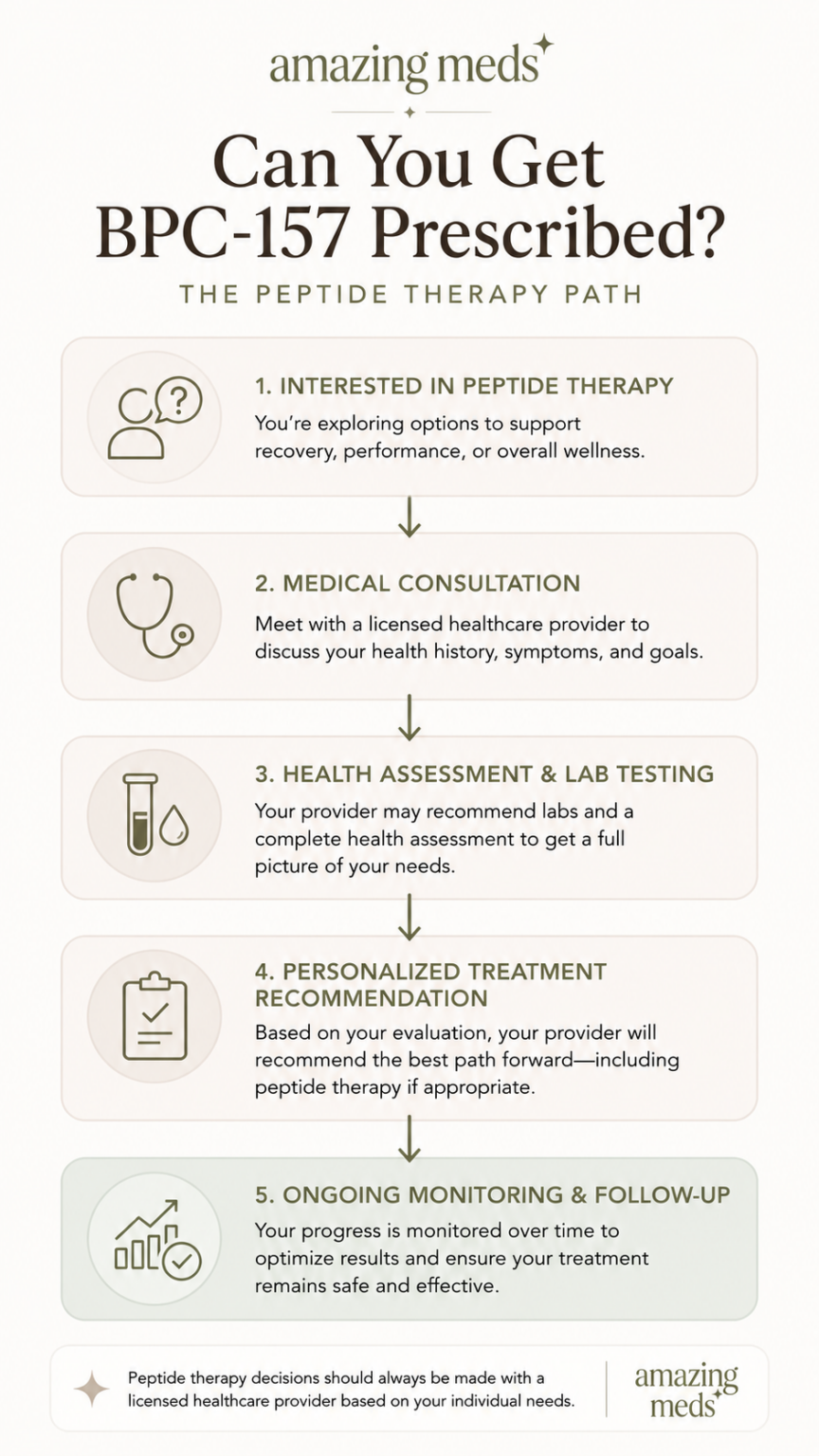
Can You Get BPC-157 Prescribed?
Many people assume that because BPC-157 is discussed online, it is widely available as a prescription medication. In reality, the situation is more complex.
BPC-157 is not an FDA-approved medication, and healthcare providers must follow applicable federal and state regulations when considering peptide therapies.
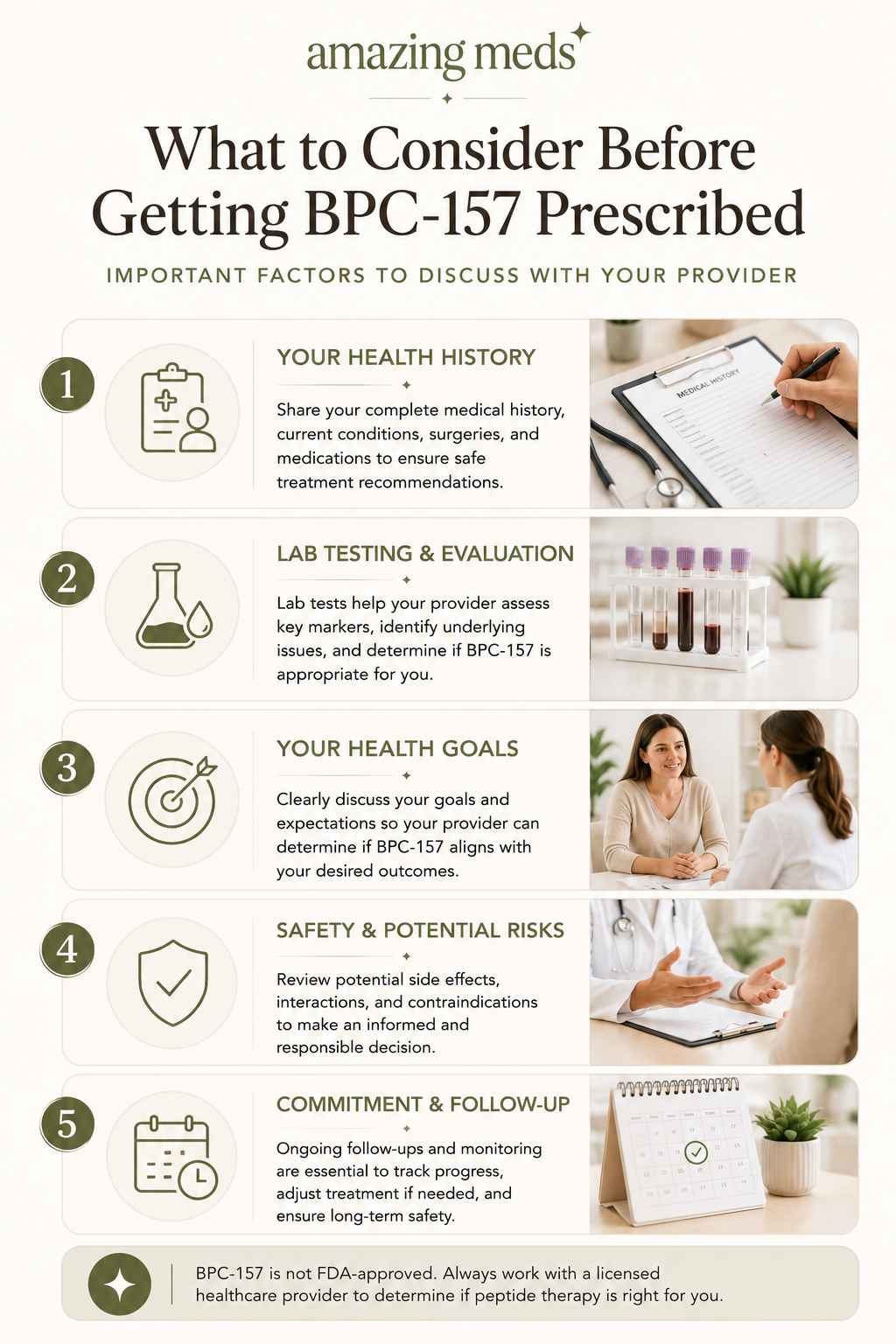
If you’re interested in treatment, your provider will first determine whether peptide therapy is appropriate based on your medical history, current symptoms, laboratory results, and overall health goals.
In some cases, a provider may recommend a different evidence-based treatment that better fits your individual needs.
Who May Be a Candidate for Peptide Therapy?
Every patient is different, which is why peptide therapy begins with a comprehensive medical evaluation rather than a single diagnosis.
A provider may consider factors such as:
-
- Your medical history
- Current symptoms
- Previous treatments
- Lifestyle habits
- Laboratory results
- Wellness goals
This information helps determine whether peptide therapy—or another evidence-based treatment—is appropriate for your individual situation.
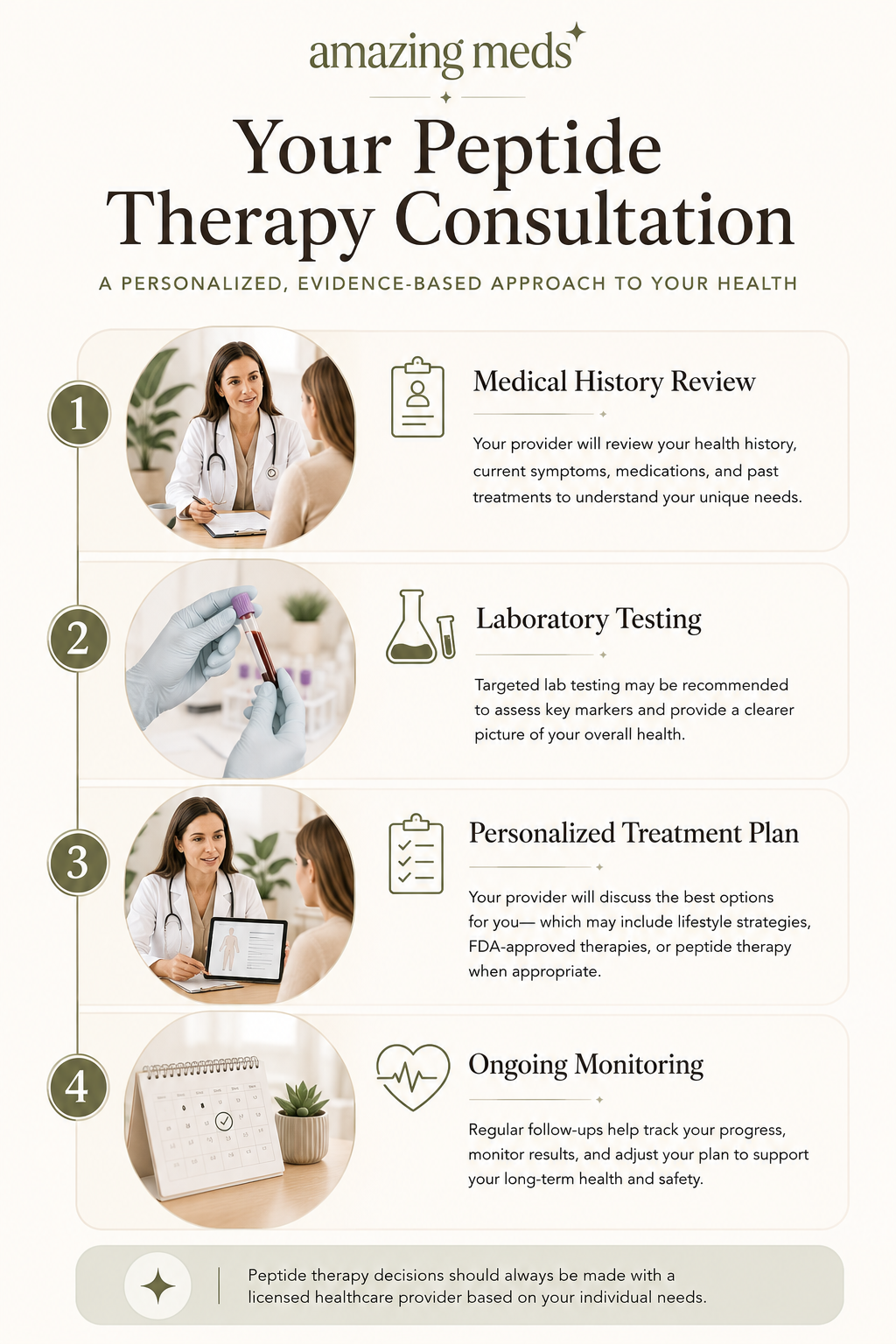
What Happens During a Peptide Therapy Consultation?
If you’re considering peptide therapy, your first appointment is designed to help your provider understand your overall health—not simply determine whether BPC-157 is appropriate.
A typical consultation may include:
1. Medical History Review
Your provider will discuss:
-
- Current symptoms
- Existing medical conditions
- Previous treatments
- Current medications
- Allergies
- Family health history
This helps identify factors that may influence your treatment options.
2. Laboratory Evaluation
Depending on your symptoms and goals, your provider may recommend laboratory testing to better understand your health.
These results can help evaluate areas such as:
- Hormone balance
- Inflammatory markers
- Metabolic health
- Nutritional status
- Overall wellness
Laboratory findings are one part of creating a personalized treatment plan.
3. Personalized Treatment Discussion
After reviewing your health history and any available laboratory results, your provider will discuss treatment options that best align with your needs.
Depending on your situation, recommendations may include:
- Lifestyle modifications
- Nutrition strategies
- FDA-approved medications
- Other evidence-based therapies
- Peptide therapy, when appropriate
Every recommendation should be individualized rather than based on a single product or protocol.
4. Ongoing Monitoring
Healthcare doesn’t end after the initial visit.
If treatment is recommended, follow-up appointments help monitor your progress, evaluate your response, and make adjustments when needed to support both safety and effectiveness.
What Questions Will Your Provider Ask?
During your consultation, expect your provider to ask questions about your health goals and overall well-being.
These may include:
-
- What symptoms are you experiencing?
- When did your symptoms begin?
- What treatments have you already tried?
- What are your wellness goals?
- What medications or supplements do you currently take?
- Have you completed any recent laboratory testing?
Providing accurate information allows your provider to make recommendations that are appropriate for your individual circumstances.
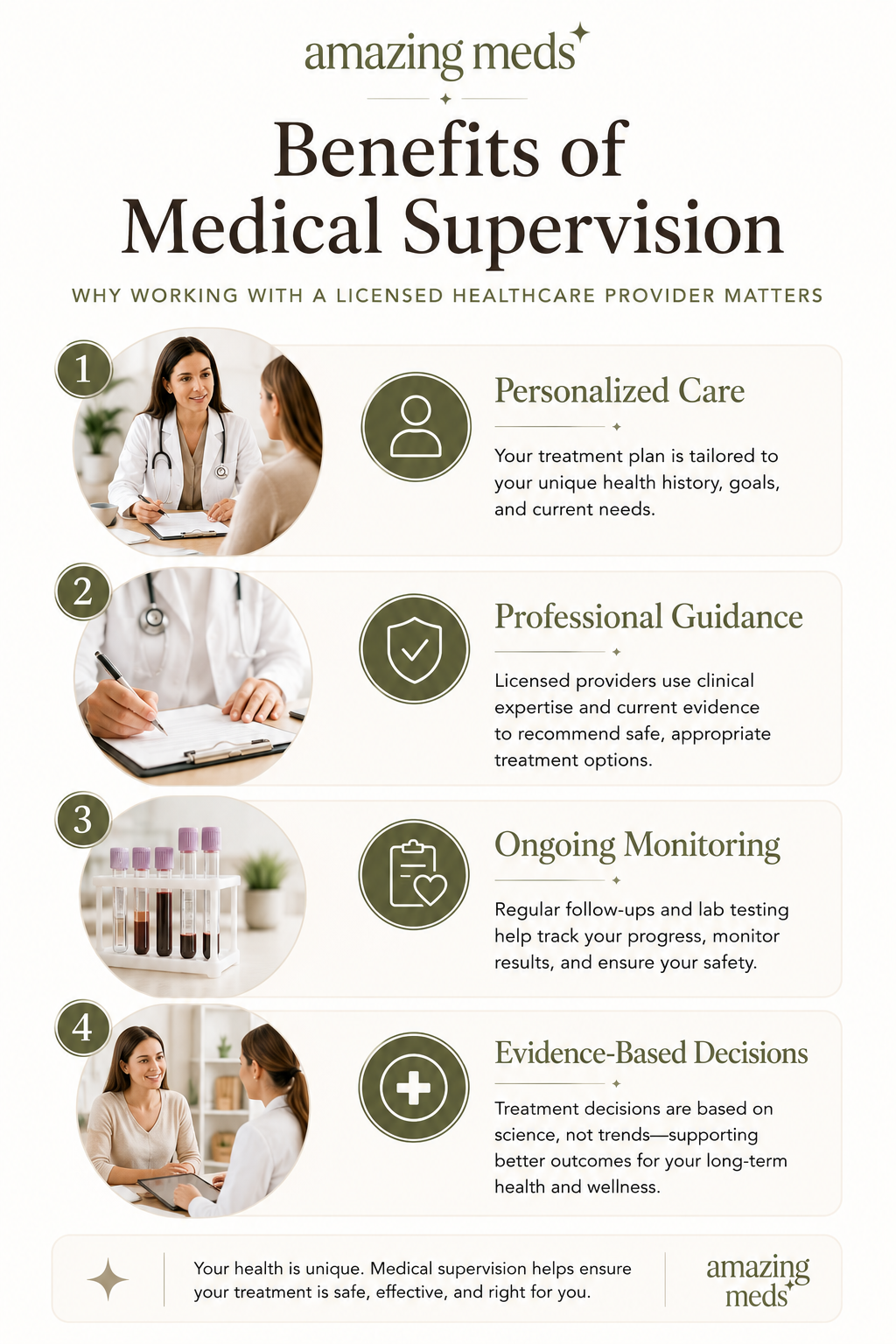
Why Medical Supervision Matters
Peptide therapy should never be approached as a one-size-fits-all solution.
Medical supervision helps ensure that treatment decisions are based on current evidence, your health history, and ongoing clinical monitoring.
Working with a licensed healthcare provider can help:
-
- Improve treatment safety
- Monitor progress over time
- Adjust therapy when needed
- Reduce unnecessary risks
- Support informed decision-making
What If BPC-157 Isn't the Right Option?
Not every patient will benefit from the same treatment approach.
Depending on your medical history, symptoms, and goals, your provider may recommend other evidence-based therapies that are more appropriate for your situation.
The objective isn’t simply finding access to a specific peptide—it’s identifying the treatment plan most likely to support your long-term health.
An individualized approach helps ensure that recommendations are based on science, safety, and your unique healthcare needs.
Ready to Learn More?
If you’re interested in exploring peptide therapy, Amazing Meds provides personalized consultations focused on evidence-based care and individualized treatment planning.
Our licensed healthcare providers can help you understand your options and recommend therapies that align with your unique health goals.
Frequently Asked Questions
Can a doctor prescribe BPC-157?
BPC-157 is not an FDA-approved medication. Availability depends on current regulations and clinical judgment.
Is BPC-157 FDA-approved?
No. The FDA has not approved BPC-157 for treating any medical condition.
Will I need laboratory testing?
Depending on your symptoms and health goals, your provider may recommend laboratory testing as part of your evaluation.
What happens during the first appointment?
Your provider reviews your medical history, discusses your goals, evaluates available laboratory data, and recommends an individualized treatment plan.
Are there alternatives to BPC-157?
Yes. Depending on your individual needs, your provider may recommend FDA-approved therapies or other evidence-based treatment options.
How do I know if peptide therapy is appropriate?
A comprehensive consultation with a licensed healthcare provider is the best way to determine whether peptide therapy aligns with your health goals and medical history.
Research Resources
- U.S. Food & Drug Administration (FDA). Certain Bulk Drug Substances for Use in Compounding May Present Significant Safety Risks.
https://www.fda.gov/drugs/human-drug-compounding/certain-bulk-drug-substances-use-compounding-may-present-significant-safety-risks - National Library of Medicine (PubMed). BPC-157 Research Publications.
https://pubmed.ncbi.nlm.nih.gov/?term=BPC-157 - National Center for Biotechnology Information (NCBI). Stable Gastric Pentadecapeptide BPC-157: Review of Experimental Findings.
https://pmc.ncbi.nlm.nih.gov/articles/PMC8504390/ - MedlinePlus. Medicines and Supplements.
https://medlineplus.gov/druginformation.html