
BPC-157 has become one of the most talked-about peptides in wellness and regenerative medicine. As its popularity has grown, so have questions about whether it is legal, FDA-approved, and available as a medical treatment.
The answer isn’t as simple as “yes” or “no.”
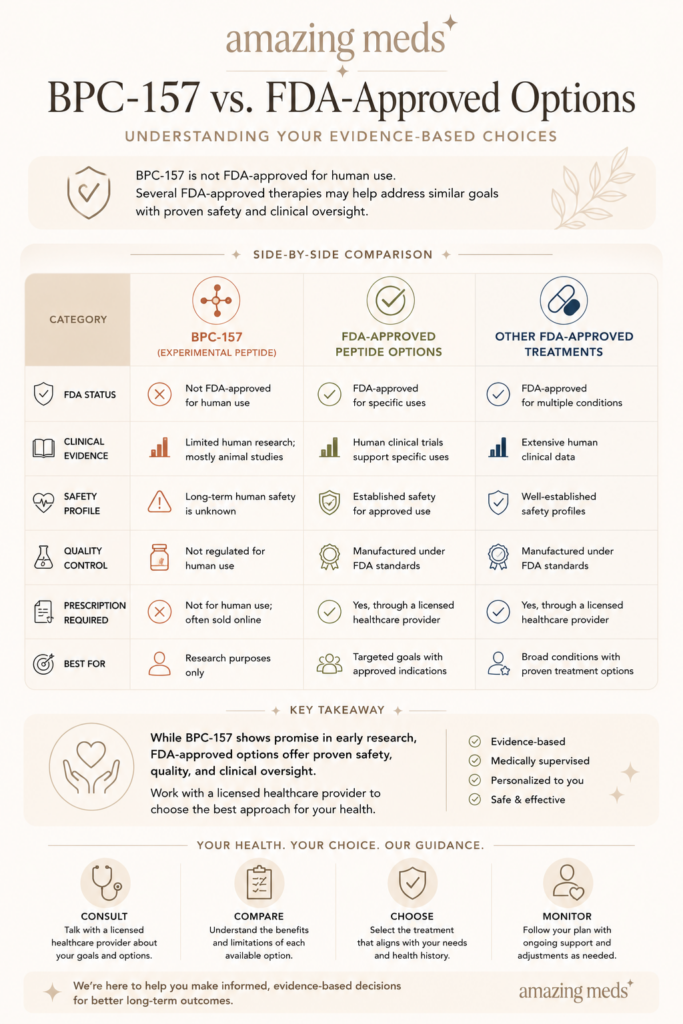
While BPC-157 can legally be purchased for certain research purposes, it is not approved by the U.S. Food and Drug Administration (FDA) for human use, and its availability for medical treatment is subject to important regulatory restrictions.
Understanding these distinctions is essential before considering any peptide therapy.
In this guide, we’ll explain the legal status of BPC-157, review the FDA’s position, discuss the risks of purchasing unregulated products, and explore what legally available alternatives may exist under medical supervision.
Interested in Learning More About Peptide Therapy?
If you’re exploring peptide-based wellness treatments, our licensed healthcare providers can help you understand your options and determine whether an evidence-based treatment plan is appropriate for your individual health goals.
What Is BPC-157?
BPC-157, short for Body Protection Compound-157, is a synthetic peptide made up of 15 amino acids. It was originally developed from a protective protein naturally found in human gastric juice.
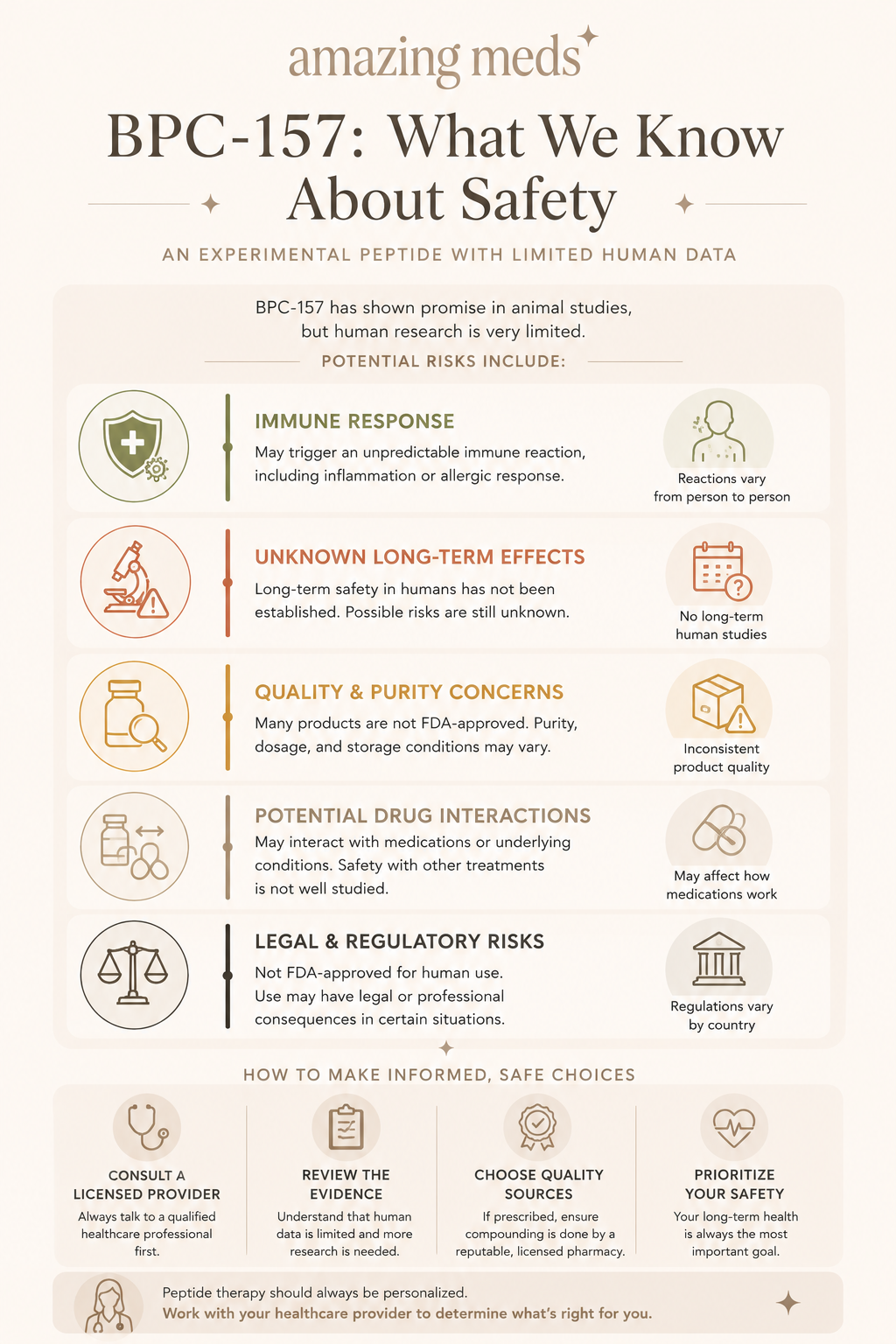
Researchers have studied BPC-157 for its potential role in supporting tissue repair, gastrointestinal health, blood vessel formation, and inflammatory responses. Most of this research has been conducted in laboratory and animal models, with only limited data available from human studies.
Because evidence in humans remains limited, BPC-157 should still be considered an experimental peptide rather than an established medical treatment.
Is BPC-157 Legal?
The legality of BPC-157 depends largely on how it is being used.
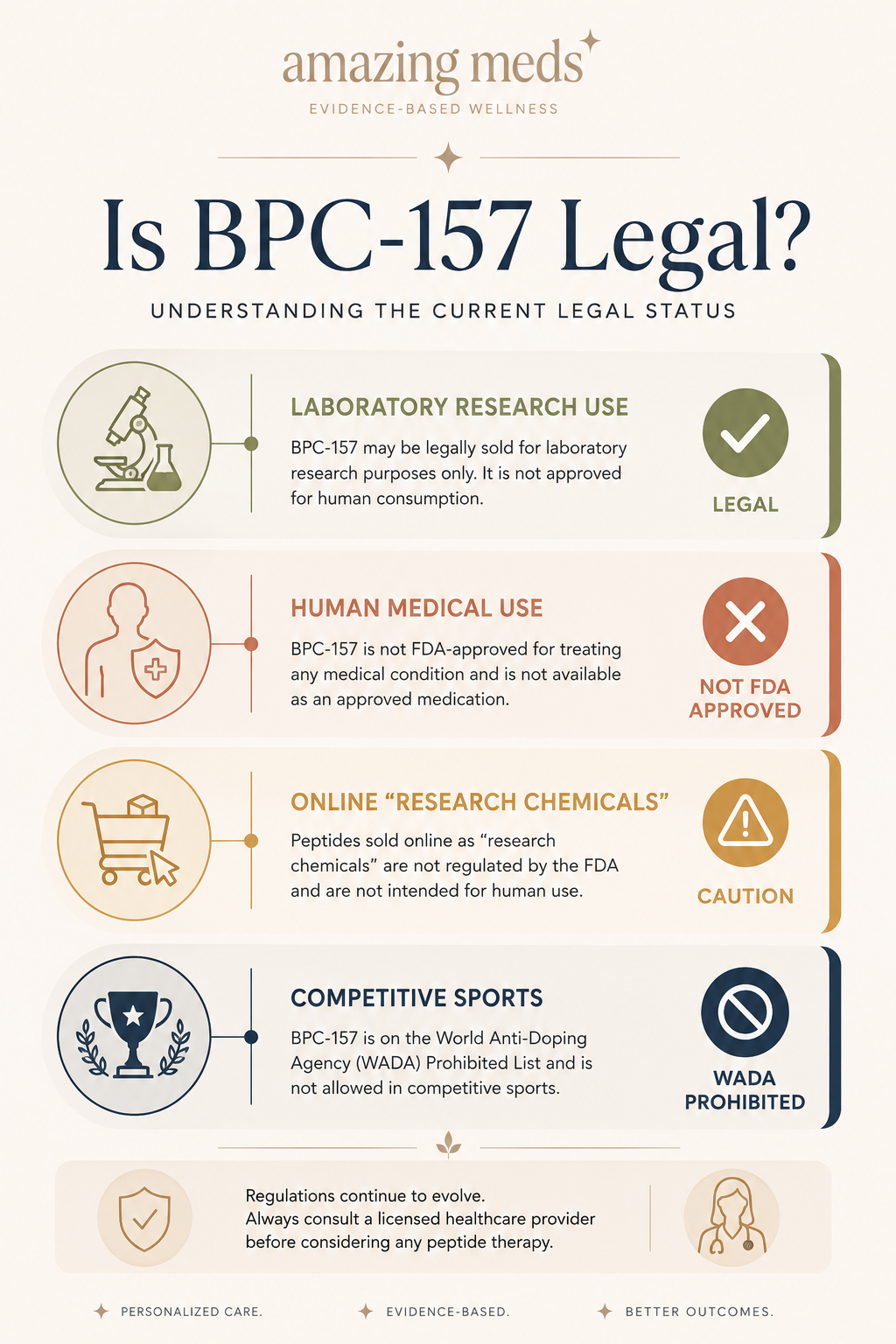
For example, BPC-157 may be sold for laboratory research purposes in certain situations. However, this does not mean it has been approved as a medication for human use.
In the United States:
-
- BPC-157 is not FDA-approved as a prescription medication.
- It is not approved for over-the-counter use.
- The FDA has raised concerns regarding compounded BPC-157 products due to limited safety information.
- Products marketed online as “research chemicals” are generally not intended for human consumption.
Because regulations continue to evolve, anyone considering peptide therapy should seek guidance from a licensed healthcare provider rather than relying on products sold through unregulated websites.
Understanding the FDA's Position
The FDA has not approved BPC-157 for treating any medical condition.
In addition, the agency has identified concerns related to compounded BPC-157 products, including:
-
- Limited human safety data
- Uncertain effectiveness
- Product quality and purity
- Potential immune reactions
- Challenges in manufacturing consistency
Without sufficient evidence from well-designed human clinical trials, the FDA has not determined that BPC-157 meets the standards required for approval as a safe and effective medication.
This does not necessarily mean BPC-157 has been proven harmful—it means that the available evidence is currently insufficient for FDA approval.
Why Isn't BPC-157 FDA Approved?
Before any medication receives FDA approval, it must undergo extensive clinical testing to demonstrate both safety and effectiveness.
At this time, BPC-157 has not met those requirements.
Although laboratory and animal studies have produced promising findings, researchers still need large, high-quality human clinical trials to answer important questions, including:
-
- Does it consistently work in humans?
- What dosage is appropriate?
- What are the long-term safety risks?
- Which patients may benefit most?
- How does it compare to existing therapies?
Until these questions can be answered through rigorous clinical research, BPC-157 remains an investigational peptide.
Can Doctors Prescribe BPC-157?
Because BPC-157 is not FDA-approved, it is not available as a standard FDA-approved prescription medication.
Healthcare providers must follow applicable federal and state regulations regarding peptide therapies and compounded medications. Availability may vary depending on evolving regulatory guidance and individual clinical circumstances.
If you’re interested in peptide therapy, it’s important to discuss your options with a licensed provider who can explain what treatments are legally available and supported by current evidence.
What Are the Risks of Buying BPC-157 Online?
A quick online search reveals hundreds of websites selling BPC-157, often marketed as a solution for recovery, performance, or anti-aging. However, many of these products are labeled “for research use only” and are not intended for human consumption.
Purchasing peptides from unregulated sources carries several potential risks, including:
-
- Unverified ingredient quality
- Incorrect dosing or concentration
- Contamination during manufacturing
- Counterfeit or mislabeled products
- Lack of medical supervision
- Unknown long-term safety
Because these products are not evaluated by the FDA for quality, safety, or effectiveness, consumers may not know exactly what they are receiving.
If you’re considering peptide therapy, it’s safest to work with a licensed healthcare provider who can discuss regulated treatment options appropriate for your individual needs.
Are There FDA-Regulated Alternatives?
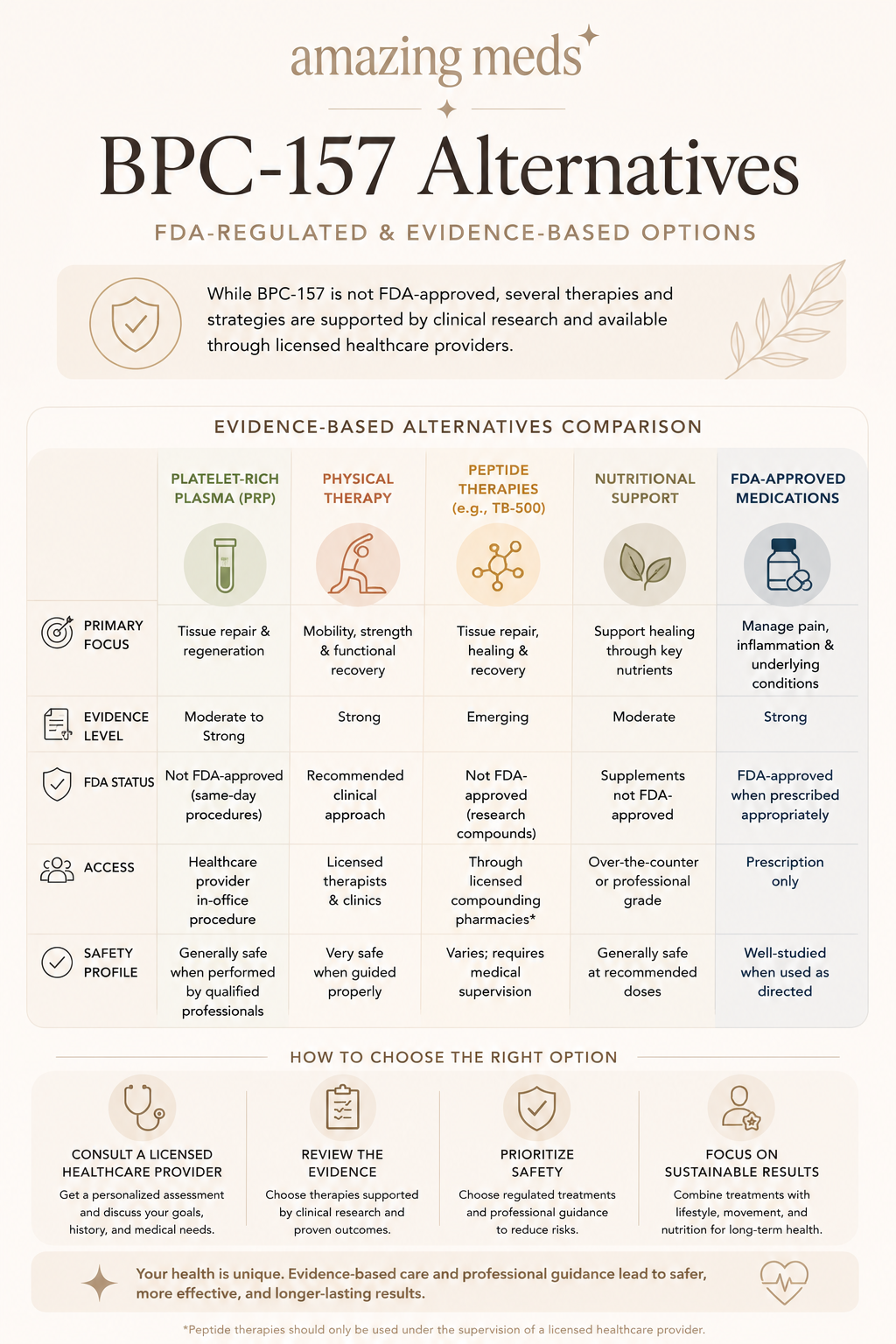
Although BPC-157 itself is not FDA-approved, there are peptide-based therapies and other evidence-based treatments that may be appropriate depending on your health goals.
At Amazing Meds, treatment recommendations are always personalized and based on your medical history, symptoms, laboratory findings, and wellness objectives.
Rather than focusing on a single peptide, providers evaluate the bigger picture to determine which therapies have the strongest evidence for your specific needs.
Depending on your goals, this may include treatments designed to support:
-
- Healthy aging
- Hormone balance
- Weight management
- Metabolic health
- Recovery and overall wellness
The right approach varies from person to person, which is why a professional medical evaluation is an important first step.
Why Medical Supervision Matters
Peptide therapy is not one-size-fits-all.
Before recommending any treatment, a licensed provider should review your:
-
- Medical history
- Current medications
- Existing health conditions
- Lifestyle factors
- Laboratory results
- Treatment goals
This comprehensive evaluation helps determine whether peptide therapy—or another evidence-based option—is appropriate while reducing the risk of unnecessary complications.
Questions to Ask Before Starting Peptide Therapy
Whether you’re researching BPC-157 or another peptide, asking informed questions can help you make safer healthcare decisions.
Consider discussing the following with your provider:
-
- Is this treatment FDA-approved?
- What human clinical evidence supports its use?
- What are the known risks and limitations?
- Are there approved alternatives?
- How will my treatment be monitored?
- What side effects should I watch for?
- Is this therapy appropriate for my medical history?
An open conversation helps ensure your treatment plan is based on current evidence and your individual health needs.
Explore Your Treatment Options
Navigating peptide therapy can be confusing, especially as regulations and research continue to evolve.
At Amazing Meds, our licensed healthcare providers focus on evidence-based care, personalized treatment plans, and patient education to help you make informed decisions about your health.
If you’re interested in learning more about peptide therapy or other wellness treatments, we’re here to help.
Frequently Asked Questions
Is BPC-157 legal in the United States?
BPC-157 may be available for laboratory research purposes, but it is not FDA-approved for human use as a medication.
Is BPC-157 FDA-approved?
No. The FDA has not approved BPC-157 for treating any medical condition.
Can doctors prescribe BPC-157?
Availability depends on current regulations and clinical circumstances. BPC-157 is not an FDA-approved prescription medication.
Why isn’t BPC-157 approved?
More high-quality human clinical research is needed to establish its safety and effectiveness before FDA approval can be considered.
Is it safe to buy BPC-157 online?
Buying products from unregulated websites carries risks related to quality, purity, and dosing. Always consult a licensed healthcare provider before considering peptide therapy.
Is BPC-157 banned in sports?
Yes. BPC-157 appears on the World Anti-Doping Agency (WADA) Prohibited List under the category of unapproved substances.
Are there legal alternatives?
Depending on your health goals, your provider may recommend FDA-approved therapies or other evidence-based treatment options that are legally available under medical supervision.
How do I know if peptide therapy is right for me?
The best way is through a comprehensive medical evaluation with a licensed healthcare provider who can review your health history, symptoms, and treatment goals.
Research Resources
-
- U.S. Food & Drug Administration (FDA). Certain Bulk Drug Substances for Use in Compounding May Present Significant Safety Risks.
https://www.fda.gov/drugs/human-drug-compounding/certain-bulk-drug-substances-use-compounding-may-present-significant-safety-risks - World Anti-Doping Agency (WADA). Prohibited List.
https://www.wada-ama.org/en/prohibited-list - U.S. Anti-Doping Agency (USADA). BPC-157 Peptide Prohibited Under the S0 Category.
https://www.usada.org/spirit-of-sport/bpc-157-peptide-prohibited/ - National Library of Medicine (PubMed). BPC-157 Research Publications.
https://pubmed.ncbi.nlm.nih.gov/?term=BPC-157 - National Center for Biotechnology Information (NCBI). Stable Gastric Pentadecapeptide BPC-157: Review of Experimental Findings.
https://pmc.ncbi.nlm.nih.gov/articles/PMC8504390/ - MedlinePlus. Medicines and Supplements.
https://medlineplus.gov/druginformation.html
- U.S. Food & Drug Administration (FDA). Certain Bulk Drug Substances for Use in Compounding May Present Significant Safety Risks.