By Dr. Jennifer Frangos, D.O. Updated November 2026.
Peptide therapy has become an area of growing interest in regenerative medicine, with researchers exploring how certain peptides may support tissue repair and recovery.
Among the most discussed are BPC-157 and TB-500. While both peptides are commonly associated with healing and recovery, they differ in their origins, proposed mechanisms, and areas of research.
If you’re comparing BPC-157 vs TB-500, this guide explains how each peptide is thought to work, the conditions they’re being studied for, where they stand with the FDA and anti-doping rules, and why a personalized medical evaluation matters before considering peptide therapy.
For an overview of peptide evidence and regulatory status, explore our peptide therapy hub.
For the distinction between the fragment and the full protein, read our TB-500 and thymosin beta-4 guide.
What Are BPC-157 and TB-500?
BPC-157: A Peptide Inspired by Gastric Juice
BPC-157 (Body Protection Compound-157) is a synthetic peptide made of 15 amino acids, based on a protective protein found in human gastric juice. It has attracted research interest because of its potential role in tissue repair, gastrointestinal health, blood vessel formation, and recovery following injury. For a fuller overview, see our guide to what BPC-157 is.
Lab and animal studies suggest BPC-157 may influence several biological pathways involved in healing, but human evidence is very thin. A 2025 systematic review in orthopaedic sports medicine included 36 studies: 35 were preclinical and only 1 was a clinical study, a small retrospective review of 12 patients with knee pain. The authors concluded that clinical safety in humans remains unknown.
TB-500: A Synthetic Fragment of Thymosin Beta-4
TB-500 is a short synthetic fragment of thymosin beta-4. The FDA lists it as “thymosin beta-4, fragment (LKKTETQ)”. Thymosin beta-4 itself is a naturally occurring protein found in nearly all of the body’s cells, and it plays a role in cell migration and wound healing.
Researchers have explored thymosin beta-4 for its potential involvement in wound healing, tissue repair, and inflammation, mostly in lab and animal studies (review). TB-500 itself has even less data: the FDA states it has not identified any human exposure data for the fragment.
How Do BPC-157 and TB-500 Work?
Proposed Mechanisms of BPC-157
Researchers continue investigating several biological pathways that may explain BPC-157’s potential effects. Lab and animal research suggests BPC-157 may:
- Support angiogenesis (formation of new blood vessels)
- Support wound healing processes
- Help regulate inflammatory signaling
- Protect the gastrointestinal lining
- Promote cellular repair processes after injury
These proposed mechanisms are based on preclinical research and have not been confirmed in people.
Proposed Mechanisms of TB-500
TB-500 has been studied for its potential effects on cellular movement and tissue remodeling. Most of the research behind these ideas used full-length thymosin beta-4, which is a different molecule from the short TB-500 fragment. Researchers have explored whether thymosin beta-4 may:
- Support cell migration during tissue repair
- Influence inflammatory responses
- Support new blood vessel formation
- Assist wound and connective tissue healing
More human studies are needed before these proposed mechanisms can be confirmed clinically.
Key Differences Between BPC-157 and TB-500
| Feature | BPC-157 | TB-500 |
|---|---|---|
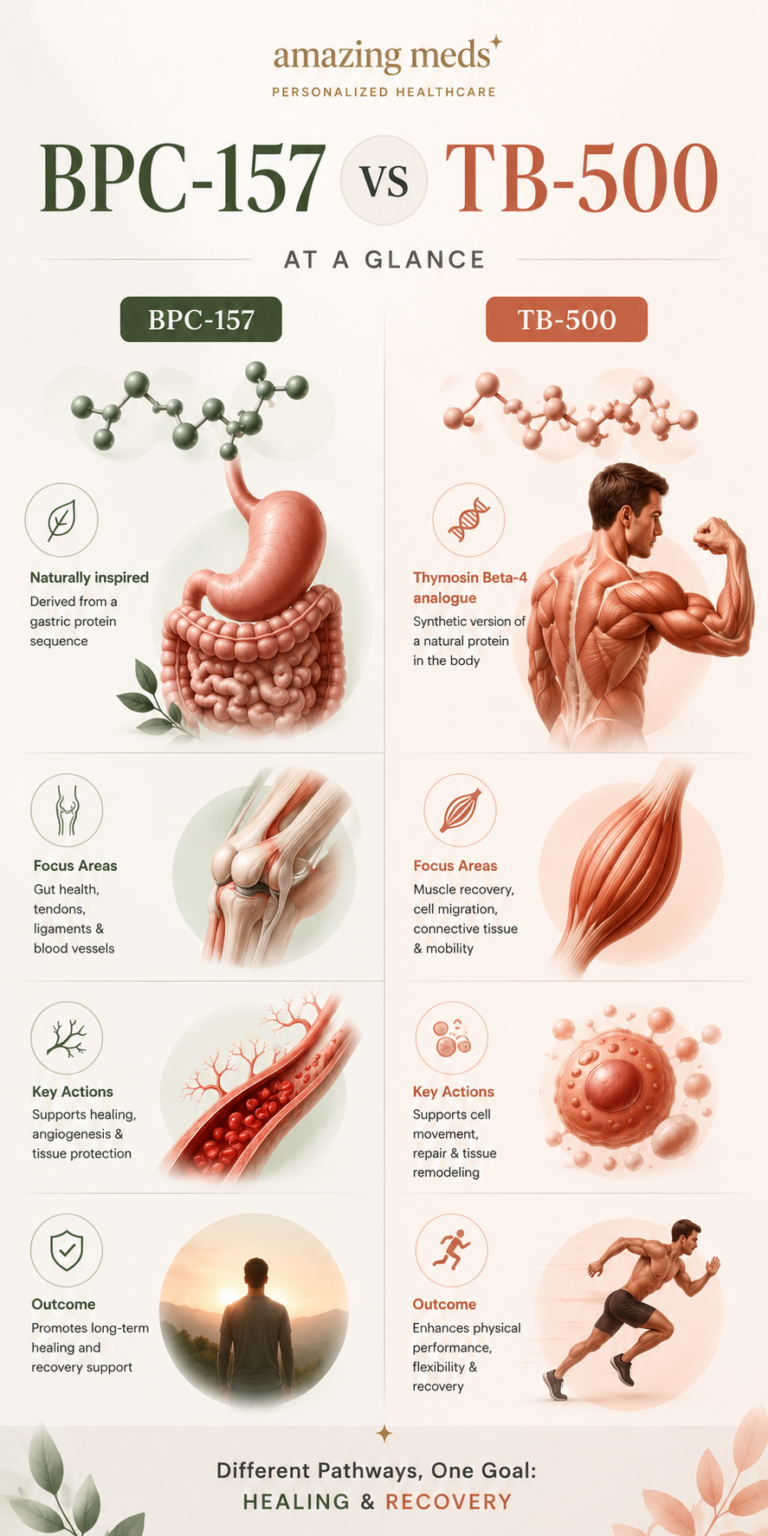
| Origin | Synthetic 15-amino-acid peptide based on a gastric juice protein | Synthetic short fragment of thymosin beta-4 |
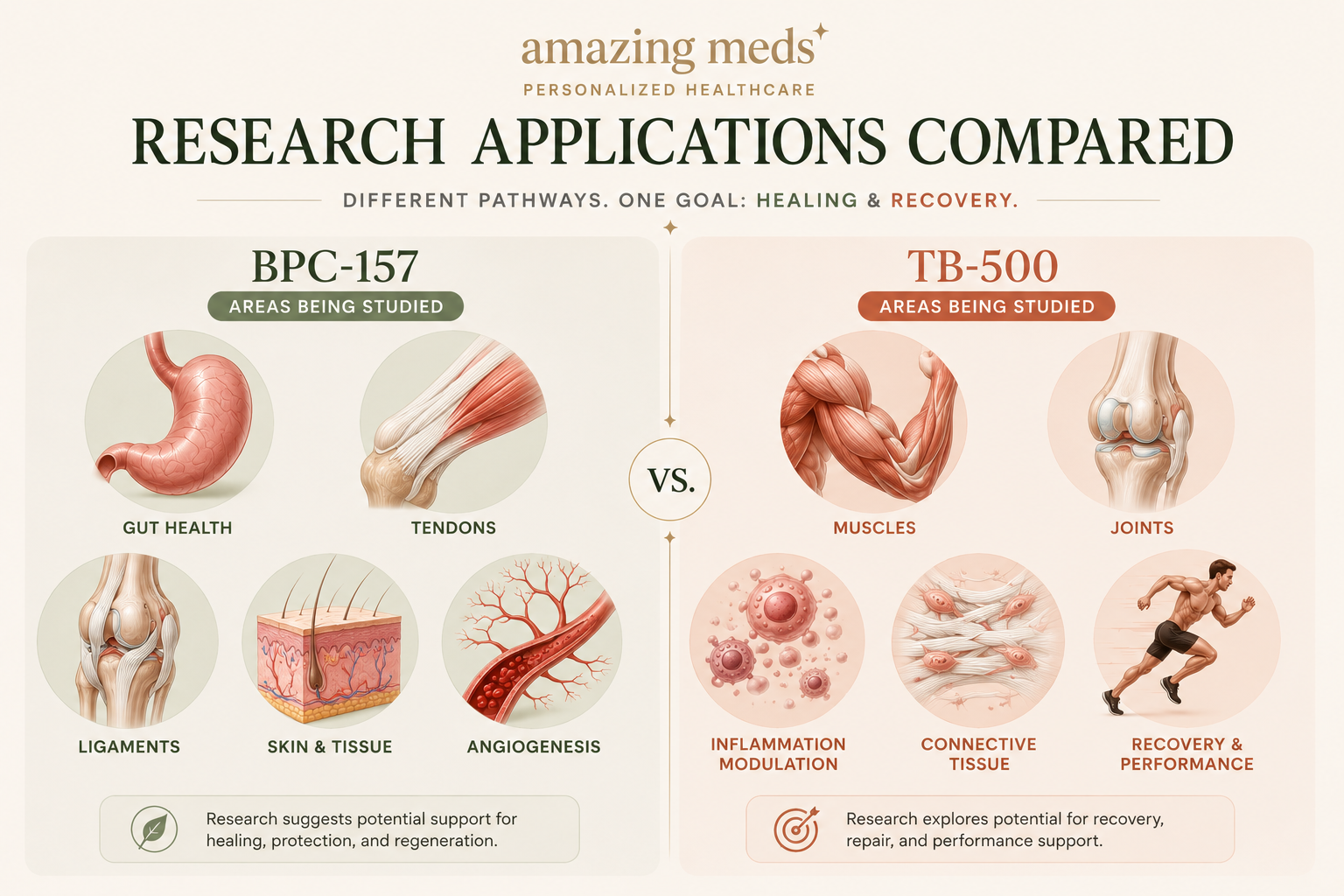
| Primary research focus | Gut health, tendons, ligaments, tissue repair | Wound healing, cell migration, connective tissue |
| Proposed mechanisms | Angiogenesis, gastrointestinal protection, inflammatory signaling | Cell migration, tissue remodeling, inflammation |
| Human evidence | One small retrospective case series in a 2025 systematic review | FDA reports no identified human exposure data |
| FDA approval | Not FDA-approved | Not FDA-approved |
| WADA 2026 status | Prohibited at all times (S0) | Prohibited at all times (S2) |
Table sources: BPC-157 review, 2025 systematic review, FDA, WADA Prohibited List.
Although BPC-157 and TB-500 share some overlapping areas of research, they differ in their biological origins and the conditions researchers commonly investigate.
FDA and Anti-Doping Status as of November 2026
Neither peptide is FDA-approved, and the federal picture on compounding them shifted several times during 2026. Here is what official sources say as of November 2026:
- The FDA’s page on bulk drug substances that may present significant safety risks lists BPC-157 and TB-500 in a table of substances previously in category 2 whose nominations were withdrawn. The FDA’s entries still note possible immunogenicity risk and little or no safety information for the proposed routes.
- The FDA’s Pharmacy Compounding Advisory Committee discussed BPC-157 and TB-500 on July 23, 2026 as candidates for the 503A bulks list.
- On October 30, 2026, HHS published notice of a draft enforcement discretion policy covering compounding with six peptides, including BPC-157 and TB-500, under specific conditions, and took public comments for two weeks. An enforcement policy describes when HHS does not plan to take action; it is not an approval. The notice says future FDA rulemaking may propose adding some or all of these peptides to the 503A bulks list, and the policy states that compounded drugs are not FDA-approved.
- The WADA 2026 Prohibited List names BPC-157 under S0 (non-approved substances) and “thymosin-β4 and its derivatives e.g. TB-500” under S2. Both are prohibited at all times.
Primary Uses Being Studied
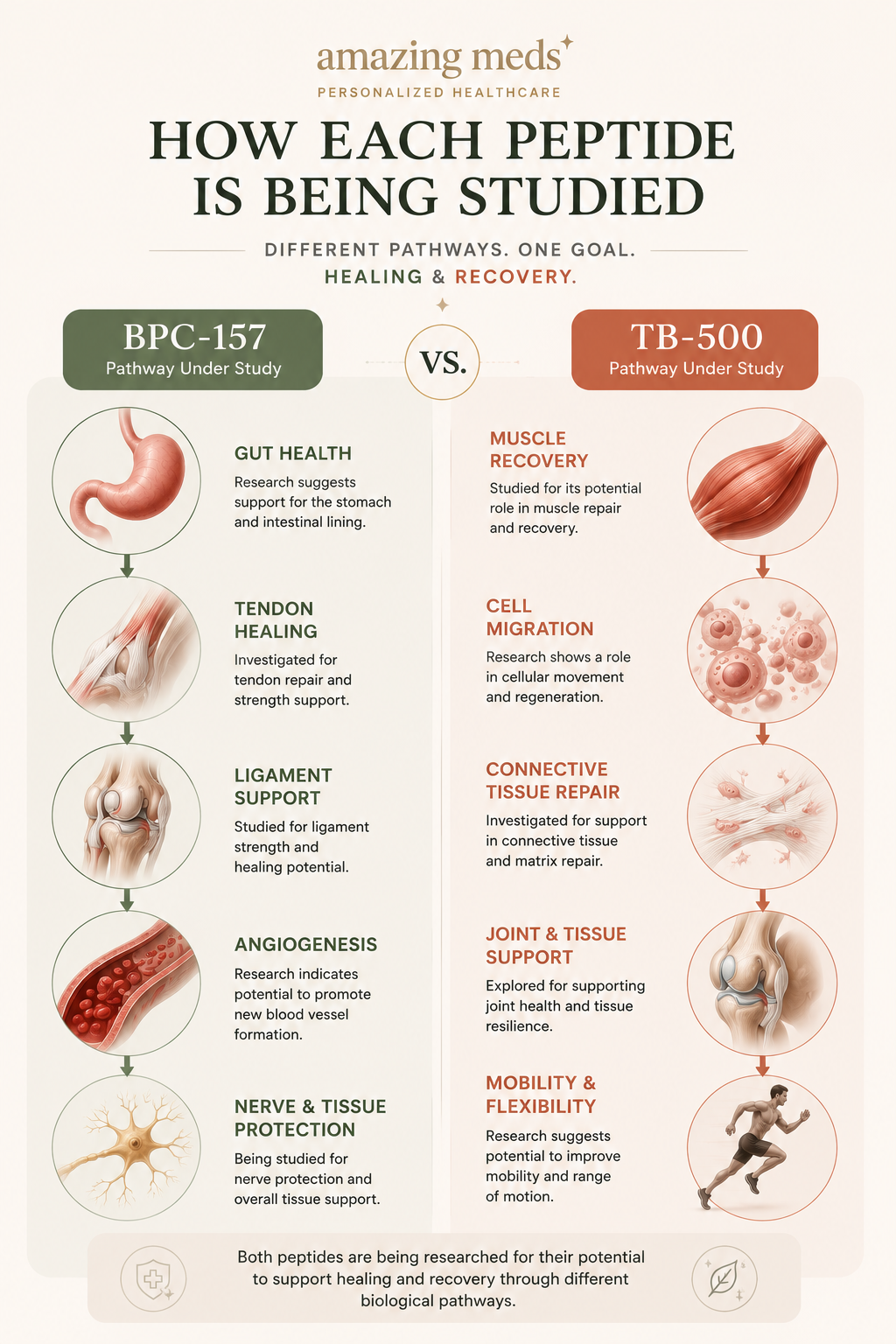
BPC-157 Research Applications
Researchers have explored BPC-157 in lab and animal studies involving:
- Tendon, ligament and muscle recovery
- Gastrointestinal health
- Skin and soft tissue wound repair
- Nerve regeneration, including spinal cord injury in rats
- Blood vessel formation
These applications remain investigational, and none has been proven in human trials. We cover the animal research in more detail in BPC-157 benefits: what the research shows.
TB-500 Research Applications
Research on thymosin beta-4, the parent protein, has looked at:
- Wound healing in skin and the cornea
- Inflammatory responses after injury
- Tissue repair and regeneration
Most of these findings come from animal models and lab work on the full-length protein and require further validation in humans. HHS’s 2026 identity document for TB-500 also notes that the fragment is rapidly truncated in human serum.
Can BPC-157 and TB-500 Be Used Together?
Because BPC-157 and TB-500 are being studied for different biological pathways, some people ask whether they could have complementary roles in tissue repair and recovery.
For example, BPC-157 has primarily been investigated for its potential effects on gastrointestinal health, tendons, ligaments, and blood vessel formation, while thymosin beta-4 has been studied for wound healing, tissue remodeling, and cell migration.
Although these differences have led to interest in combining the two peptides, there is currently insufficient human clinical evidence to confirm that using them together provides better outcomes. Additional research is needed to better understand their safety, effectiveness, and potential interactions.
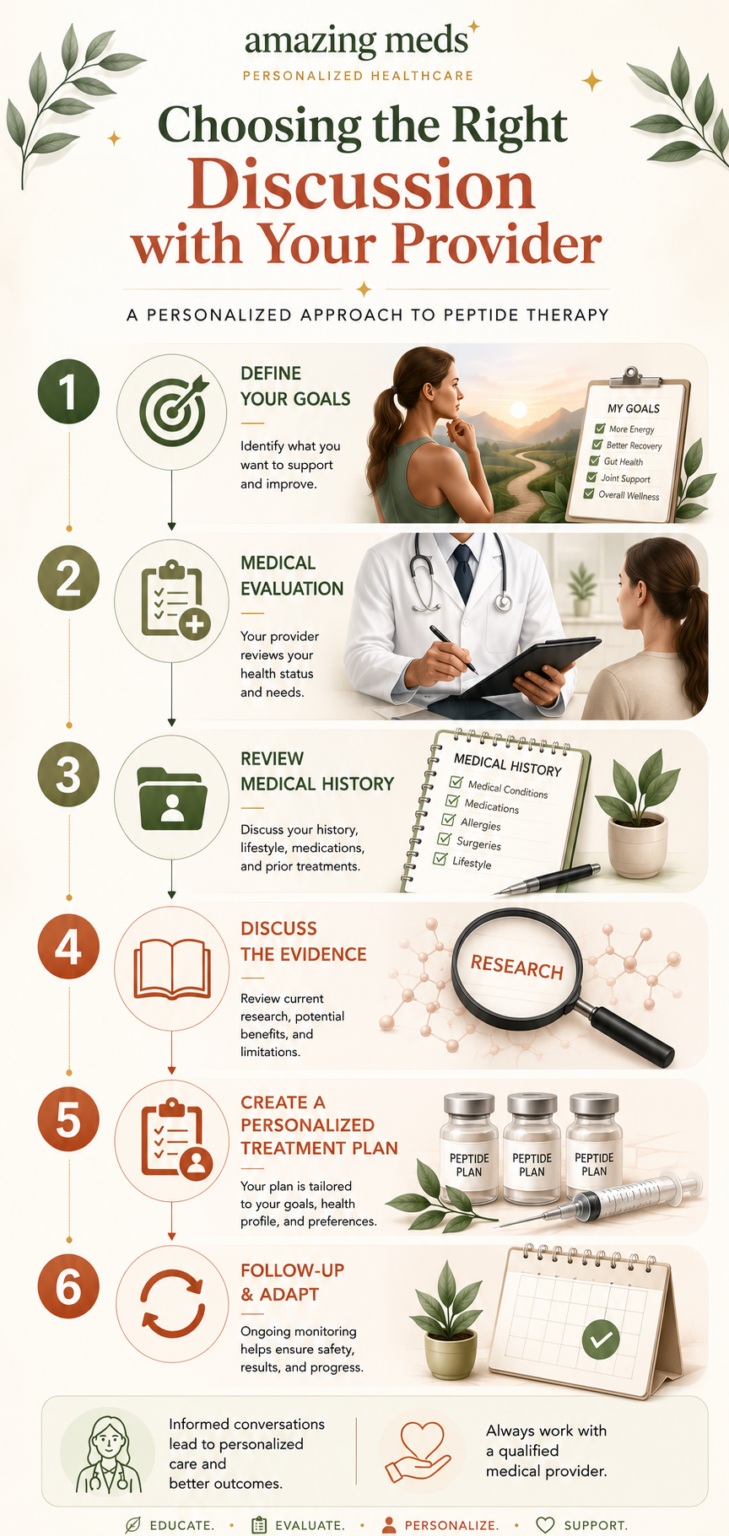
Any decision regarding peptide therapy should be made with a licensed healthcare provider who can recommend an individualized approach based on your medical history and health goals.
How Amazing Meds Can Help
At Amazing Meds, peptides are prescribed only after a licensed provider reviews an online intake covering your health history and goals and decides whether a peptide is appropriate for you. Medication is self-pay, and we treat by telehealth in all 50 states. If you have questions about prescriptions, read whether you need a prescription for peptides, or see how Amazing Meds works.
Conclusion
BPC-157 and TB-500 are two of the most widely discussed peptides in regenerative medicine research. While both have been investigated for their potential roles in healing and recovery, they differ in their biological origins, proposed mechanisms, and areas of scientific interest.
Current evidence remains largely limited to laboratory and animal studies, and more high-quality human clinical trials are needed to better understand their safety, effectiveness, and potential therapeutic applications.
If you’re considering peptide therapy, a personalized medical evaluation is the best place to start. A licensed healthcare provider can review your health history, discuss the available evidence, and recommend options that fit your individual needs and goals.
Frequently Asked Questions
Is BPC-157 better than TB-500?
Neither peptide has been proven to be superior. They are being studied for different biological processes, no human trials compare them head to head, and the right approach depends on your individual health goals and your provider’s clinical evaluation.
Are BPC-157 and TB-500 FDA approved?
No. Neither BPC-157 nor TB-500 is approved by the U.S. Food and Drug Administration (FDA) to diagnose, treat, cure, or prevent any disease. The October 2026 HHS draft policy on compounding them is an enforcement policy, not an approval, and states that compounded drugs are not FDA-approved.
Which peptide is being studied for gut health?
BPC-157 has been more commonly investigated in gastrointestinal research, particularly in laboratory and animal studies involving the stomach and intestinal lining. The FDA advisory committee reviewed it for ulcerative colitis in July 2026.
Which peptide is being studied for muscle recovery?
BPC-157 has been studied in animal models of muscle, tendon, and ligament injury, and a 2025 systematic review found that nearly all of that research was preclinical. Claims about TB-500 and muscle recovery rest mostly on research into full-length thymosin beta-4 rather than the fragment itself.
Are these peptides safe?
The long-term safety of BPC-157 and TB-500 in humans has not been established. The FDA lists possible immunogenicity risk and limited safety information for both, and the 2025 systematic review concluded that clinical safety of BPC-157 in humans remains unknown. Talk with a licensed healthcare provider before starting any peptide.
Can athletes use BPC-157 or TB-500?
Athletes subject to anti-doping rules should not. The WADA 2026 Prohibited List bans both at all times, in and out of competition. If you compete, check with your sport’s anti-doping organization before taking any peptide.
Sources
- FDA: Certain Bulk Drug Substances for Use in Compounding that May Present Significant Safety Risks
- FDA: July 23-24, 2026 Meeting of the Pharmacy Compounding Advisory Committee
- Federal Register, October 30, 2026: Enforcement Discretion Policy Regarding 503A Compounding Using Certain Peptide Bulk Drug Substances
- HHS: Enforcement Discretion Policy Regarding 503A Compounding Using Certain Peptide Bulk Drug Substances
- HHS: Peptide Enforcement Discretion Policy, Appendix B
- World Anti-Doping Agency: The Prohibited List (2026)
- Józwiak M, et al. Multifunctionality and Possible Medical Application of the BPC 157 Peptide: Literature and Patent Review. Pharmaceuticals, 2025
- Vasireddi N, et al. Emerging Use of BPC-157 in Orthopaedic Sports Medicine: A Systematic Review. HSS Journal, 2025
- Perovic D, et al. Stable gastric pentadecapeptide BPC 157 can improve the healing course of spinal cord injury and lead to functional recovery in rats. Journal of Orthopaedic Surgery and Research, 2019
- Sosne G, et al. Thymosin beta 4: A novel corneal wound healing and anti-inflammatory agent. Clinical Ophthalmology, 2007
- Goldstein AL, et al. Thymosin β4: a multi-functional regenerative peptide. Basic properties and clinical applications. Expert Opinion on Biological Therapy, 2012
This article is for general education and is not medical advice. Talk with a licensed provider about your own health before starting, stopping or changing any treatment.