

By Dr. Jennifer Frangos, D.O. Updated November 2026.
If you have been researching peptides for recovery, gut health, or overall wellness, you have likely come across BPC-157. Interest in this peptide has grown quickly in recent years, especially among people looking to learn about tissue healing and regenerative medicine. Related reading: KLOW peptide and KPV peptide.
BPC-157, short for Body Protection Compound-157, is a synthetic peptide based on a sequence first isolated from a protein in human gastric juice. Most of what we currently know comes from laboratory and animal studies, where researchers have explored its possible effects on tissue repair, inflammation, and gastrointestinal health.
These early findings have drawn interest, but BPC-157 is not an FDA-approved drug, and high-quality clinical research in humans remains very limited. Any discussion of its potential benefits should be read in that context.
In this guide, we explain what BPC-157 is, how it may work, what current research suggests, its potential risks, where it stands with the FDA as of November 2026, and the questions to ask before considering peptide therapy.
For an overview of peptide evidence and regulatory status, explore our peptide therapy hub.
What Is BPC-157?
BPC-157 is a laboratory-produced peptide made of 15 amino acids (a “pentadecapeptide”). It was originally developed from a naturally occurring protective protein found in human gastric juice, which is where the name Body Protection Compound comes from.
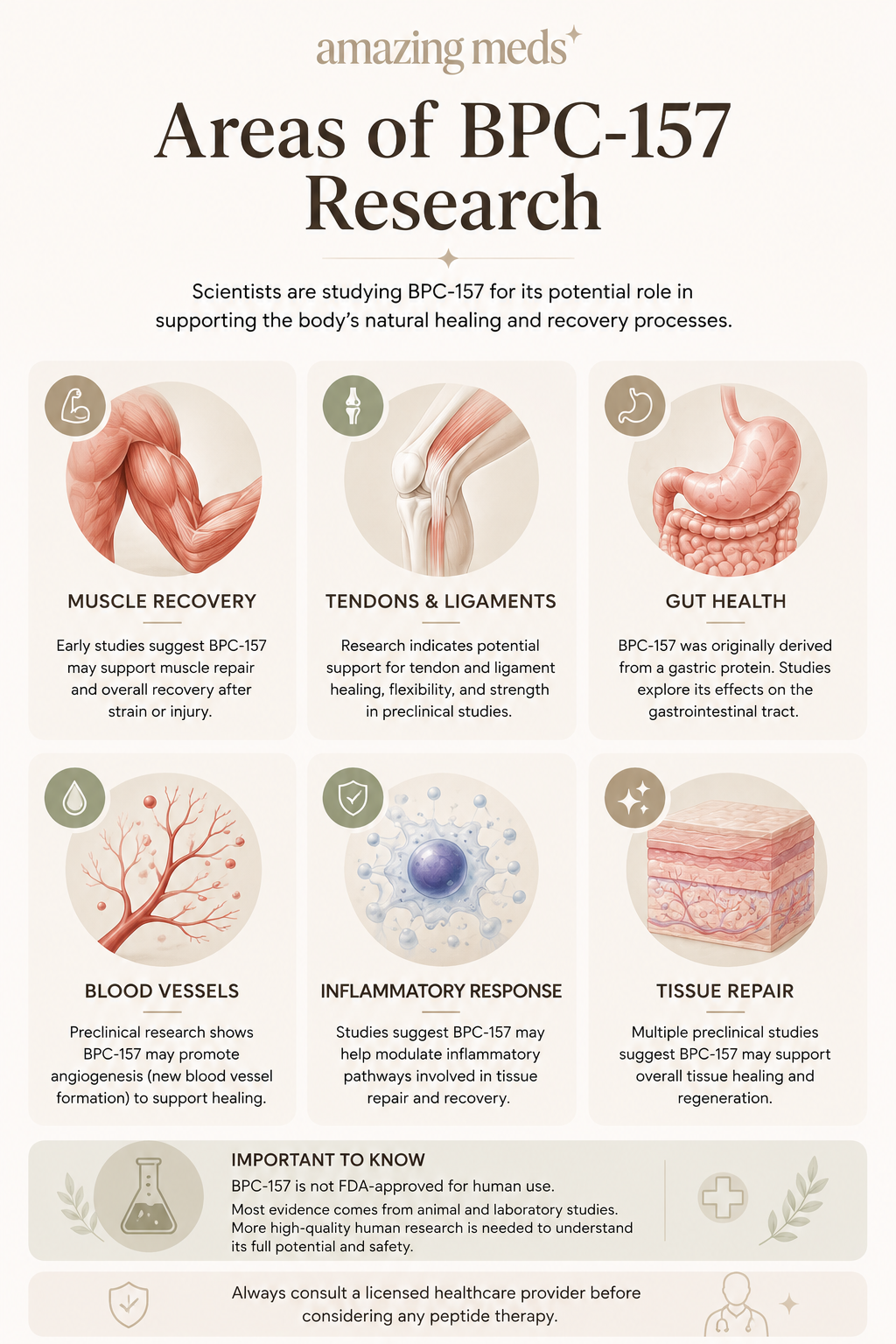
Researchers have studied BPC-157 because of its possible role in supporting the body’s natural healing processes. Animal and laboratory studies have explored its effects on:
- Soft tissue repair
- Tendons and ligaments
- Muscle recovery
- Blood vessel formation (angiogenesis)
- Gastrointestinal tissues
- Inflammatory responses
While these findings have generated interest, most published evidence comes from animal or preclinical studies. A 2025 systematic review in HSS Journal found 36 studies of BPC-157 for musculoskeletal injuries: 35 were preclinical and only one was a small human study. Well-designed human clinical trials are needed before clear conclusions can be made about safety or effectiveness. For a closer look at each area researchers have studied, see our guide to potential BPC-157 benefits.
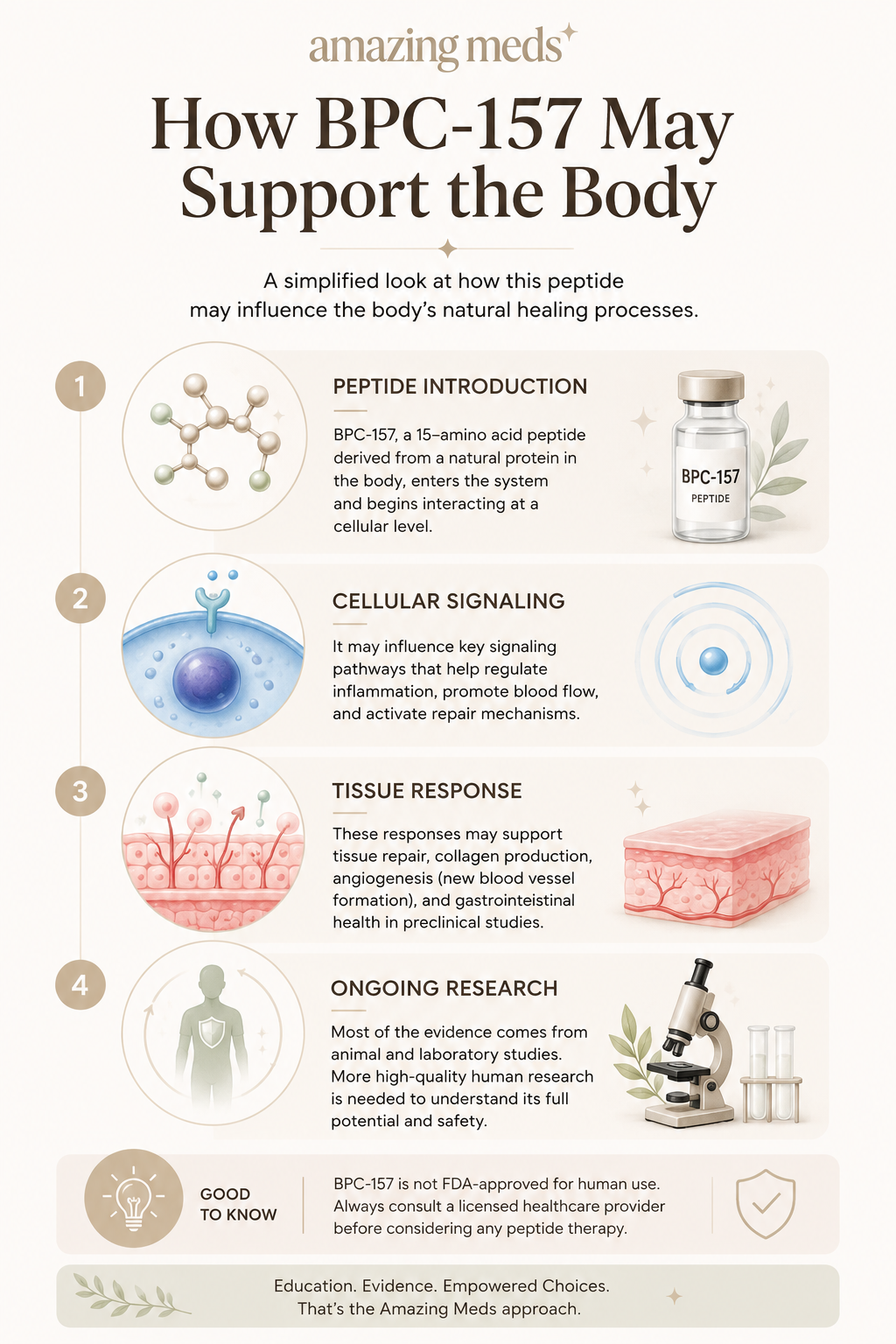
How Does BPC-157 Work?
Researchers believe BPC-157 may influence several biological pathways involved in tissue repair and recovery. The exact mechanisms are still being studied, and a 2025 review describes most of this work as animal research.
Potential mechanisms being investigated include:
- Supporting normal tissue repair
- Promoting blood vessel development
- Modulating inflammatory responses
- Interacting with the nitric oxide system
- Helping maintain the integrity of the gastrointestinal lining
These proposed mechanisms are based primarily on experimental research and should not be read as proven clinical effects in humans.
Potential Benefits Being Studied
Research into BPC-157 continues to evolve. No therapeutic claims can be made at this time, but scientists are investigating several areas where the peptide may play a role.
Tissue Recovery
Rat studies summarized in a 2021 review have explored whether BPC-157 may support healing after injuries to muscles, tendons, and ligaments. These results have not been confirmed in controlled human trials.
Gut Health
Because BPC-157 comes from a gastric protein sequence, researchers have studied it in animal models of injury across the stomach, intestines, and esophagus. The same review notes these are rat studies.
Blood Vessel Formation
Some laboratory and animal studies suggest BPC-157 may influence angiogenesis, the process by which new blood vessels develop, which could play a part in tissue repair (source).
Inflammatory Response
Researchers are also studying whether BPC-157 may affect inflammatory pathways involved in tissue healing. So far, this work has been done in animals.
Overall Recovery
Together, these findings have led scientists to explore BPC-157 within the broader field of regenerative medicine. More human research is needed before any medical conclusions can be drawn.
Is BPC-157 FDA-Approved?
No. BPC-157 is not an FDA-approved drug for any use.
This is one of the most important points to understand before considering any peptide therapy. On its page about bulk drug substances that may present significant safety risks (content current as of April 22, 2026), the FDA says compounded drugs containing BPC-157 may pose a risk of immune reactions for certain routes of administration, notes concerns about peptide-related impurities and ingredient characterization, and states it has no, or only limited, safety information for the proposed routes. The FDA says it lacks enough information to know whether the drug would cause harm in humans.
The regulatory picture changed during 2026:
- That same FDA page now lists BPC-157 among substances that were previously in category 2 and whose nominations were withdrawn by the nominators.
- FDA’s Pharmacy Compounding Advisory Committee discussed BPC-157 on July 23, 2026 as a substance being considered for the 503A bulks list, the list of ingredients pharmacies may use in compounding.
- On October 30, 2026, HHS published a notice in the Federal Register announcing a draft interim enforcement discretion policy for 503A compounding with certain peptides, meant to apply while the bulks list is developed through rulemaking. The policy lists BPC-157 as one of six covered peptides. HHS says it does not intend to take enforcement action against licensed pharmacies and physicians that compound them under set conditions, including a patient-specific prescription. HHS states the policy is not binding and does not create rights, and that compounded drugs are not FDA-approved.
None of these steps makes BPC-157 an approved drug, and a decision not to enforce is not the same as a ruling that something is legal. BPC-157 is still not on the 503A bulks list; the HHS policy applies only until a final rule decides whether it belongs there. It should be viewed as an experimental peptide rather than an established medical treatment.
Is BPC-157 Safe?
There is not enough high-quality human research to confirm the safety of BPC-157. The 2025 HSS Journal review reported that no clinical safety data were found.
Most studies have been done in animals or laboratory settings. Those studies do not provide the same level of evidence as large, controlled human clinical trials.
Potential safety concerns may include:
- Unknown long-term effects
- Product purity or contamination issues
- Incorrect dosing from unregulated sources
- Injection-site irritation or infection
- Immune reactions, which the FDA lists as a possible risk
- A theoretical concern for anyone with an undiagnosed cancer, because BPC-157 has stimulated blood vessel growth in animal and cell studies (raised by the authors of a 2025 review)
- Unclear interactions with medications or medical conditions
Because safety information remains limited, anyone considering peptide therapy should speak with a licensed healthcare provider and avoid products sold online as “research chemicals” or without medical oversight.
Possible Side Effects of BPC-157
Because BPC-157 has not been widely studied in humans, its full side effect profile is not well established.
Potential risks may include:
- Pain or irritation where it is injected
- Swelling or redness
- Allergic-type reactions
- Unknown long-term risks
A short list of side effects does not mean the peptide is proven safe. It often means the available human data are too limited to fully understand the risks. How long BPC-157 lasts in the body is also poorly understood in people; our article on BPC-157 half-life covers what animal studies show.

Why Medical Supervision Matters
Peptide therapy should never be treated as a one-size-fits-all wellness trend. Even when a compound is being studied for potential benefits, your health history, current medications, allergies, and treatment goals all matter.
A licensed healthcare provider can help assess:
- Whether peptide therapy is appropriate
- Whether FDA-approved options exist for your concern
- Potential medication interactions
- Risk factors based on your medical history
- Monitoring and follow-up
This matters most with peptides like BPC-157, where human safety and effectiveness data remain limited. If you are wondering whether you need a prescription at all, see do you need a prescription for peptides.
BPC-157 vs Other Peptides
BPC-157 is often discussed alongside other peptides used in wellness and regenerative medicine conversations. Not all peptides have the same level of evidence, regulatory status, or safety profile.
| Peptide type | Example | Regulatory note |
|---|---|---|
| FDA-approved peptide medications | GLP-1 medicines such as semaglutide | Approved by the FDA for specific medical uses |
| Cosmetic peptides | GHK-Cu in topical skincare | Cosmetics do not need FDA approval before sale |
| Experimental peptides | BPC-157 | Not FDA-approved; FDA reports limited safety information |
Being called a “peptide” does not mean something has been proven safe or effective as a medical treatment. BPC-157 is also often compared with TB-500; see BPC-157 vs TB-500 for how the two differ.
Questions to Ask Before Considering Peptide Therapy
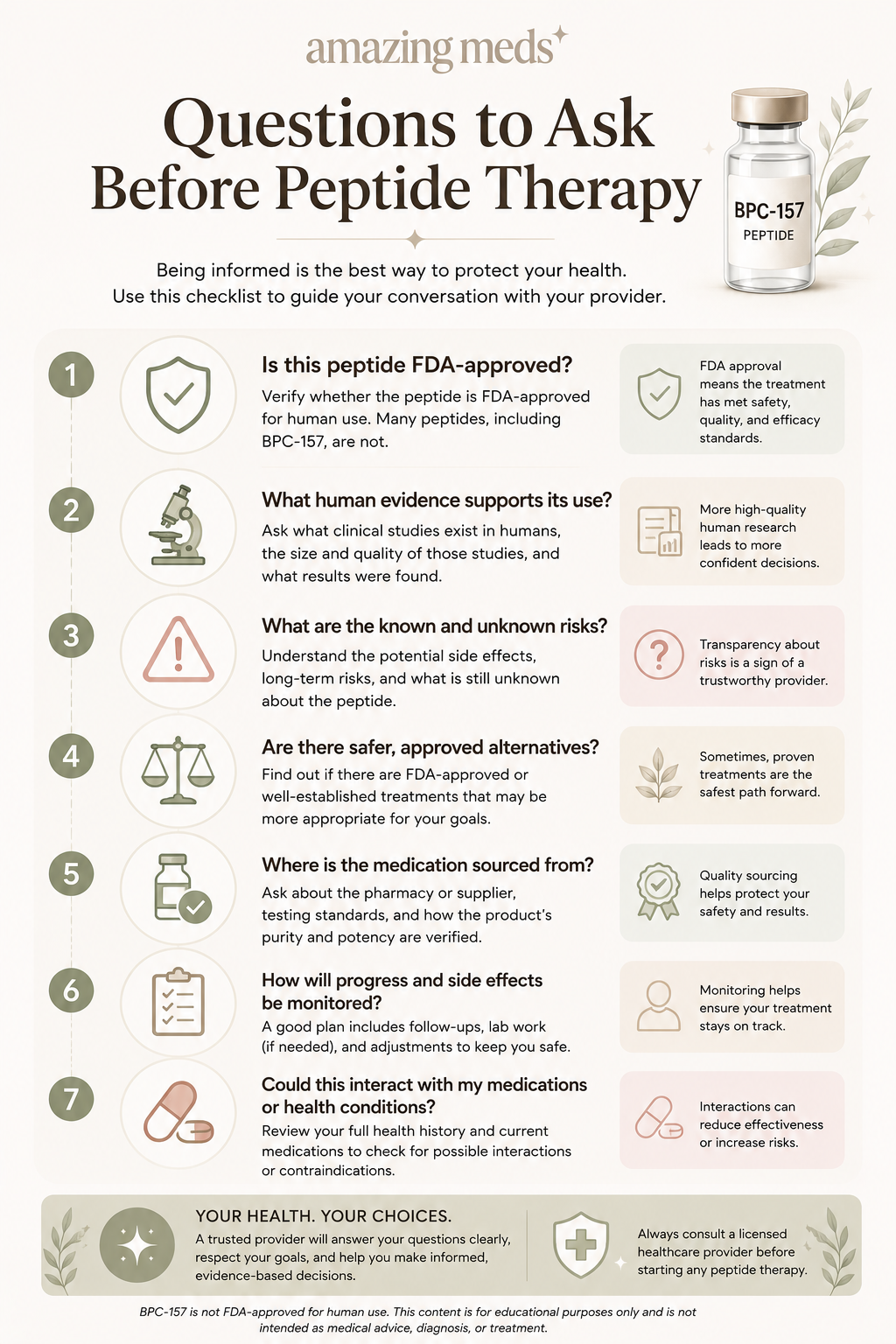
Before exploring any peptide treatment, ask your provider:
- Is this peptide FDA-approved?
- What human studies support its use?
- What are the known and unknown risks?
- Are there approved alternatives for my concern?
- Where is the medication sourced from?
- How will progress and side effects be monitored?
- Could this interact with my medications or health conditions?
A trustworthy provider should be open about what is known, what is still uncertain, and whether a treatment is appropriate for your situation.
At Amazing Meds, BPC-157 requests start with an online intake that a licensed provider reviews against your health history before deciding whether it is appropriate for you. Medication is self-pay. You can read more about how Amazing Meds works.
Frequently Asked Questions
What is BPC-157 used for?
BPC-157 is mostly discussed for tissue recovery, gut health, and inflammation, based on animal research. It is not FDA-approved for any use, and human studies are few and small.
Does BPC-157 help with injuries?
It has not been proven to. The only human study in a 2025 systematic review was a retrospective chart review of knee pain patients with no control group and self-reported results, so it cannot show that BPC-157 caused any improvement.
Can athletes use BPC-157?
Athletes subject to drug testing should avoid it. USADA states that BPC-157 is prohibited under WADA’s S0 Non-Approved Substances category, and USADA’s 2027 list advisory still lists it under S0.
Can I buy BPC-157 online?
Buying BPC-157 online is risky. Products sold as research chemicals may be mislabeled, contaminated, wrongly dosed, or not intended for human use.
Should I talk to a provider before using BPC-157?
Yes. Because BPC-157 is experimental and not FDA-approved, discuss it with a licensed healthcare provider who can explain the risks, limits of the evidence, and alternatives.
Sources
- FDA. Certain Bulk Drug Substances for Use in Compounding that May Present Significant Safety Risks (content current as of April 22, 2026)
- FDA. July 23 to 24, 2026 Meeting of the Pharmacy Compounding Advisory Committee
- Federal Register, 91 FR 68526. Notice of Availability: Enforcement Discretion Policy Regarding 503A Compounding Using Certain Peptide Bulk Drug Substances (October 30, 2026)
- HHS. Enforcement Discretion Policy Regarding 503A Compounding Using Certain Peptide Bulk Drug Substances, with Appendices A and B
- Józwiak M, et al. Multifunctionality and Possible Medical Application of the BPC 157 Peptide: Literature and Patent Review. Pharmaceuticals, 2025
- Seiwerth S, et al. Stable Gastric Pentadecapeptide BPC 157 and Wound Healing. Frontiers in Pharmacology, 2021
- Vasireddi N, et al. Emerging Use of BPC-157 in Orthopaedic Sports Medicine: A Systematic Review. HSS Journal, 2025
- Lee E, Padgett B. Intra-Articular Injection of BPC 157 for Multiple Types of Knee Pain. Alternative Therapies in Health and Medicine, 2021
- USADA. BPC-157: What Athletes Should Know About the Prohibited Experimental Peptide
- USADA. Athlete Advisory: What’s New on the 2027 WADA Prohibited List?
- FDA. NDA 215256 approval letter (semaglutide), 2021
- FDA. FDA Authority Over Cosmetics: How Cosmetics Are Not FDA-Approved, but Are FDA-Regulated
This article is for general education and is not medical advice. Talk with a licensed provider about your own health before starting, stopping or changing any treatment.